Haeinsa, Home to the Tripitaka Koreana, and Gayasan, Where the Forest Speaks
- Input
- 2026-10-15 09:24:57
- Updated
- 2026-10-15 09:24:57
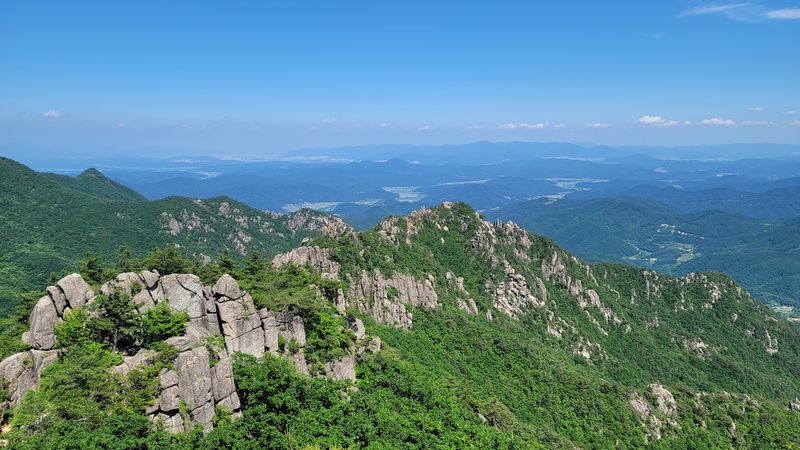
【Hapcheon County, South Gyeongsang Province, and Seongju County, North Gyeongsang Province — Reporter Jeong Sun-min】 Yi Jung-hwan (1691–1756), a Silhak scholar of the late Joseon period, wrote in Taengniji: “There are no mountains in Gyeongsang Province that could be called ‘seokhwaseong’ (stone-flame peaks). Only Gayasan has rows of pointed rocks that look like flames.” It is easy to assume that Gayasan is in Hapcheon County, South Gyeongsang Province, but in fact it stretches across four counties: Hapcheon and Geochang in South Gyeongsang Province, and Seongju and Goryeong in North Gyeongsang Province. The reason Hapcheon comes to mind first is probably that Haeinsa Temple, an ancient temple with a thousand-year history that houses the Tripitaka Koreana, is located there. In early October, as the season gradually began to take on autumn hues, I visited Haeinsa Temple in Hapcheon and the Gayasan Ecological Exploration Center in Seongju.
■ A Thousand Years of Wisdom at Gayasan: The Tripitaka Koreana
The first stop on a trip to Gayasan is Sorigil, a trail that follows Hongnyudong Valley. Opened in 2011 to mark the 1,000th anniversary of the publication of the Goryeo Tripitaka, Sorigil stretches about 7.3 kilometers from Hapcheon Tripitaka Koreana Theme Park to Yeongsangyo Bridge at Haeinsa Temple. Its gentle route offers views of the valley and forest, making it ideal for visitors who find a climb to the summit demanding.
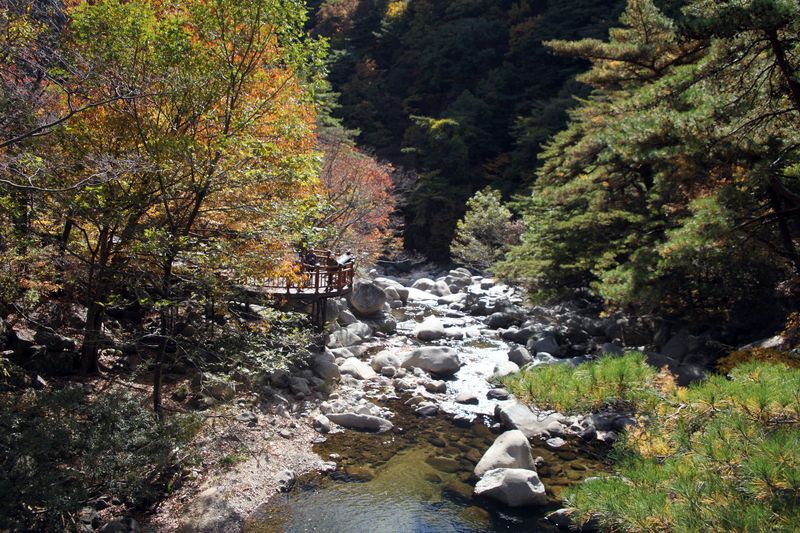
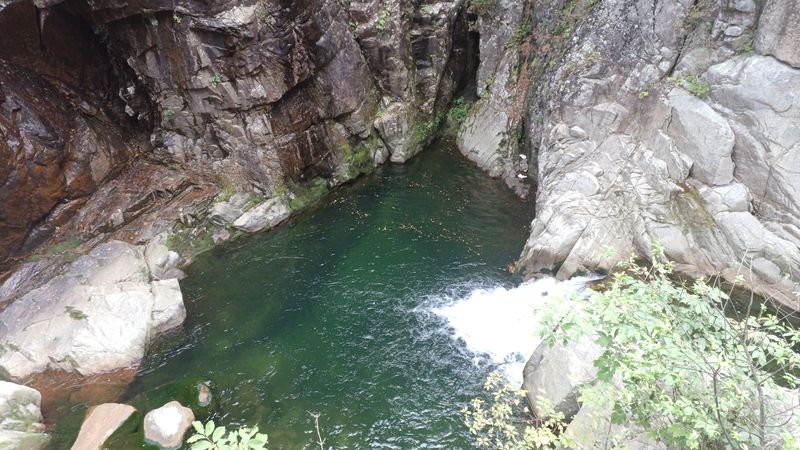
On my first day in Gayasan, I walked slowly along part of Sorigil. In the valley emerging between the trees, water squeezed between the rocks and churned into white foam. The valley was named Hongnyudong, or “Red Flow Valley,” because in autumn the red foliage reflects on the water, making it seem to flow crimson. As befits a place where Choe Chiwon, a literary figure of the late Silla period, is said to have lived in seclusion and enjoyed nature’s company, traces of the past remain throughout the valley.
Following in Choe Chiwon’s footsteps, I came upon Gayasan’s attractions one after another, including Nakhwadam and Cheopseokdae. I slowed down to take in the layered rocks and deep blue-green water, then closed my eyes for a moment. The sounds of water, birds and wind brushing through the leaves came into sharp focus. The sounds of nature, which I usually hear as one indistinct whole, each revealed its own character.
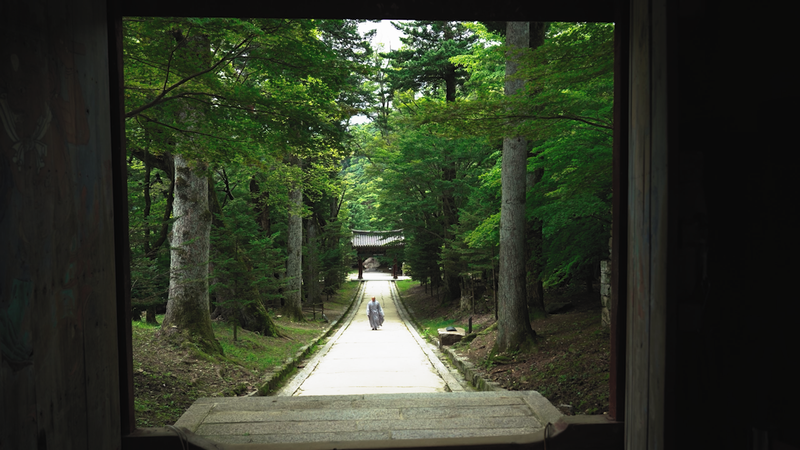
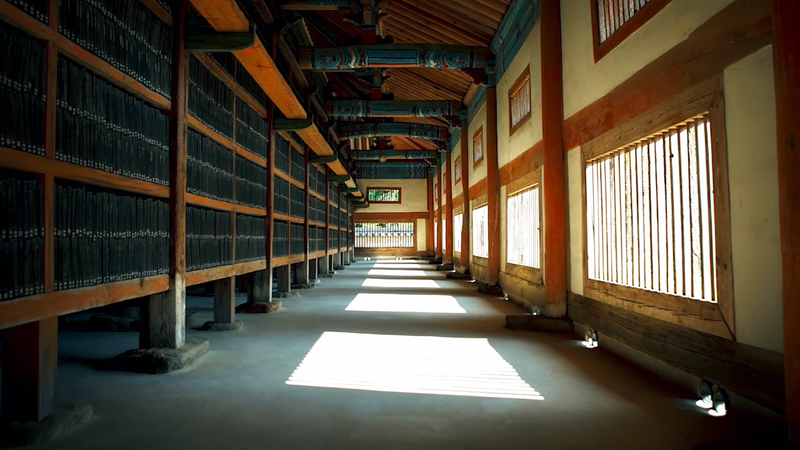
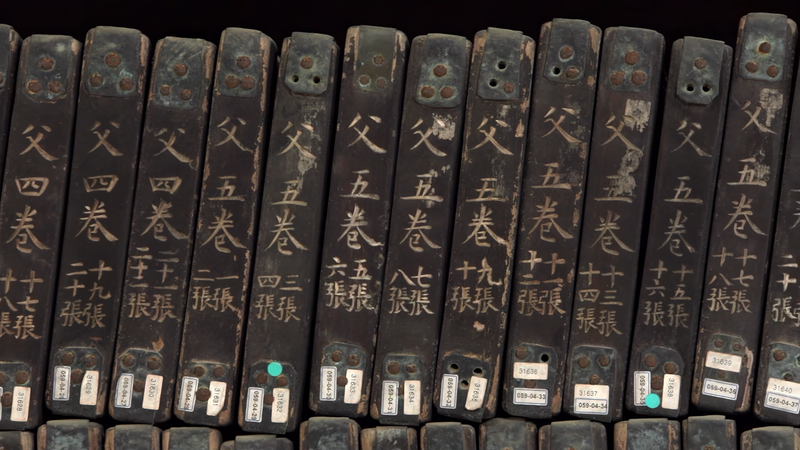
At the end of Sorigil stands Haeinsa Temple, a temple of the Dharma Jewel that enshrines the Tripitaka Koreana. Founded during the Silla period, the temple is widely known for the Tripitaka Koreana, which contains the teachings of Buddhist scriptures, and Janggyeong Panjeon, the repository that has housed it for centuries. Walking behind Daejeokgwangjeon Hall, the temple’s main worship hall, brings Janggyeong Panjeon into view. The neat wooden buildings, rather than elaborate ornamentation, make a striking impression.
The formal name of the Tripitaka Koreana is the Goryeo Tripitaka. It was produced from 1237 to 1248, during the reign of Goryeo’s King Gojong, in the hope that the power of Buddhism would repel the Mongol invasions. The woodblocks number 81,258, according to the widely cited figure. They are a precious heritage that attests not only to Buddhist culture during the Goryeo period but also to the era’s woodblock-printing technology and level of record-keeping. The Goryeo Tripitaka woodblocks were inscribed on UNESCO’s Memory of the World Register in 2007.
Most remarkable of all is the preservation technology that has endured for hundreds of years. The size and placement of windows at the front and back of the building were designed to allow natural air circulation, while materials such as charcoal, salt and sand were used in the floor to regulate humidity. The buildings embody the wisdom of our ancestors, who protected the woodblocks for centuries without electricity or modern climate-control systems.
Visitors cannot enter Janggyeong Panjeon, but from the courtyard they can look through the lattice windows and see the woodblocks packed tightly inside. This is when the Tripitaka Koreana, previously encountered as numbers and dates in an exhibition hall, becomes real. The passage of time belonging to those who made tens of thousands of woodblocks and carved the characters, and to those who safeguarded them, seems to converge. Just as Gayasan’s natural surroundings have endured in place for centuries, Haeinsa continues to pass its thousand-year-old wisdom down to the present.
■ The Gayasan Ecological Exploration Center: Listening to Nature’s Sounds
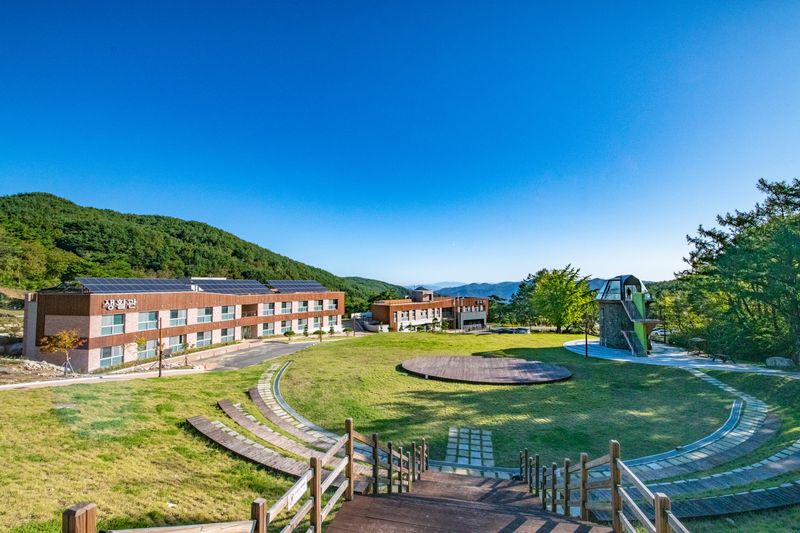
The next day, I moved to the slopes of Gayasan on the Seongju side in North Gyeongsang Province. Operated by the Korea National Park Service, the Gayasan Ecological Exploration Center is a destination for extended stays, with lodging and educational facilities. Set on the mountain slopes at an elevation of about 500 meters, it is surrounded by forest and mountains. It is an ideal place to step away from the noise of the city and rest in nature.
The program’s central concept at the center is soundscape—in other words, a “landscape of sound.” If the landscape we see is a visual landscape, the landscape we hear is a soundscape. The experience goes beyond appreciating the beauty of the forest with our eyes; it invites us to listen carefully to the sounds created by nature.
The program began with exercises to awaken our ears. We listened to audio mixing various sounds and responded when we heard a particular one, then focused until the clear resonance of a singing bowl had completely faded. As the sounds died away, those around us that we had not noticed before came alive. We began to distinguish the chirping of crickets and other insects, water in the distance, leaves swaying in the wind and mountain birds calling.
In nature, no sound waits its turn. Birds, insects, wind and flowing water in the valley blend together at the same time. Listening to the things we casually call “forest sounds” one by one was an experience of discovering nature anew. Then I lay down on a yoga mat and listened to the sounds outside the window. There was no need to go looking for anything or take pictures. Simply lying still and listening was enough for the forest’s time to slowly seep into my body.
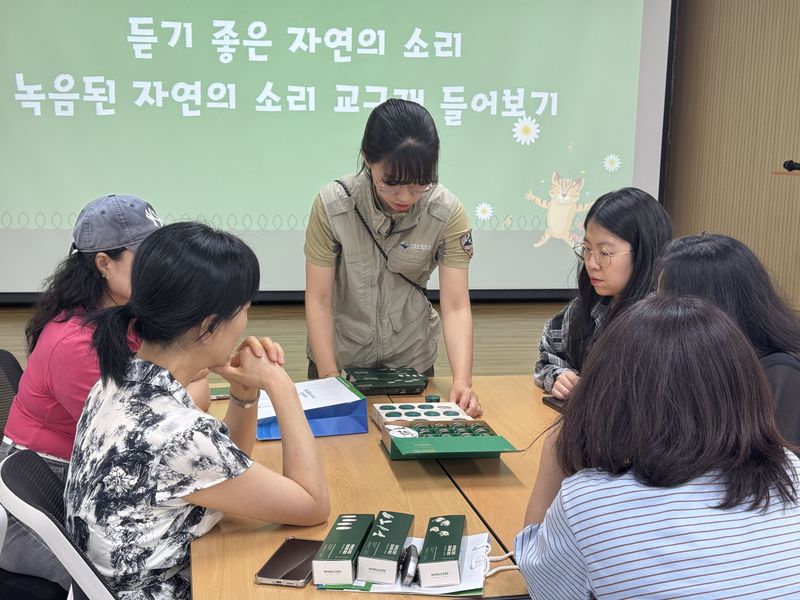
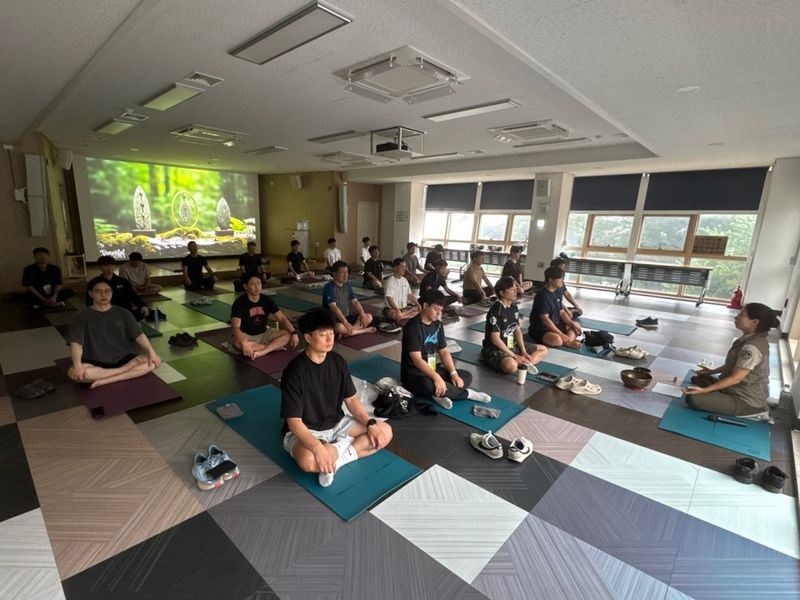
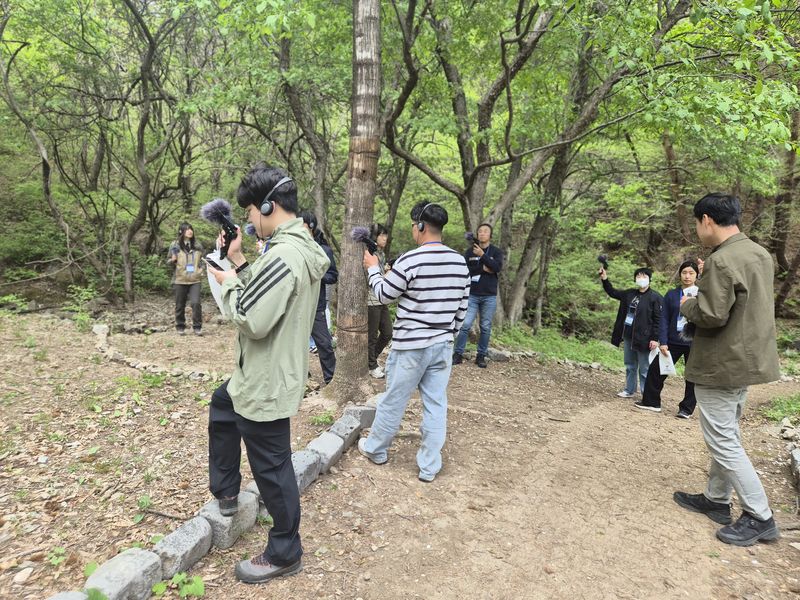
The center extends the experience beyond listening to nature indoors, offering activities outdoors as well. In a program open to children and adults alike, participants look for sound-making devices placed throughout the forest to discover what produces each sound. The disappearance of natural sounds also means that the habitats of the creatures that make them are under threat. The center explains that listening carefully can be a first step toward understanding and protecting the ecosystem.
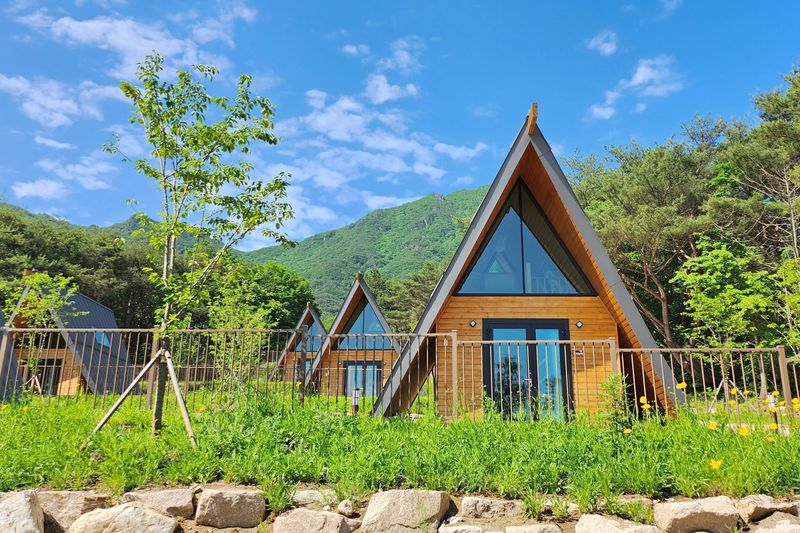
The accommodations are another appeal of the center. A residence hall and detached Nature Houses are nestled against a forest backdrop. With rooms for three to eight people, the center can accommodate families as well as groups. The Nature Houses include Haneulchae and Baramchae, and guests can bring dogs to some Haneulchae rooms. The education building has an auditorium and classrooms, while other facilities include a dining hall, an outdoor stage, an observation deck and a nature trail.
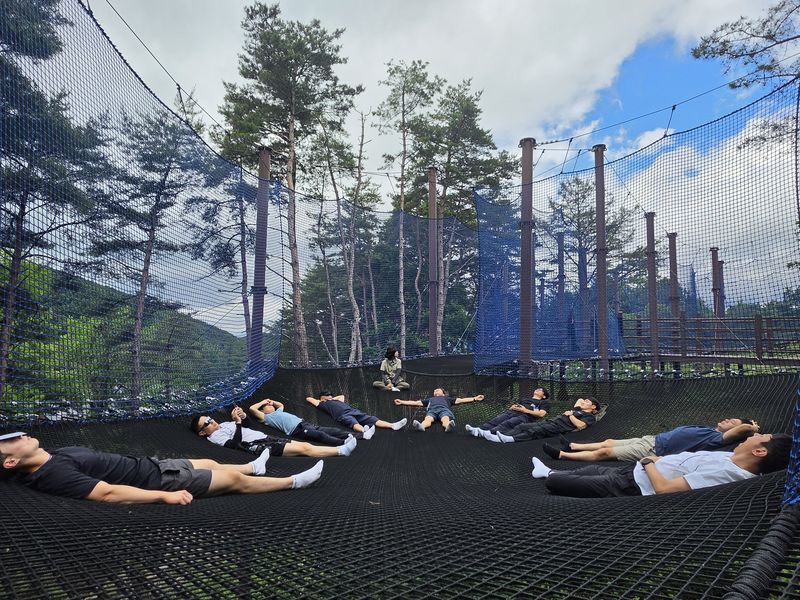
The nature trail inside the center is a walking route that brings visitors close to the forest. As you follow the forest path, the lodging buildings come into view between the trees. At the net adventure facility, you can relax in a different way by stretching out on the nets. Rather than hurrying off to the next destination, spending a night in the forest and taking time to look around is another way to enjoy Gayasan.
[email protected] Jeong Sun-min Reporter