Ulsan Labor Community Calls for Special Labor Inspection of DN Automotive Over ‘Chelation Injections’
- Input
- 2026-10-13 16:09:22
- Updated
- 2026-10-13 16:09:22
【Financial News, Ulsan = Reporter Choi Su-sang】 Ulsan’s labor community has called for a special labor inspection and an epidemiological investigation of DN Automotive, which has faced allegations of exposing workers to lead and concealing health examination results.
The Ulsan Regional Chapter of the Korean Confederation of Trade Unions issued a statement on the 13th, claiming, “Instead of improving working conditions, DN Automotive transported workers to hospitals whenever health examinations were due and, deceiving them by saying they were vitamin shots that were good for their health, had them receive chelation injections—a drug that forcibly removes heavy metals—for the past decade or so.”
The union also stressed, “They administered the injections as many as 28 times, without prior consent, even to a worker with only one kidney,” adding, “This is an inhumane crime that used workers’ bodies as ‘human guinea pigs in live experiments’ to evade government oversight standards and conceal occupational disease determinations.”
Chelation injections are known to be a drug whose use is restricted by the World Health Organization (WHO) because of the risk of serious side effects, including kidney damage, and whose preventive administration is prohibited by law in the United States.
The Ulsan Regional Chapter pointed out, “The fine the labor ministry imposed on DN Automotive in connection with this was a mere 46 million won, and no criminal penalties were even imposed,” adding, “Such slap-on-the-wrist punishment is tantamount to giving the company a free pass.”
It also called for special labor inspections and epidemiological investigations at all DN Automotive sites and workplaces handling hazardous chemicals, as well as investigations into the company’s executives and the medical institutions involved.
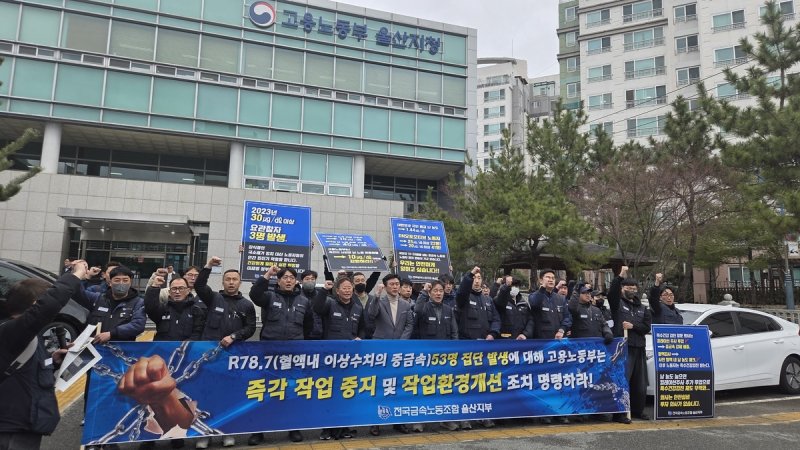
It also demanded an immediate apology from DN Automotive’s executives and Chairman Kim Sang-heon, health follow-up examinations for all affected current and former workers, meaningful compensation and reparations, and measures to improve working conditions.
Earlier, at a press conference in February, the Ulsan branch of the Korean Metal Workers’ Union and the Workplace Safety Education Support Center raised allegations that the company had workers at its Ulsan plant receive injections to remove lead, distorting their health examination results.
On the 11th, MBC’s investigative program Straight reported on the matter under the title ‘The Secret of “Vitamin Shots” at a Lead Factory,’ sparking public outrage. In particular, President Lee Jae-myung, after seeing the report, called it “unacceptable” the next day and ordered a stern response.
DN Automotive has since posted a statement on its website, apologizing and saying it would cooperate with all investigations.
In its statement, DN Automotive said, “We deeply regret that the principle of putting employee safety and health first was not rigorously observed and upheld,” and added, “We bow our heads in apology for causing deep concern to the public and our employees.”
It went on to pledge, “We will cooperate fully and actively with all procedures, including ongoing or future investigations by government agencies, health examinations by experts, safety and health assessments, and epidemiological investigations,” adding, “We will accept the outcome of the committee’s deliberations. The committee, made up of nine external experts recommended by labor, management and government, was launched under the guidance of the Ministry of Employment and Labor to improve working conditions.”
[email protected] Choi Su-sang Reporter