Inflation curbed, but exit strategy remains elusive... 11th oil price cap system announcement set for the 16th
- Input
- 2026-10-13 17:16:31
- Updated
- 2026-10-13 17:16:31
[Financial News]
With global oil prices remaining above $100 a barrel, the government is facing a growing burden in operating the oil price cap system ahead of winter, when energy demand rises. Since its introduction last March, the system has helped curb inflation, but the fiscal burden of compensating refiners for their losses is mounting, making it difficult to devise an exit strategy.
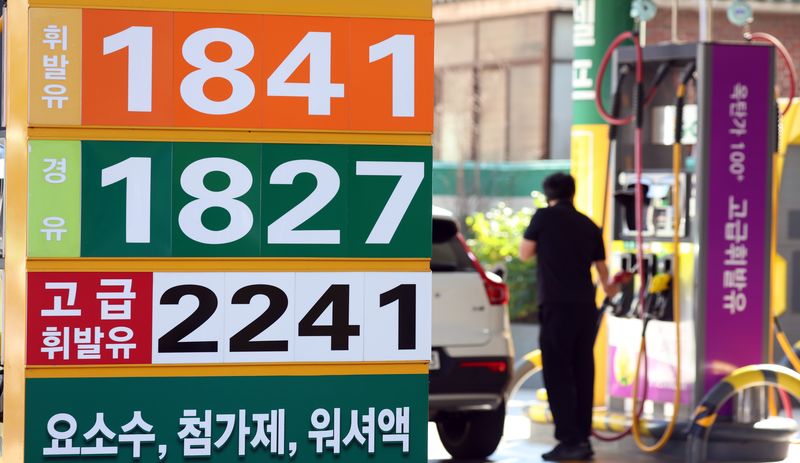
According to the Ministry of Trade, Industry and Energy on the 13th, the government will set the 11th oil price cap on the 16th. The current ceilings on refiners’ supply prices are 1,784 won per liter for gasoline, 1,773 won for diesel and 1,380 won for kerosene. They have been frozen for four consecutive decisions since the seventh. Attention is focused on whether the freeze will continue this time.
Earlier, Bank of Korea Governor Shin Hyun-song said at a parliamentary audit on the 12th that the oil price cap system had lowered the pace of inflation by 0.6 percentage points. He explained that it had continued at a sustainable level because it involved fiscal spending, and that it had the advantage of preventing secondary effects in advance.
However, he cautioned against keeping price controls in place for too long. Governor Shin stressed that price controls can cushion the initial inflation shock in the short term and block its pass-through into costs or core inflation, but should not be maintained over the long term and should instead be temporary.
Despite high oil prices, the increase in domestic petroleum product prices has been relatively limited. According to a briefing by the Ministry of Trade, Industry and Energy’s Middle East War Response Headquarters, Brent crude rose to $106.12 a barrel, up 46.4% from February 27 this year, before the Middle East war. By contrast, the average retail price of gasoline at domestic gas stations rose just 9.69% over the same period, from 1,692.58 won to 1,856.66 won per liter.
Crude oil supply is also relatively stable. The Ministry of Trade, Industry and Energy said it was securing crude oil imports for October and November at least 100% of the average for the previous year. It has also secured at least 100% of October’s naphtha demand, while the volume for November is at 100% of demand. The main challenges, then, are not immediate shortages but high import prices and the burden of domestic price controls.
The key issue is the funding needed to compensate refiners for their losses. When the system was introduced, the government set aside 4.2 trillion won in contingency funds for compensation. It initially estimated losses for the second and third quarters at about 2.76 trillion won and also allocated funds to prepare for a possible surge in global oil prices. The refining industry, however, estimates that compensation could reach 7 trillion to 8 trillion won.
Although the calculation criteria and covered periods may differ, the longer the price cap remains in place, the greater the fiscal burden will inevitably become. The Ministry of Trade, Industry and Energy plans to finalize settlement prices by the end of November after review by a settlement committee, and then pay compensation. The government faces a choice: raising the cap would increase the burden on consumers, while continuing the freeze would add to compensation costs. With high oil prices persisting, it is also difficult to devise an exit strategy.
When the 10th price cap was announced, Yang Gi-uk, head of the Ministry of Trade, Industry and Energy’s Industry and Resources Security Office, said, “The principle of pursuing an exit strategy when passage through the Strait of Hormuz becomes smooth and oil prices fall to a certain level or below remains unchanged.” He added, “The situation is lasting longer than expected, so we are continuing to consider how we should pursue an exit strategy.” The ministry maintains the same position. It plans to decide whether to adjust the cap by taking into comprehensive consideration the national economy, supply-and-demand conditions, international oil prices and other factors.
[email protected] Park Ji-young Reporter