The tragedy of 6,000-won soju bottles: Beer pubs close en masse
- Input
- 2026-10-14 08:35:18
- Updated
- 2026-10-14 08:35:18
[Financial News] As high prices drive more people to drink alone, the number of beer pubs has fallen below 20,000 for the first time since records began. The shift since COVID-19 from company dinners that used to run through second and third rounds to a more casual culture of having just one round has also dealt a direct blow.
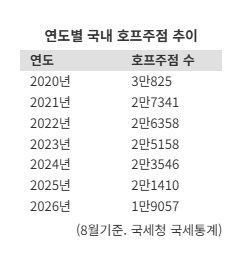
On the 14th, National Tax Service tax statistics showed that there were 19,057 beer pubs in South Korea as of August this year. It was the first time the figure had fallen below 20,000 since the relevant statistics began being compiled, based on August figures. That was 2,353 (11.0%) fewer than the 21,410 recorded in the same period last year.
The number of beer pubs in South Korea, based on August figures, has steadily declined: 30,825 in 2020, 27,341 in 2021, 26,358 in 2022, 25,158 in 2023 and 23,546 in 2024. After falling by around 1,000 a year, the number has plunged by more than 2,000 annually over the past two years, accelerating the decline.
The main factors cited for the sharp drop in beer pubs are the economic slowdown and reduced alcohol consumption. With domestic demand sluggish and their wallets thinner, consumers cut back on entertainment spending first. Domestic alcoholic beverage shipments stood at 3,268,623 kL in 2022, 3,237,036 kL in 2023, 3,151,371 kL in 2024 and 2,987,000 kL in 2025, the lowest level on record since statistics began in 2006.
Rising labor costs and rents have been passed directly on to drink prices, further discouraging people from visiting bars. With a bottle of soju costing more than 6,000 won and the total well over 30,000 won once food is added becoming the norm, even a casual drinking session has become more expensive to get into.
The disappearance of group dinners since COVID-19 and the “healthy pleasure” trend of managing one’s health in an enjoyable way have also accelerated the decline in alcohol consumption. Unlike the past, when people passed around bomb shots, a “non-drinking society” in which young people look after their health and drink less is becoming mainstream. According to a trend report released by NH NongHyup Bank in January this year, spending at drinking establishments by people in their 20s fell 20.9% last year compared with the previous year, while spending by those in their 30s dropped 15.5%.
A bar owner identified only as Kim, who runs a drinking establishment in Wangsimni, Seoul, lamented, “The streets used to be bustling until midnight, but these days they’re quiet even just after 9 p.m. There are a few people at bars where you can casually enjoy cocktails or wine, unlike at beer pubs where people drink to excess.”
By contrast, alcohol consumption through retail channels such as big-box stores and convenience stores is on the rise. As consumers increasingly value the experience of drinking something good, even if they have just one glass, more people are enjoying premium alcoholic beverages at home—the so-called solo drinkers. In the first half of this year, Lotte Mart’s spirits sales rose 2.3% year over year, while whiskey sales increased 13.6% and Japanese whiskey sales 12.6%. Across the market, growth in premium alcoholic beverages is clear, with imports of Japanese beer surging by an annual average of 72% since COVID-19.
Lee Young-ae, a professor in the Department of Consumer Studies at Incheon National University, added, “Self-employed business owners who managed to stay afloat with various forms of support during COVID-19 are being pushed to the brink and closing their businesses. The wider range of choices available to consumers, including the option of enjoying different kinds of alcoholic beverages at home, also seems to be having a significant impact.”
[email protected] Park Gyeong-ho Reporter