SMEs Minister: “Beyond production automation, AI must also help make on-site decisions”
- Input
- 2026-10-13 15:04:47
- Updated
- 2026-10-13 15:04:47
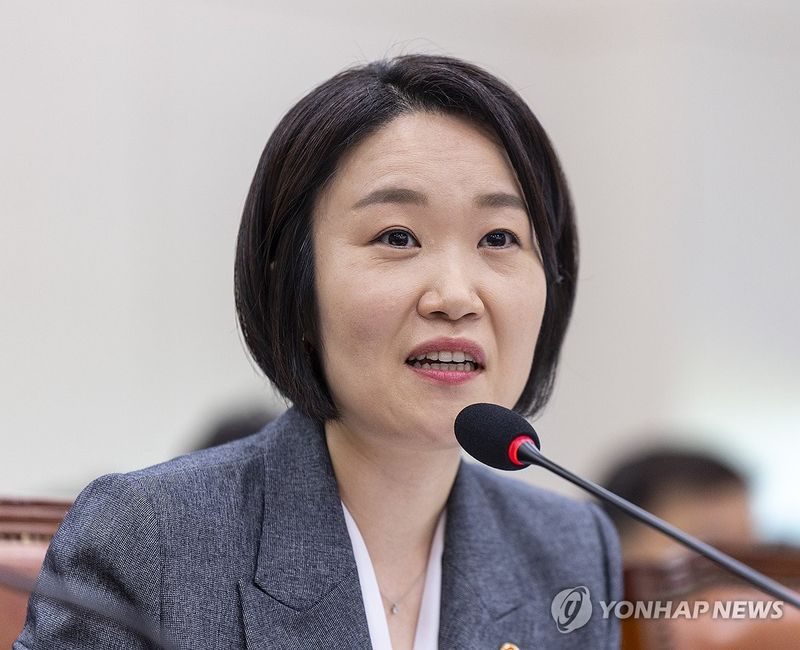
At the opening ceremony of the “2026 Smart Biz Expo” at COEX in Samseong-dong, Seoul, on the 13th, the minister said, “In this era of sweeping AI transformation, smart factories, too, must now move beyond production automation and take the next step toward manufacturing AI innovation, where AI helps with on-site decision-making and fundamentally boosts manufacturing competitiveness.”
The Smart Biz Expo was organized by MSS, the Korea Federation of SMEs, and Samsung Electronics to showcase outstanding products and technologies from SMEs whose smart-factory construction they supported, and to help expand their market opportunities. At the event, which runs through the 16th, 53 SMEs involved in building smart factories are showcasing their products and technologies.
A total of 37 companies are participating in the general exhibition area for household goods, industrial products, and machinery and equipment; six in the AI pavilion; and 10 in the Win-Win Market. The AI pavilion will feature AI solutions already in use at manufacturing sites and models of production processes.
Since introducing its mutually beneficial smart-factory program for large and small companies in 2018, MSS has supported the establishment of smart factories at about 6,800 SMEs in partnership with about 60 large corporations and public enterprises.
The minister said, “The biggest challenge facing our economy is polarization,” adding, “To narrow the gap between large corporations and SMEs and ensure the benefits of growth reach the front lines, large corporations must share their capital and manufacturing innovation know-how with SMEs so that they can strengthen their competitiveness together.”
The minister later visited Diphams Tech, an SME manufacturer in Gunpo, Gyeonggi Province, to see how AI technology is being applied on the production line. Diphams Tech manufactures and exports automotive parts, semiconductor sockets, and camera components using its ultra-precision mold-making technology. It improved its processes so that AI trained on photographs of fingernail-sized optical components—captured at a rate of 20 to 40 images per second—could take over product sorting, thereby increasing equipment utilization.
The minister said, “I will develop support policies to ensure that the results of national strategic projects, including physical AI, reach SMEs, enabling them to take their place as confident leading players.”
[email protected] Kim Hyeon-cheol Reporter