LG Innotek President Moon Hyuk-soo: “Expanding long-term FC-BGA contracts with big tech; glass substrates to be supplied in 2028”
- Input
- 2026-10-13 15:14:12
- Updated
- 2026-10-13 15:14:12
[Financial News] LG Innotek is stepping up efforts to strengthen its flip-chip ball grid array (FC-BGA) business by expanding long-term supply agreements (LTAs) with global big tech companies. It is also developing next-generation semiconductor substrates known as “glass substrates,” with a pilot production line in operation and supply targeted for 2028.
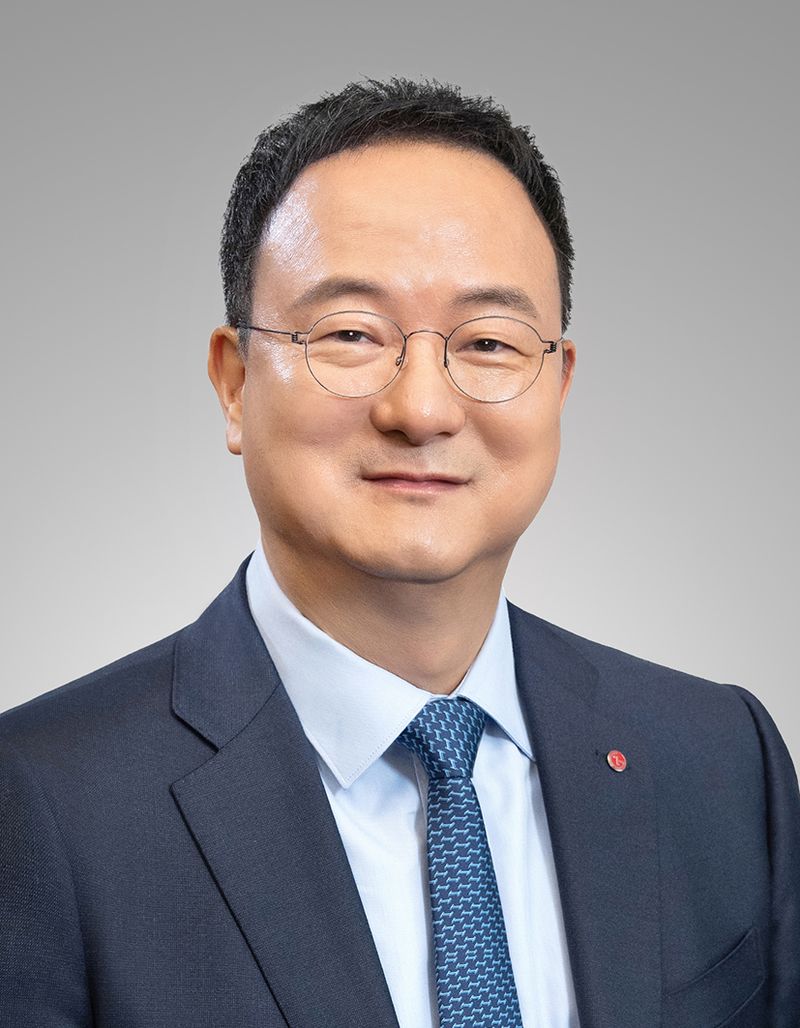
On the 13th, LG Innotek President Moon Hyuk-soo met with reporters at the Korea Electronics Show (KES 2026), held at COEX in Seoul’s Gangnam District, and discussed the status of the FC-BGA business. “We continue to sign LTAs, and expect things to improve starting next year,” he said. Asked about customers with which the company had signed long-term supply agreements, he declined to name them, saying, “They’re companies you would all know.”
FC-BGA is a high-value-added package substrate that connects high-performance semiconductors, such as central processing units (CPUs) and graphics processing units (GPUs), to mainboards. Demand for these high-density, high-performance substrates is also growing as investment in AI servers and data centers expands.
Since announcing its entry into the FC-BGA business in 2022, LG Innotek has expanded its operations by building a production line at its Gumi facility. Recently, it has broadened its business from CPU substrates for PCs to substrates for AI server networking and for AI training and inference, increasing the share of high-value-added products. It is also focused on securing mid- to long-term demand and improving production efficiency through long-term supply agreements with global customers.
The company is also accelerating development of next-generation glass substrates for semiconductors. Glass substrates replace the plastic material used in conventional semiconductor package substrates with glass. They are thin and have a smooth surface, which can minimize circuit distortion. They are drawing attention as a potential way to ease bottlenecks in AI semiconductors by improving data processing speed, power efficiency and heat dissipation. However, glass can crack or break easily, and thousands of tiny holes must be drilled and circuits connected, making the manufacturing process highly complex—a challenge that remains to be overcome.
Since formally announcing its entry into the semiconductor glass substrate business in 2024, LG Innotek has pursued technology development and the establishment of production capabilities. It is currently developing products at a pilot production line in operation at its Gumi facility. Asked when glass substrates might be supplied, Moon said, “I think it will be possible around 2028.” He added, “We have built and are operating a pilot line in Gumi,” and said, “We’re not at the supply stage yet; we’re still in development.”
Moon’s remarks reaffirmed the previously announced target of beginning mass production in 2028. Securing customers and completing the technology needed for mass production are expected to be key to expanding the business going forward.
On robotics-related businesses, Moon declined to elaborate, saying, “We are currently at the R&D stage,” and adding, “That’s how robotics should be viewed around the world.” His remarks suggest that the robotics industry as a whole is still at a stage of developing its technology and assessing its potential for commercialization.
[email protected] Im Su-bin Reporter