Gwangju University selected as a 'Leading University for Regional Specialization' under an Education Ministry initiative... to train talent in care and safety
- Input
- 2026-10-13 14:47:06
- Updated
- 2026-10-13 14:47:06
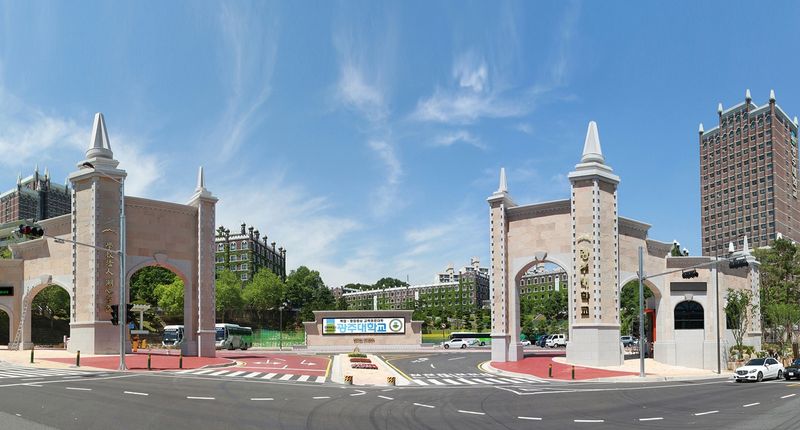
【Financial News, Jeonnam-Gwangju: Hwang Tae-jong, reporter】Gwangju University has been selected as a 'Leading University for Regional Specialization' under an Education Ministry initiative and will establish a system to train talent combining care and safety. In particular, it will establish the Wellbeing Care College and Safety College in 2028.
According to Gwangju University on the 13th, it was included among the 33 institutions selected by the Education Ministry for the 2026 project to foster leading universities for regional specialization (FIRST)—16 four-year universities and 17 junior colleges.
The Education Ministry plans to provide a total of 600 billion won for the project through 2030. This year, funding for four-year universities totals 85 billion won, averaging about 5 billion won per university for the 16 institutions, including Gwangju University.
With its selection for the project, Gwangju University plans to designate 'Human Life (Care & Safety)' as its core area of specialization and establish a system to train talent combining care and safety.
In particular, the university plans to strengthen its competitiveness in specialized fields by linking the education and research capabilities it has built up in care-related fields, such as social welfare, psychology and nursing, with those in safety-related fields, such as policing, firefighting and emergency medical services.
A Gwangju University official stressed, “We will establish an education system centered on student growth that progresses from foundational AI education to interdisciplinary major courses, core competency certification and field training, and train interdisciplinary talent with expertise in care and safety.”
Gwangju University plans to establish the Wellbeing Care College and Safety College in 2028 and reorganize its current academic structure. The plan is to strengthen expertise in its specialized fields, promote connections and collaboration across disciplines, and build an academic system that can respond flexibly to social needs and changes in the industrial environment.
The university also plans a comprehensive overhaul of its curriculum, focusing on interdisciplinary AI capabilities and practical skills for the workplace. First, its general education program will offer the four-year 'AI-X Course Ladder,' starting with 'AI Makers' in the first year and progressively advancing students’ learning through AI ethics, data use and interdisciplinary projects. This will enable all students, regardless of their major, to systematically develop skills ranging from basic AI literacy to the ability to apply AI in their majors and professional fields.
'Major education' will be reorganized to improve the efficiency of curriculum delivery by consolidating similar and overlapping courses, while strengthening both major-specific expertise and interdisciplinary capabilities.
In particular, the newly established Wellbeing Care College and Safety College will jointly develop and offer interdisciplinary courses in care and safety. The university plans to make the curriculum more flexible and expand student choice, allowing students to take relevant courses across the boundaries of their own majors.
The university will also introduce the 'Life Skill Up Competency Certification System' to systematically track students’ learning outcomes and support the development of practical skills. The aim is to assess and certify learning outcomes accumulated through curricular and extracurricular programs against eight core competencies, and issue a 'Graduation Guarantee Certificate' to students who meet all certification criteria, enabling them to demonstrate specifically the capabilities they have gained through their university education.
Gwangju University will also strengthen hands-on education by introducing 'Co-op,' an eight-week paid field placement program for third-year students. The program is intended to strengthen ties between university education and industry and expand the foundation for training practice-ready talent by helping students apply their major-related knowledge and practical skills in real-world industries and workplaces, and improve their understanding of jobs and ability to adapt to the workplace.
A Gwangju University official said, “By linking curriculum innovation with the restructuring of our academic system, we will improve students’ employment competitiveness and grow into a specialized university that responds to the needs of the local community and industry.”
[email protected] Hwang Tae-jong Reporter