Gangnam District finalizes 67 pledges for its ninth popularly elected term, including reconstruction and transport improvements
- Input
- 2026-10-13 14:28:48
- Updated
- 2026-10-13 14:28:48
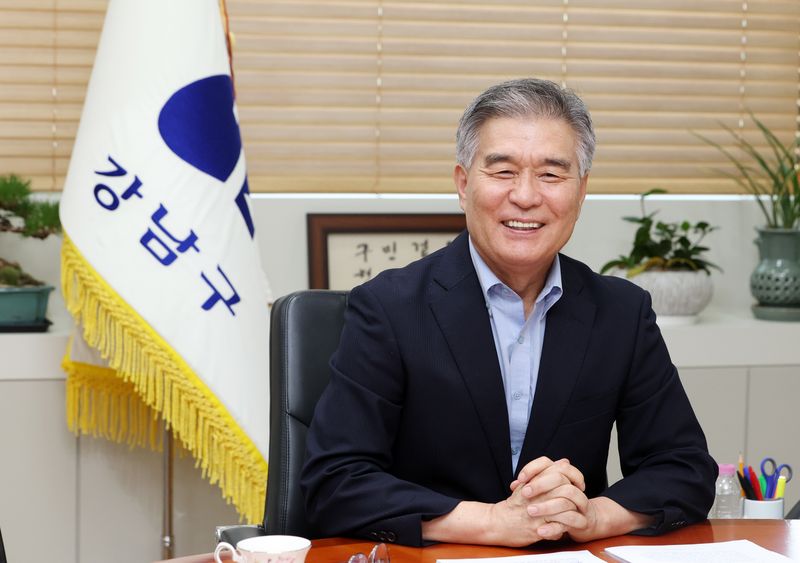
Gangnam District said on the 13th that it had held a pledge briefing on the 12th at the Yangjaecheon Riverside Cultural Rest Area under the theme “100 Days of Listening, Four Years of Promises,” and announced 67 projects across five key areas to be pursued over the next four years. Mayor Kim Hyun-ki (Photo) personally explained the 67 pledges and their main implementation plans and exchanged views with residents.
The pledges were finalized last month after review by the transition committee, consultations with relevant departments and a survey of residents’ preferences. By area, they comprise 19 for “a city that is good to live in,” 10 for “a city where opportunities grow,” 15 for “a city to learn and enjoy,” 16 for “a city to enjoy together” and seven for “a city where people can feel at ease.”
In housing and transport, the focus is on speeding up reconstruction projects and alleviating parking shortages and traffic congestion. The plans include expediting reconstruction, securing underground public parking beneath neighborhood parks, and improving traffic systems around Gaepo Complex 1, Yeongdong-daero and Severance Hospital. The district will also pursue a “Gangnam-style compact city” centered on areas around transit stations and pilot the operation of future transport networks, including urban air mobility (UAM).
In the economic sector, the district is putting forward plans to attract new AI industries, support venture companies and startups, and develop an innovative city for the robotics industry. Plans for education and culture include establishing an AI education academy center for people ranging from young adults to older residents, attracting a K-content multi-purpose performance venue, and expanding community sports facilities.
The district will also support housing costs for newlyweds and young people, build a smart integrated care system, and identify gaps in welfare services. The pledges also include establishing a tax response system to protect property and residential rights, pursuing the easing of regulations in land transaction permit zones, and building an AI CCTV crime-prevention system.
The resident survey showed particular concern about housing and transport issues. In a survey of 3,219 residents conducted by Gangnam District from August 25 to September 9, housing (51.4%) and transport (50.7%) were the most frequently cited as important policy areas for Gangnam’s future development. They were followed by the economy and jobs (41.7%), education and the environment (39.8%), and the city and safety (39.7%).
Among specific policies, the Gangnam-style tax response system to protect property and residential rights drew strong support, with a preference rating of 72.1%. Residents also showed interest in expanding cultural and leisure facilities (48.3%), identifying gaps in welfare services (46.3%), and developing compact cities around transit stations (44.3%). Overall, 91.9% of respondents said the policy direction for the ninth popularly elected term was appropriate.
The district plans to regularly disclose progress on the pledges to improve their effectiveness. It will draw up implementation plans for each project by this December and post them on its website, then review progress quarterly from January next year through June 2030. External evaluations of pledge implementation and deliberations by a residents’ jury panel will also be conducted.
Gangnam District Mayor Kim Hyun-ki said, “Over the past 100 days, we have listened to residents and reviewed whether the projects are feasible, making concrete the promises we will pursue over the next four years.” He added, “We will transparently disclose the implementation process and results so residents can feel the changes in their daily lives.”
[email protected] Lee Seol-young Reporter