'All-out push to expand housing supply': Government defers equity-capital rules for residential real estate PF for two years
- Input
- 2026-10-13 14:09:28
- Updated
- 2026-10-13 14:09:28
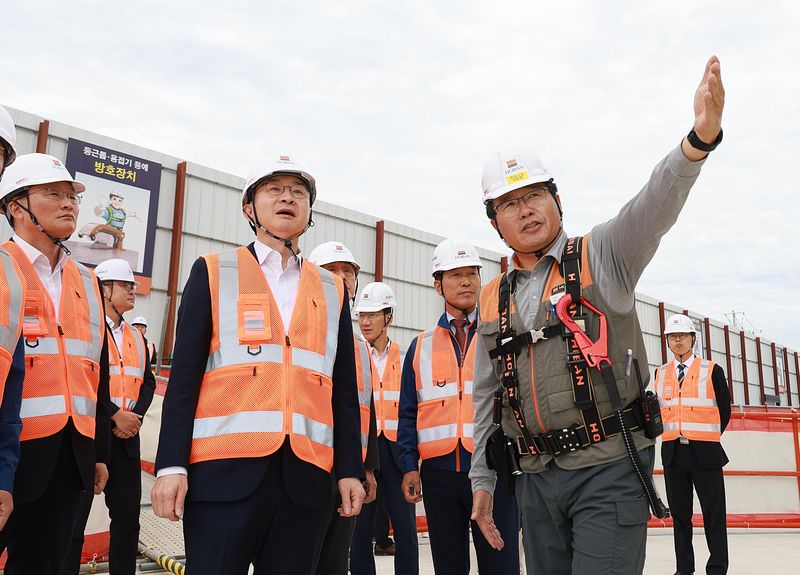
Related agencies, including the Financial Services Commission (FSC), the Financial Supervisory Service, the Ministry of Economy and Finance, and the Ministry of Land, Infrastructure and Transport, held a meeting at Government Complex Seoul on the 13th to review the real estate PF situation and financial support measures to promote housing supply. They examined trends in real estate PF exposure and delinquency rates, among other issues, and discussed financial support measures to boost housing supply. The government plans to counter rising property prices by expanding the housing supply. Earlier, FSC Chairman Lee Eok-won said at a National Assembly audit by the National Policy Committee on the 8th, “I will focus policy efforts on rapidly increasing housing supply to stabilize the market.”
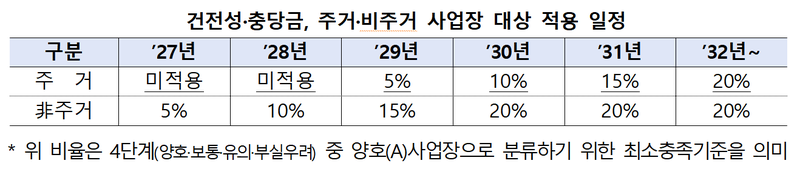
According to the FSC, for residential projects, implementation of the PF equity-ratio regulations and related rules on prudential standards and provisions, loan requirements, and risk-weight adjustments will be deferred for two years. The phased increase in the PF equity ratio for residential projects will begin in 2029. Nonresidential projects, however, will be subject to the PF equity-ratio regulations from 2027 as originally planned, and PF limit rules and industry-specific prudential regulations will also take effect as scheduled.
The risk-weight adjustment plan applies differentiated risk weights to projects that meet the 20% equity-ratio threshold. For nonresidential projects, it will be introduced at 20% starting in 2027, while for residential projects it will start at 5% in 2029 and rise in stages by 5 percentage points. However, the system will be introduced from 2027 to allow banks and securities firms to receive lower risk weights in 2027–2028 as well, provided they meet the 5% equity-ratio threshold. The FSC emphasized that it had “provided a clear incentive for the financial sector to support residential projects with funding.” Housing guarantees and fund formation by related public corporations are also gathering pace. The Korea Housing Finance Corporation approved PF guarantees worth 704.9 billion won in September, more than the 621.7 billion won approved in September last year and more than three times last year's monthly average of 228.2 billion won. KAMCO is also preparing a call for asset managers and detailed operating guidelines to support new investments in the first KAMCO Fund and to create new KAMCO funds.
The government said, “New funds are being supplied smoothly, particularly to projects with sound business prospects and a high level of progress.”
According to the FSC, new PF lending in the second quarter totaled 23.5 trillion won, up 6.7 trillion won from the end of the previous quarter. The outstanding balance of PF loans was 115.8 trillion won, increasing for the first time since the end of 2023, when it stood at 135.6 trillion won. At the end of June, PF exposure (risk exposure) was 168.8 trillion won, down by about 1 trillion won from the previous quarter. The decline has continued since the end of 2023, when it stood at 231.1 trillion won. By the end of June, 19.7 trillion won in projects requiring attention or considered at risk of insolvency had been resolved or restructured. Soundness indicators also improved, with the PF nonperforming-loan ratio falling by 10.0 percentage points and the PF delinquency rate by 7.3 percentage points. The financial sector's PF loan delinquency rate was 4.56%, down 0.09 percentage points from the end of March, the previous quarter. It nevertheless remained above the 3.88% recorded at the end of last year.
Since September, financial authorities have pursued close monitoring to promote housing supply, including assigning a manager to each of 279 residential projects in regulated areas of the Seoul metropolitan region. The PF and Construction Company Financial Difficulties Relief Center, operated by the Financial Supervisory Service and the Korea Development Bank since September 1, had received 47 cases of financial difficulties as of October 2. Consultations and reviews had been completed for 27 of them, while 20 had been referred to the responsible agencies. Financial authorities said that once the pan-government Integrated Housing Supply Support Center, now being prepared for launch, is established, it will support housing supply through close monitoring of individual projects.
The meeting, chaired by FSC Secretary General Shin Jin-chang, was attended by officials from the Ministry of Economy and Finance, the Ministry of Land, Infrastructure and Transport, the Bank of Korea, the Financial Supervisory Service, the Korea Housing Finance Corporation, the Korea Asset Management Corporation (KAMCO), the Korea Federation of Banks (KFB), the Korea Financial Investment Association, the Credit Finance Association, the Korea Construction Association, the Korea Housing Association, and Shinhan and Hana banks, among others.
[email protected] Jo Eun-hyo Reporter