“They came in and searched without consent”... Employer’s acquittal final after immigration raid ruled unlawful
- Input
- 2026-10-13 13:31:01
- Updated
- 2026-10-13 13:31:01
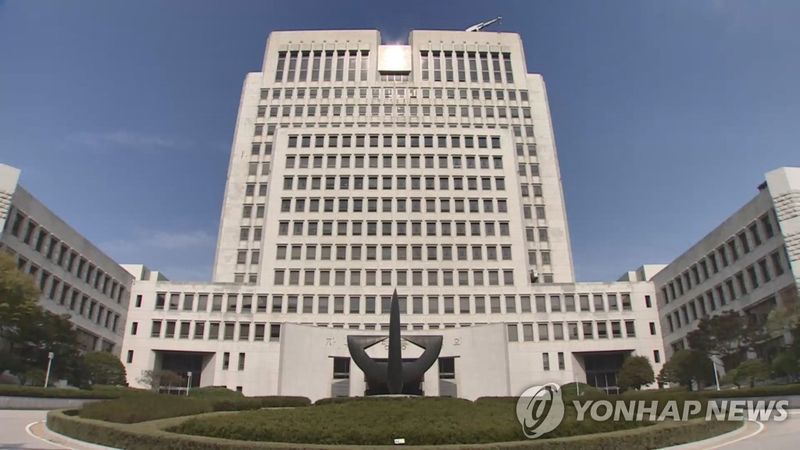
According to legal sources on the 13th, the Supreme Court’s Second Division, with Justice Eom Sang-pil as the justice in charge, finalized on the 10th of last month the lower court’s acquittal of A, who had been indicted for violating the Immigration Act, and dismissed the prosecution’s appeal.
A was indicted on suspicion of employing three Thai nationals as staff at a massage parlor in Mokpo, South Jeolla Province, from July 20 to August 16, 2023, despite their lacking residence status that permitted them to work. They had entered under a visa-free status, and two of them had also overstayed their authorized period of stay.
On August 14, 2023, the Gwangju Immigration and Foreigners Office received reports of illegal stay, illegal employment and prostitution, and two days later sent nine staff members to the business. While one spoke with A at the counter, the other eight went inside and stood outside the massage-room doors. A immediately protested, in effect, “You didn’t even ask for my consent or permission beforehand, and now you’re coming in and searching as you please?” The investigation continued nonetheless. The officials knocked on the doors and had only the foreign nationals come out, then checked their immigration and work eligibility. Starting the next day, they summoned and questioned the foreign employees, the person listed as the representative, and A, one after another, before filing a complaint.
The issues were whether entering and investigating the business without the manager’s consent was unlawful and, if so, whether the evidence obtained at the time and statements later taken during questioning after summonses could be used at trial.
The first- and second-instance courts reached opposite conclusions. In May last year, the Mokpo Branch of the Gwangju District Court, the trial court, found the raid lawful and sentenced A to four months in prison, suspended for two years. It reasoned that the parlor’s main area was open to an unspecified number of people during business hours, that the officials had entered in an ordinary manner, and that they had only knocked rather than entering the rooms. It also found that even if the raid had been unlawful, the statements obtained later in separate questioning after summonses were no longer connected to the initial illegality.
By contrast, in December last year, the Gwangju District Court overturned the trial court’s ruling and acquitted A. The panel cited a March 2009 Supreme Court ruling that “immigration officials and others must obtain the prior consent of the resident or manager to enter another person’s residence or a business where the general public is not permitted free access in order to question foreign nationals.” It further said that even in a place open to the public, a manager’s consent or permission is needed to conduct an administrative investigation. Despite A’s clearly stated objection, the officials entered, stood guard outside the rooms and made the foreign nationals come out; this amounted in effect to a search and was an unlawful exercise of official authority without a warrant.
The second-instance court ruled that not only the evidence obtained during the raid but also derivative evidence—including the complaint, raid report, records of statements by the foreign nationals and suspect interrogation records—could not be used. Derivative evidence is evidence obtained later using unlawfully collected evidence as a lead. The court reasoned that because the officials who conducted the raid also took part in the subsequent investigation, the initial illegality could not be considered diluted or severed. It concluded that the remaining evidence was insufficient to prove the charges.
The Supreme Court upheld the outcome as well. The panel explained that “although parts of the reasoning are inappropriate,” there was “no error affecting the judgment through a misunderstanding of the legal principles concerning investigative procedures under the Immigration Act, illegally obtained evidence, the admissibility of evidence and related matters.”
[email protected] Kim Dong-gyu Reporter