No urine bag even after bladder removal: How did neobladder surgery help a patient “graduate” from bladder cancer after 10 years?
- Input
- 2026-10-13 13:29:36
- Updated
- 2026-10-13 13:29:36
[Financial News] “I was very worried that I might have to wear a urine bag.”
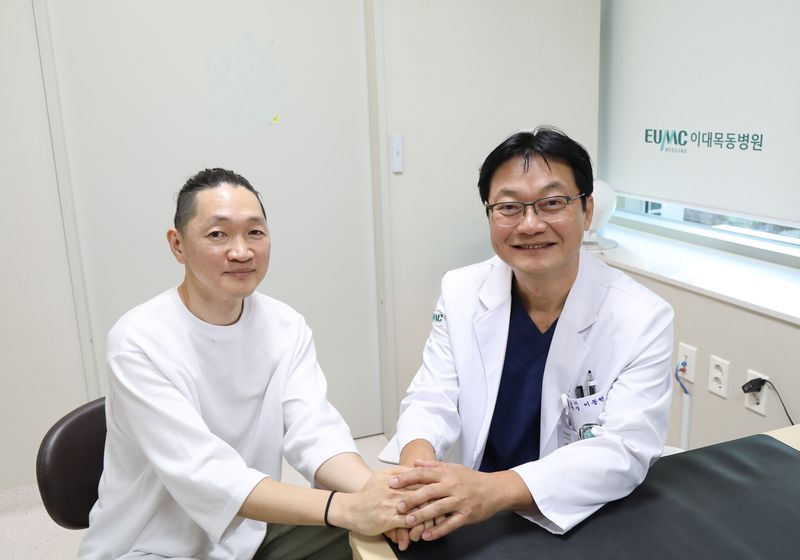
That was the greatest fear of Lee, 46, who was diagnosed with bladder cancer 10 years ago. But neobladder surgery allowed him to return to daily life without a urine bag. After completing about 10 years of follow-up with no recurrence, he was told on the 1st that he had “graduated” from bladder cancer.
According to Ewha Urology Hospital, Lee first noticed something was wrong in 2014. He went to a local hospital because he had blood in his urine, but was diagnosed with urethritis. His only symptom was some discomfort when using the bathroom, and since it did not significantly interfere with his daily life, he did not think much of it. During further tests in August the following year, he was diagnosed with bladder cancer. He was 36 at the time.
Diagnosed with cancer at a young age, Lee found the prospect of life after surgery more daunting than the cancer itself. He was deeply worried about how he would urinate and manage daily life in the future, and whether his quality of life would decline.
In December 2016, Lee underwent neobladder surgery performed by Professor Lee Dong-hyun, then head of the Neobladder Center and now director of Ewha Urology Hospital. Postoperative pathology confirmed that the cancer had invaded the bladder muscle and spread to the pelvic lymph nodes. Cancer was found in five of the 41 lymph nodes removed, so he received six rounds of chemotherapy to reduce the risk of recurrence.
“He was a relatively young patient, and given the extent of the cancer’s progression, aggressive treatment was necessary,” Professor Lee explained. At the same time, he focused on helping the patient continue daily life as much as possible after surgery.
Neobladder surgery involves removing the bladder and using part of the small intestine to create a new bladder, allowing the patient to urinate naturally. It is considered a treatment option that takes quality of life after surgery into account, since it can preserve urinary function without an external urine bag.
Another important consideration for the medical team was preserving Lee’s fertility. Given his young age, they also had to consider the possibility of marriage and having children in the future. At Professor Lee’s recommendation, Lee banked his sperm before treatment. He later married and had twins through in vitro fertilization.
Right after surgery, he sometimes felt soreness or a sensation that urine remained after urinating, but he is now living without any particular pain or complications. Lee has regularly visited the hospital for checks on his urinary and kidney function, among other things. As his health remained stable, his follow-up care came to an end. The medical team told him, “As of today, you’ve graduated from bladder cancer. You don’t need to come to the outpatient clinic anymore.”
Professor Lee has performed at least 200 neobladder surgeries a year. He has developed surgical techniques focused on patients’ recovery and quality of life, including reducing operating time from around eight hours to three to four hours and bloodless surgery that minimizes damage to nerves and blood vessels. Drawing on this experience, he founded Ewha Urology Hospital and serves as its director.
“Before I knew it, 10 years had passed. I now have two children and am living an ordinary life with my family,” Lee said. “I’m grateful to the medical team for taking my situation into account when deciding on a treatment plan and giving me a new life.”
“For young bladder cancer patients, it’s important to consider not only cancer treatment but also life after treatment,” Professor Lee emphasized. “Neobladder surgery also needs to be supported by long-term care so patients can adapt well to a new way of urinating and continue living healthy, everyday lives.”
[email protected] Jung Myung-jin, Medical Correspondent Reporter