NTT plans Japan’s first data center for Anthropic
- Input
- 2026-10-13 14:06:53
- Updated
- 2026-10-13 14:06:53
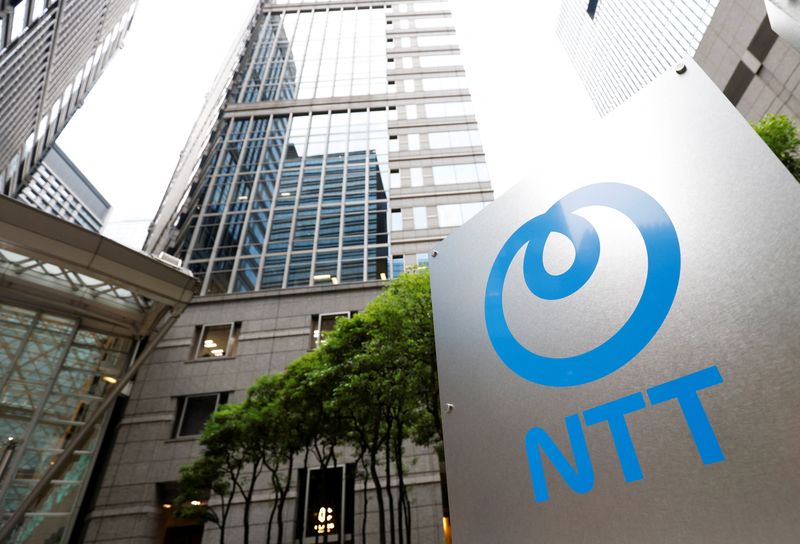
【Financial News, Tokyo—Correspondent Seo Hye-jin】 Japan’s Nippon Telegraph and Telephone Corporation (NTT) has entered final discussions over building Japan’s first data center for U.S. artificial intelligence (AI) company Anthropic, the Nihon Keizai Shimbun (Nikkei) reported on the 13th. The facility would rank among Japan’s largest, with construction costs alone reaching up to 1 trillion yen (about 850 billion won). As competition to secure bases for AI development and operations in Asia gathers pace, Japan is seeking to attract large-scale investment.
According to Nikkei, NTT Data Group, an NTT subsidiary, is discussing plans with Anthropic to build a new data center in a coastal area in southern Osaka Prefecture. The goal is to sign a contract within fiscal 2026 and begin operating part of the facility as early as 2028.
The facility’s total power intake capacity—the maximum amount of electricity it can receive—is planned to reach up to 500 megawatts (MW). If large numbers of servers equipped with graphics processing units (GPUs) for AI computing are brought in, total investment is expected to far exceed construction costs. Both companies declined to comment on the reports, Nikkei said.
Osaka seeks to attract an AI hub as factories move out
Anthropic, which developed the generative AI system Claude, is considering building data centers in several Asian countries. If the project goes ahead, it would provide a foundation for developing and operating Anthropic’s advanced AI in Japan. NTT Data Group, the world’s third-largest data center operator by market share, aims to turn its experience building large-scale AI facilities in Japan into additional orders.
Osaka’s strengths are its available sites and power supply conditions. The Kansai region has more spare electricity supply capacity than the Tokyo metropolitan area, and grid connections take less time. Coastal industrial zones have many large factory sites that can readily be converted into large data centers. With about 60% of Japan’s data centers concentrated in the Tokyo metropolitan area, demand for distributing facilities among multiple locations to prepare for disasters is also helping attract investment.
KDDI and SoftBank Group Corp. are already developing data centers on the site of Sharp’s Sakai plant. Hong Kong-based ESR is also building three data center buildings on Sakishima, an artificial island in Osaka City.
As factory closures have mounted amid the decline of manufacturing, Osaka Prefecture has begun viewing data centers as a new investment destination and source of tax revenue. Osaka Prefecture and Osaka City, which are pushing for Osaka to be designated a secondary capital, are working to attract data centers and expand tax incentives to lay the groundwork for next-generation industries such as autonomous driving and smart cities.
Japan plans to expand data center capacity 4.5-fold... Power grid a key variable
Investment is expanding across Japan. A survey of 26 major operators by Nikkei last September found that 22 planned to expand their AI facilities in Japan. The total power intake capacity identified at the time is expected to grow about 4.5-fold, from 1.1 gigawatts (GW) at the end of 2025 to 4.9 GW by 2033.
Construction costs for the additional 3.8 GW were estimated at about 10 trillion yen (about 85 trillion won). Including servers and semiconductors, the investment total will be even higher.
NTT Group plans to increase its capacity to 2 GW in fiscal 2033, 6.7 times the level at the end of 2025. The expansion of major cloud providers’ businesses in Japan, including Microsoft and Amazon Web Services (AWS), is supporting the investment.
The key challenge is securing the electricity needed for actual operations. The additional capacity identified in a survey last month would require as much power as about four large nuclear power plants. In Japan, delays in upgrading the transmission grid have led to some facilities postponing operations even after construction is complete.
Because it will take time for the Osaka facility for Anthropic to receive 500 MW through the grid, alternative power sources, such as fuel cells, are being considered for the initial phase. Even in Kansai, where power supply conditions are better than in the Tokyo metropolitan area, additional infrastructure will be needed to operate large-scale AI facilities.
Kansai Transmission and Distribution plans to invest at least 150 billion yen (about 1.275 trillion won) in expanding substations and transmission lines.
However, it remains unclear whether the grid can handle rapidly growing demand from data centers. At a public-private council in Osaka Prefecture on the 9th, one proposal was for data center developers to invest directly in substations and transmission facilities. Nikkei noted that whether large-scale investment leads to facilities actually going into operation will depend on the pace of grid expansion.
[email protected] Seo Hye-jin Reporter