Mokdong’s First Project Implementation Approval Is ‘Just Around the Corner’—Could Relocation Be Brought Forward? “Possibly in Early 2028”
- Input
- 2026-10-13 15:40:28
- Updated
- 2026-10-13 15:40:28
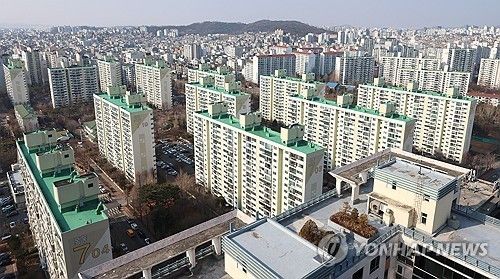
■ Leading Complex 6 could begin relocations in early 2028
According to the redevelopment industry on the 13th, Complex 6—the fastest-moving of Mokdong’s 14 complexes—will hold a general meeting on the 17th to seek project implementation approval. The association plans to approve the project implementation plan at the meeting and then submit an application for approval to Yangcheon District. Final approval is expected to be announced in November or December. With the detailed blueprint, including the complex’s layout and scale, set to be finalized, the project will get fully underway.
The industry is paying closest attention to when relocations will begin. That is because the 14 complexes will effectively undergo redevelopment at the same time, with a total of 26,629 households set to relocate. Against the backdrop of an acute rental crunch, calls for the complexes to stagger their schedules to avert a mass relocation crisis have also emerged. According to Asil, listings for jeonse and monthly rentals in neighboring Gangseo District rose 5.2% to 944 from 897 a year ago. But listings fell 50.1% in Guro District, from 769 to 384, and 12.9% in Yeongdeungpo District, from 1,092 to 952. The situation is similar in the Gyeonggi region, which borders Seoul. Listings plunged 79.3% in Gwangmyeong, Gyeonggi Province (3,165 to 656), and fell 38.2% in Ojeong District, Bucheon (603 to 373), and 38.2% in Wonmi District (603 to 373).
Under the Seoul Metropolitan Government’s schedule, residents of Mokdong Complex 6 are due to relocate in the second half of 2028, but people on the ground increasingly believe that the date could be brought forward. Recently, there has reportedly been a growing mood within the complex to consider beginning relocations in 2027 alongside the existing plan to “begin relocations in 2028.” An earlier move-out date would make it easier to coordinate timing with other complexes that follow, while further enhancing Complex 6’s symbolic status as the frontrunner. It could also reduce indirect financing costs and project expenses by shortening the overall project period. However, Hwang Hee-jung, head of the Mokdong Complex 6 association, said, “Residents can begin relocating only after management and disposal plan approval is completed and a guarantee is obtained from the Korea Housing and Urban Guarantee Corporation (HUG).” He added, “We believe relocations could begin as early as early to mid-2028.”
The Seoul Metropolitan Government and Yangcheon-gu Office are considering relocation measures from multiple angles. Yangcheon District, in particular, took early action by launching a research project last May on measures to stabilize relocation plans for the Mokdong apartment reconstruction. “We have completed a survey asking residents of the 14 complexes which areas they plan to move to, among other things, and are examining how much rental demand nearby areas can absorb,” a Yangcheon District official said. The study’s findings are expected in December.
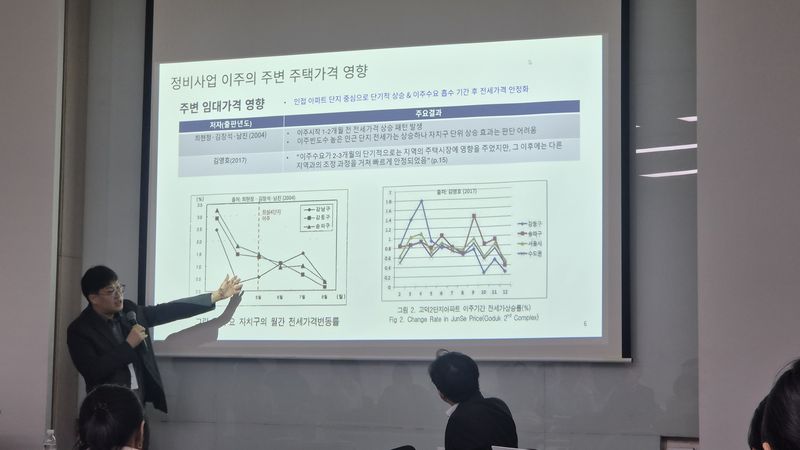
Meanwhile, the Korean Society of Urban and Real Estate Studies held a roundtable at Seoul City Hall in Jung District that afternoon on “Relocation Plans for Redevelopment Projects: What’s the Problem?” Experts agreed that slowing redevelopment projects to prevent a mass relocation crisis would be like burning down the house to catch a louse. Their view is that concerns about a relocation crisis could be eased by considering the rental market across the entire Seoul metropolitan area, not just Seoul.
There was also a rebuttal to claims by some that revitalizing redevelopment projects would drive up jeonse prices. Kim Jeong-seop, a professor at UNIST, said, “Looking at past relocation cases, nearby jeonse prices rose before relocations got underway in earnest, but stabilized three months later. Over time, prices followed a more stable trend than in other areas.” Jung Jae-hoon, a professor at Dankook University, warned, “If projects in various areas are delayed to slow the pace, supply shortages in five years will cause jeonse and monthly rents, as well as home sale prices, to surge together. Delays create a vicious cycle in which a massive cost burden and loss of momentum undermine project viability.” He added that the Third New Towns, including Goyang Changneung, could serve as ideal buffer zones for relocation.
[email protected] Jeon Min-kyung Reporter