Jeonnam-Gwangju Special City Office of Education to run preparation period for written-response and essay-based assessment through 2027
- Input
- 2026-10-13 13:04:12
- Updated
- 2026-10-13 13:04:12
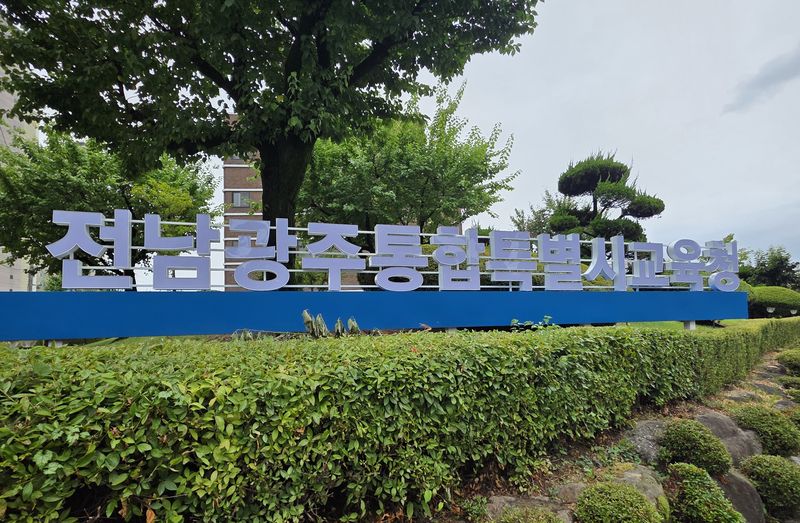
【Financial News, Jeonnam-Gwangju = Hwang Tae-jong】The Jeonnam-Gwangju Integrated Special City Office of Education (Gwangju Special City Office of Education) will run a preparation period for implementing written-response and essay-based assessment through 2027, reflecting the views of teachers and parents on its introduction.
It will also recruit lead teachers, a group of experts in written-response and essay-based assessment, and train a pool of instructors. It has also decided to operate pilot schools for the assessment in elementary and middle schools in 2027.
Superintendent of Education Kim Dae-jung said, “We will actively incorporate the views of teachers and parents expressed at public hearings and meetings on written-response and essay-based assessment, begin preparations for implementation next year, and expand it gradually, starting with the pilot schools.”
According to the Gwangju Special City Office of Education on the 13th, it has decided to develop a ‘Comprehensive Plan for Focused Classroom Support’ centered on three areas—△instruction and assessment △teacher support △administrative support—and provide close support to schools, as part of a major transformation of instruction and assessment to drive student learning and growth.
First, the ‘instruction and assessment’ area will pursue support for classroom instruction, the development of an artificial intelligence (AI) assessment system, and the establishment of a system to respond to complaints about assessments. The ‘teacher support’ area will focus on strengthening protections for educational activities, supporting teachers’ professional development, and reducing teachers’ instructional hours. The ‘administrative support’ area will focus on reducing teachers’ workload and introducing a system to assess the impact of education policies in schools.
It also plans to form a ‘Working Support Team for Written-Response and Essay-Based Assessment’ to develop high-quality assessment materials suited to the characteristics of each subject and lay the groundwork for the transition, starting with the pilot schools.
Earlier, on September 1, the Gwangju Special City Office of Education established the Curriculum Development and Assessment Team within the K-Education Integration Promotion Task Force, which is dedicated to advancing written-response and essay-based assessment. Over the course of a month, it listened to a range of views from the field through public hearings for teachers and parents (six sessions) and meetings with teachers’ organizations (five sessions).
The hearings built consensus on the purpose and need for introducing written-response and essay-based assessment, but also raised the need for further discussion about its timing, methods, and procedures.
Accordingly, the Gwangju Special City Office of Education decided to pursue written-response and essay-based assessment developed jointly by the education community, reflecting the views of teachers, parents, and teachers’ organizations. It will establish the foundation for implementation during the 2026–2027 preparation period.
It will also operate pilot schools for written-response and essay-based assessment in elementary and middle schools in 2027. In particular, schools may choose to offer it by grade or subject based on their preferences and autonomy, and may determine the proportion of assessment conducted in this format according to their own circumstances.
In addition, the education office plans to actively provide the participating schools with the funding and infrastructure needed to run the program and conduct research into the pilot schools’ results.
Superintendent Kim Dae-jung emphasized, “We will actively support written-response and essay-based assessment so that it drives a transformation in teaching, serves as a compass for education, and ultimately becomes central to an ‘educational transformation’ that realizes ‘local production and local consumption in education’—with talent nurtured in the region leading its future industries and settling back in the region.”
[email protected] Hwang Tae-jong Reporter