NATO’s Top Commander Says Alliance Is Ready to Fight Tonight, at a Moment’s Notice
- Input
- 2026-10-13 14:20:19
- Updated
- 2026-10-13 14:20:19
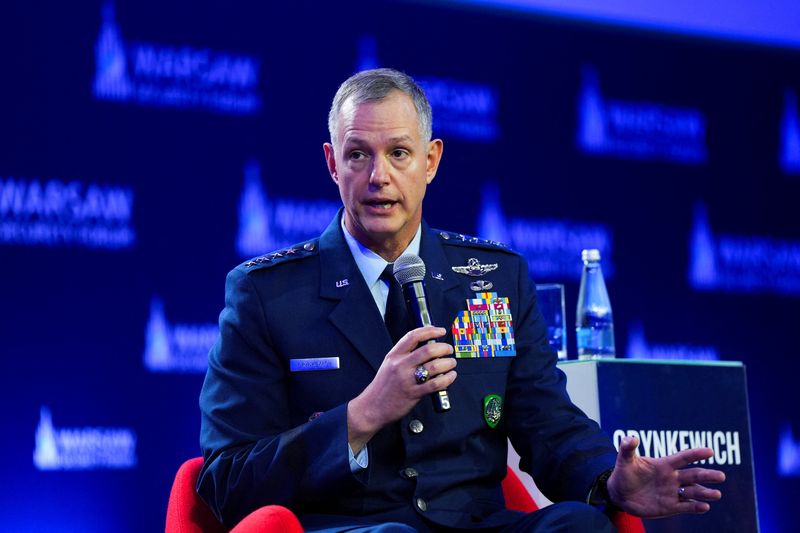
[Financial News] The top commander of NATO issued a strong warning about the possibility of Russian provocations.
NATO’s top commander, U.S. Air Force Gen. Alexus Grynkewich, attended the Warsaw Security Forum in Warsaw, Poland, on the 12th (local time), saying, “NATO is ready to fight tonight, right away, if attacked,” and signaling a firm resolve to respond.
The remarks came amid an intensification of Russian covert operations and hybrid attacks across Europe, as concerns were also raised about the possibility of future border incursions to test NATO’s defenses.
In a speech, Commander Grynkewich formally presented NATO’s so-called “Theory of Victory.” “Our theory of victory is simple,” he said. “We will stop an initial attack, and if it continues, neutralize it to prevent the enemy from advancing. If necessary, we will destroy not only the enemy’s forces but the entire system used to conduct operations against us.”
This means that targets would include not only forward assault units but also all the infrastructure and command structures that support, sustain and control them.
Commander Grynkewich, who did not mention Russia directly, said, “I do not currently see war as imminent or inevitable,” but added, “The most effective way to maintain peace is to prepare for war while keeping channels of dialogue open to resolve misunderstandings.”
According to Western officials, since Russia’s 2022 invasion of Ukraine, there have been at least 211 incidents of covert operations and acts of sabotage suspected of Russian involvement in Europe.
Last month alone, an arson incident occurred at a defense company in Estonia, while a plot to attack a Ukrainian aircraft with a drone at Leipzig Airport in Germany was foiled. In the United Kingdom, a plot by a citizen acting on a Russian spy’s instructions to sabotage a drone factory was uncovered.
In a recent assessment report, the Danish Defence Intelligence Service (DDIS) warned that “Russia could acquire Ukrainian-made drones and use them to attack Europe, thereby concealing its involvement.” Polish Prime Minister Donald Tusk also raised the possibility that Russia could disguise attacks as “mistakes” or “accidents” to undermine unity among NATO allies and weaken their willingness to provide support.
Despite Commander Grynkewich’s hard-line message that day, political and technical challenges within NATO remain.
U.S. President Donald Trump entered into a contract to import Russian diesel to lower fuel prices in the United States ahead of next month’s midterm elections, and mentioned reducing U.S. troops stationed in Europe, causing unease among allies. In response, Commander Grynkewich drew a clear line, saying, “The deployment of troops is a political decision, but the U.S. commitment to NATO should not be questioned.”
Drone incursions have continued in border areas of NATO member states. Last May, a drone entered the airspace over Vilnius, Lithuania’s capital, prompting an evacuation order for residents. Yet some member states continue to show weaknesses in integrating drone defense systems and conducting response exercises.
NATO spokesperson Colonel Martin O’Donnell said, “We are continuing to expand the deployment of ground sensors and counter-drone technology, and are in the process of building a comprehensive defense network.”
[email protected] Yoon Jae-jun Reporter