Heat-related illness cases fell 15%, but Jeju ranks third nationwide per capita
- Input
- 2026-10-13 10:34:41
- Updated
- 2026-10-13 10:34:41
【Financial News, Jeju = Reporter Jeong Yong-bok】 The number of people with heat-related illnesses in Jeju fell 15% this year from last year, but the number of reported cases relative to the population was the third-highest nationwide. Across the country, while heat-related illness cases declined, deaths among older people and cases occurring at home increased.
According to the results of the Korea Disease Control and Prevention Agency’s 2026 Heat-related Illness Emergency Room Surveillance System, 91 cases were reported in Jeju this year, down 16 (15.0%) from 107 last year, the agency said on the 13th.
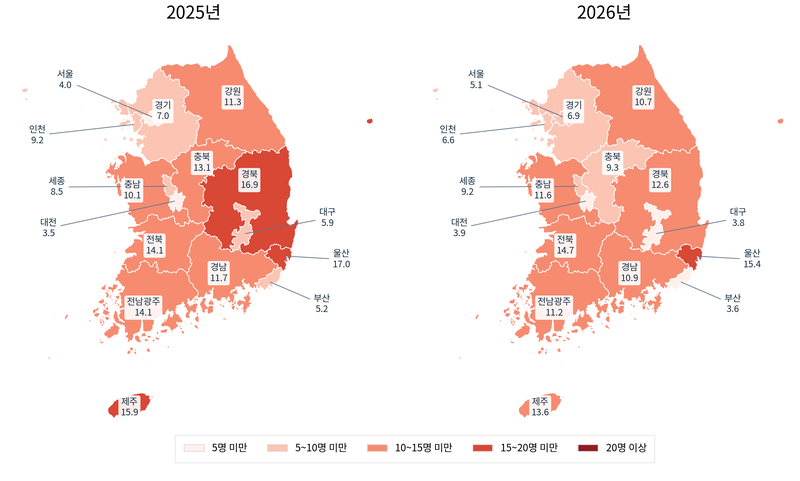
However, Jeju ranked third nationwide, with 13.6 reported cases per 100,000 people, behind Ulsan (15.4) and North Jeolla (14.7). The rate was higher than in North Gyeongsang (12.6) and South Chungcheong (11.6). Jeju accounted for just 2.2% of the 4,066 cases nationwide, but its reporting rate relative to population was among the highest in the country.
The statistics are reports to a surveillance system involving 516 emergency medical institutions nationwide from May 15 through September 30. Last year, 517 institutions participated, and the surveillance period ran from May 15 through September 25.
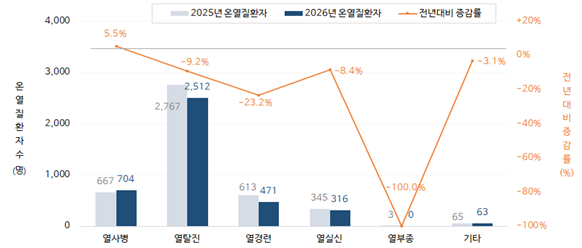
Nationwide, 4,066 cases of heat-related illness were reported this year, down 394 (8.8%) from 4,460 last year. However, estimated deaths from heat-related illness rose by 7 (24.1%), from 29 to 36. The total number of cases was the third-highest since the surveillance system began operating in 2011.
One estimated death from heat-related illness was also reported in Jeju. After a patient hospitalized with a heat-related illness on July 16 died on the 20th, Jeju Province strengthened its response to heatwaves, including activating Level 1 emergency operations at the Disaster and Safety Countermeasures Headquarters at least 15 days earlier than the previous year.
The most notable change in this year’s nationwide figures was the increase in harm among older people. The number of heat-related illness cases among people aged 65 and older rose by 80, from 1,341 last year to 1,421 this year. Their share of all cases also increased, from 30.1% to 34.9%. The age group with the most cases shifted from people in their 50s last year to those in their 60s this year.
Estimated deaths among people aged 80 and older rose from 10 last year to 17 this year. That was 47.2% of the 36 deaths overall. Estimated deaths among people under 80 remained at 19, the same as last year; all seven of the increase in deaths nationwide occurred among people aged 80 and older.
The locations where heatwave-related harm occurred also changed. Heat-related illness cases at outdoor workplaces nationwide fell 25.9%, from 1,431 last year to 1,060 this year. By contrast, cases at home rose 48.9%, from 237 to 353. Estimated deaths at home also increased, from three to 10.
The share of all heat-related illness cases that occurred indoors rose from 20.8% last year to 24.7% this year. While heatwave-related harm remains widespread at outdoor workplaces, homes have also emerged as a significant risk setting.
Heat-related illness is an acute health condition caused by prolonged exposure to high temperatures; heat exhaustion and heatstroke are among its main forms. Heat exhaustion occurs when heavy sweating leads to a loss of fluids and salts, causing symptoms such as dizziness and weakness. Heatstroke is a severe condition in which impaired temperature regulation can lead to altered consciousness and organ damage.
There were 704 cases of heatstroke nationwide this year, up from 667 last year. Heatstroke was classified as the cause of death for all 36 estimated fatalities.
In Jeju, addressing heatwaves while accounting for both an aging population and outdoor working conditions is emerging as a challenge.
According to the Jeju Island Population Policy Integrated Platform, the share of the island’s population aged 65 and older, including registered foreign residents, rose from 12.1% in 2010 to 19.4% in 2025. With industries involving extensive outdoor activity, such as agriculture and fisheries, construction, and tourism, alongside a growing older population, the need to consider both working and living environments is increasing.
In its heatwave response last July, Jeju Province deployed 8,589 disaster-response aides to check on around 156,600 vulnerable people, including older adults living alone, people with disabilities, and people working in agriculture and fisheries, and inspected the operations of 632 cooling shelters. It also pursued AI drone patrols over agricultural land in the mid-mountain areas, shelters for mobile workers, and protective measures for outdoor workers. Support for households unable to make sufficient use of cooling facilities, management of working hours for older farmers and fishers, and rest conditions for mobile workers are also areas that need review.
The Korea Disease Control and Prevention Agency plans to strengthen heatwave prevention measures based on this year’s results, taking into account older people’s living environments and access to care. Jeju, too, needs to examine patterns of illness among different high-risk groups and assess the effectiveness of existing protective measures, given its high rate of reported cases relative to population.
“With deaths among people aged 80 and older increasing, we need to take a close look at their living environments and care conditions,” said Im Seung-gwan, commissioner of the Korea Disease Control and Prevention Agency. “We will incorporate the identified patterns of heat-related illness into our prevention measures.”
[email protected] Jeong Yong-bok Reporter