“Preventing Overseas Leaks of Advanced Technologies”: NIS and Korean Patent Attorneys Association Launch Reporting Guidance Center
- Input
- 2026-10-13 10:56:40
- Updated
- 2026-10-13 10:56:40
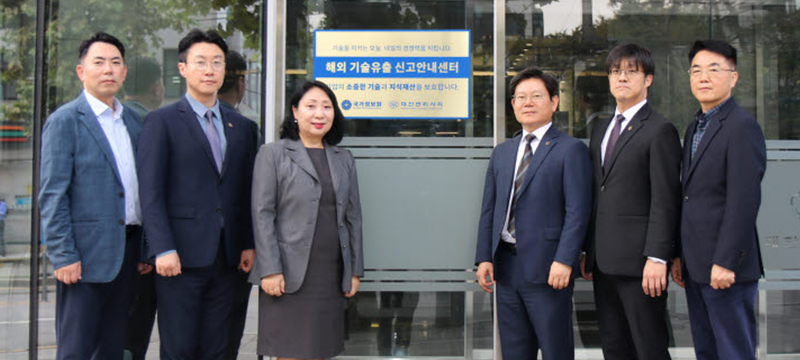
The Korean Patent Attorneys Association said it will begin operating the Overseas Technology Leakage Reporting Guidance Center, established in cooperation with the NIS, on its official website on the 13th. By combining the NIS’s technology security investigation capabilities, built up over about 20 years, with patent attorneys’ technical expertise, the center will be able to detect signs of technology leakage early and respond swiftly.
Private sector detects suspicious signs; government responds swiftly
Foreign espionage targeting the country’s advanced technologies has grown increasingly sophisticated. According to the 2026 Status of Overseas Leaks of Industrial Technologies, submitted to the National Assembly by the Ministry of Trade, Industry and Energy, the NIS detected a total of 107 cases of overseas industrial technology leakage from 2021 through 2025. The semiconductor sector accounted for the largest share, with 40 cases (about 37%), followed by display (21 cases) and electrical and electronics (10 cases). The tally also included 31 cases involving leaks of “national core technologies,” which have a significant impact on national security and the economy.
Expertise and a deep understanding of the technology in question are essential to preventing technology leaks and responding at an early stage. Patent attorneys are the professionals who work most closely with companies during the patent application and management process, and they are often the first people companies turn to for advice when signs of a technology leak emerge. The partnership is therefore expected to create practical synergies by connecting suspicious activity in the private sector with swift government investigations.
Protecting tipsters ... expanding cooperation
Under the partnership, the NIS will handle the receipt of reports and tips as well as investigations and responses, while the association will provide reporting guidance, advice on technology leakage, prevention training and publicity. The association’s website has been directly linked to the NIS’s 111 reporting system so that companies and research institutions can report suspected leaks immediately. Reports can be made by calling 111 (no area code required), texting #0111, emailing [email protected] or using the link on the website. Tipsters’ identities and the contents of their reports will be strictly protected in accordance with relevant laws.
The two sides plan to continue expanding cooperation to enable specialist patent attorneys in fields such as semiconductors, electronics, machinery, chemicals and biotech to provide technical advice. They will also jointly conduct prevention training for companies and patent attorneys on signs of suspected leaks, technology protection practices and initial response procedures.
“Advanced technologies are the future growth engine of the Republic of Korea and the core of its national competitiveness,” said Jeon Jong-hak, chair of the Korean Patent Attorneys Association. “We will put the expertise of patent attorneys, who have deeply understood technology and protected it through legal rights, to work for national technology security as well, safeguarding our companies’ technologies and the country’s future competitiveness.”
Early evidence gathering amid tougher damages and sentencing standards
Meanwhile, the new public-private cooperation framework is expected to have a major impact in conjunction with recent efforts led by the National Assembly and the government to amend the Industrial Technology Protection Act and the Patent Act. Penalties for technology leakage crimes have long been criticized as a “slap on the wrist,” but limits on damages and sentencing standards have recently been moving toward tougher measures. Analysts say that if experts’ early involvement makes it possible to secure evidence swiftly, that evidence could be crucial in imposing effective legal penalties on technology-leakage offenders and supporting damages claims by affected companies.
[email protected] Kim Won-jun Reporter