Nobel Prize-Winning “Expectation Management”... Warsh’s “Silence Strategy” Put to the Test
- Input
- 2026-10-13 09:56:30
- Updated
- 2026-10-13 09:56:30
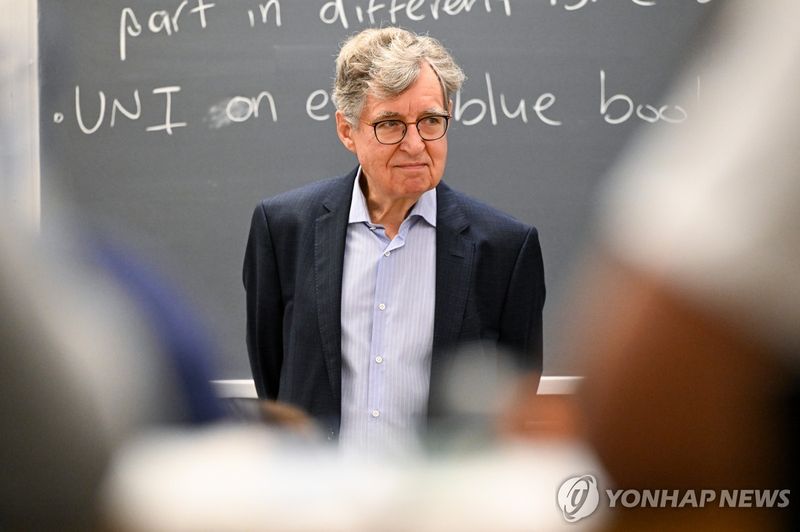
【Financial News, New York—Correspondent Lee Byung-chul】 Debate over how the U.S. Federal Reserve (Fed) communicates monetary policy has drawn renewed attention following this year’s Nobel Prize in Economic Sciences. Michael Woodford, a Columbia University professor who laid the theoretical foundations for the idea that a central bank can influence the economy simply by signaling the future direction of interest rates, was named a laureate. The award comes as Fed Chair Kevin Warsh is scaling back forward guidance.
Nobel Prize-Winning “Expectation Management”... Why Is Warsh Saying Less?
The Royal Swedish Academy of Sciences on the 12th (local time) named Professor Woodford and Stanford University Professor Robert Hall co-recipients of the Nobel Prize in Economic Sciences. Their recognized achievement was “microeconomic foundations of macroeconomic stabilization.” They were honored for developing a new Keynesian model that makes it possible to assess the effects of policies to stabilize the economy by starting from the choices made by households and businesses.
The Royal Swedish Academy explained that the two economists’ model reflects how households make decisions about consumption and saving while looking ahead. This means that how governments and central banks communicate policy can affect people’s expectations about the future. Woodford’s research focused on how a central bank can influence consumption and investment simply by signaling the future direction of interest rates, even without actually changing them. If it says it will keep rates low, households may increase consumption and businesses may expand investment.
Speaking to reporters by phone when the award was announced, Professor Woodford said traditional monetary policy tools had not been enough to support an economic recovery during the 2008 financial crisis. Interest rates were already at or near zero in many countries. Central banks introduced a new approach, communicating the future direction of rates more explicitly. Professor Woodford said the approach had helped stabilize the economy, adding, “It didn’t solve the problem like magic, but it was an important contribution.”
By contrast, Chair Warsh has reduced communication since taking office. After taking office in May, he said at his first Federal Open Market Committee (FOMC) press conference in June that forward guidance had been removed from the statement because it was not appropriate for the current policy environment. He also launched a task force to review Fed communications. Warsh’s position is that markets should respond to actual data rather than analyze the wording of the statement.
The problem is that markets’ expectations do not disappear just because a central bank says less.
A single remark from Warsh sends rate-hike odds soaring 20 percentage points
A case in point was the Jackson Hole Economic Policy Symposium in Wyoming on August 28. Warsh said, in effect, that the Fed should take further action if it was not confident inflation was falling fast enough toward its 2% target. He did not lay out a specific rate path.
According to the CME FedWatch Tool, the probability of an FOMC rate hike in September rose 20.3 percentage points, from 35.4% the previous day to 55.7%. The U.S. two-year Treasury yield rose 14 basis points (1 bp = 0.01 percentage point) to close at 4.34% that day, while the 10-year yield also climbed 5.6 basis points late in the session, to 4.728%.
Although Chair Warsh did not specify when rates might be raised, the market interpreted his remarks as a signal of tighter policy.
In fact, at its FOMC meeting on the 16th of last month, the Fed raised its benchmark rate by 0.25 percentage points to an annual range of 3.75% to 4.00%. It was the first increase since July 2023. The market had already priced in at least a 90% chance of a rate hike just before the meeting.
This shows that reduced Fed communication does not necessarily lead to market turmoil. Even without Chair Warsh setting out a specific rate path, markets anticipated the direction of policy based on inflation data, rising oil prices and other factors.
However, correctly anticipating one rate decision is not proof that forward guidance is unnecessary. Getting an imminent rate decision right and forming a stable outlook for the future direction of monetary policy are separate matters.
The Question Raised by the Nobel Prize... Explanation Matters More Than Silence
There are also voices within the Fed saying that a commitment in advance to future interest rates should be distinguished from explaining the principles behind policy decisions.
Beth Hammack, president of the Federal Reserve Bank of Cleveland, said at the National Association for Business Economics (NABE) annual meeting on the 12th, “I have a responsibility to explain to the public why I make those decisions.” She emphasized that explaining a policy reaction function is different from signaling a future rate path. A policy reaction function refers to the principles a central bank uses to determine how to adjust interest rates as economic conditions change.
It is difficult to interpret this award as criticism of Chair Warsh’s strategy of reducing communication. What the Nobel committee recognized was not a particular way of signaling interest rates, but research showing that households’ and businesses’ expectations about the future affect the economy as a whole.
Professor Woodford also struck a cautious note. In an interview with AFP, he said of Chair Warsh’s new communication strategy, “It is very appropriate to periodically reassess these policies.” He also acknowledged that economic conditions today differ from those during the 2008 financial crisis, when forward guidance developed.
Ultimately, rather than deciding whether Warsh is right or wrong to scale back communication, this year’s Nobel Prize in Economic Sciences has refocused attention on what will determine the strategy’s success or failure. Even without a promise in advance about the future rate path, markets need to understand and trust the principles guiding the Fed’s policy decisions.
The Fed will make its next rate decision at the FOMC meeting on the 27th and 28th. Whether Chair Warsh can manage market expectations steadily while offering less guidance on rates is now being put to the test.
[email protected] Correspondent Lee Byung-chul Reporter