1,351 CNG and hydrogen buses found 'non-compliant'; fuel inlet defects most common
- Input
- 2026-10-13 09:53:17
- Updated
- 2026-10-13 09:53:17
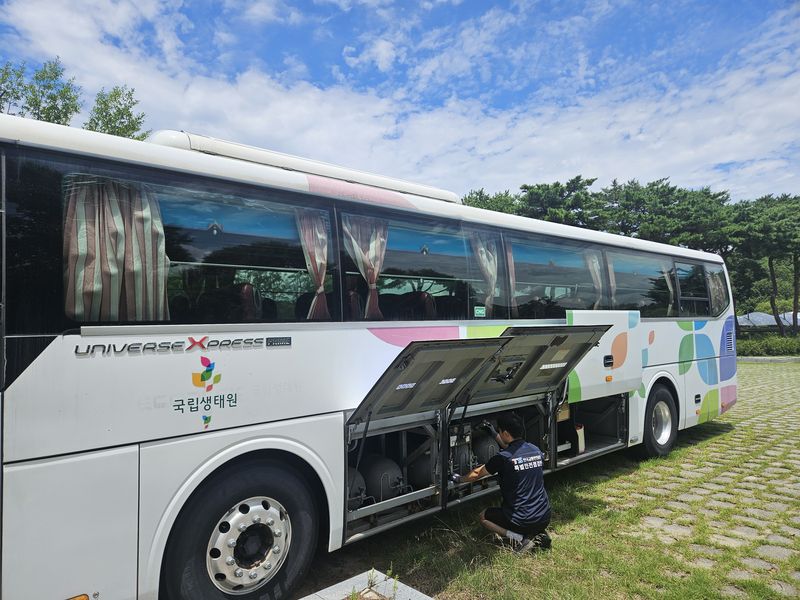
[Financial News] This summer, inspections of pressure vessels on CNG and hydrogen buses nationwide found safety issues in 1,351 buses, and all were addressed on site.
TS said on the 13th that it had completed its summer special safety inspections of bus pressure vessels, which ran for a little over four months, from May 26 to September 28. The inspections were designed to prevent accidents involving compressed-gas cylinders during the summer, when temperatures rise. Of the 23,042 vehicles targeted nationwide, 22,881 were inspected, for an inspection rate of 99.3%. Charter buses will be inspected periodically throughout the year, taking into account operating conditions during the peak travel season.
Local governments and TS shared responsibility for the inspections. Local governments checked 20,755 vehicles, while TS focused its staff on 2,126 older vehicles or vehicles requiring additional checks. TS said that this year it shifted from inspecting all vehicles in the same way to a prevention-focused approach: prioritizing vehicles with more issues requiring attention and addressing any problems immediately on site.
By number of defects, missing fuel inlet caps were the most common, with 351 cases (23.5%). They were followed by damage to fuel inlets, with 184 cases (12.3%); damage to fuel inlets and check valves, with 128 cases (8.6%); and gas filter leaks, with 123 cases (8.2%). The category of “other,” which grouped seven items including sensory inspections and gas leaks in low-pressure lines, accounted for 709 cases (47.4%). The three fuel-inlet-related items alone totaled 663 cases (44.3%). This underscores that checking a vehicle’s condition before and after operation and maintaining it regularly are key to preventing accidents.
The vulnerable areas also differed by bus type. City buses mainly had problems with systems responsible for refueling and gas supply, such as fuel inlets and gas filters, while local buses mainly had issues with piping, such as fuel inlets and low-pressure lines. TS plans to encourage the early scrapping or replacement of older vehicles by considering both vehicle age and inspection history. During this inspection program, 119 buses were deregistered or replaced.
Efforts were also made to help the transport industry manage safety on its own. TS provided maintenance and inspection training to 568 vehicle-management staff at CNG and hydrogen transport companies nationwide, and offered safety-management consulting to the 10 transport companies with the most non-compliant vehicles in 2025. CNG filling stations were instructed to stop applying reduced-pressure refueling across the board and to use it only for vehicles equipped with Type-2 cylinders.
The approach to reduced-pressure refueling changed significantly this year. When TS announced its inspection plan in May, it said it would limit the “10% reduced-pressure refueling” it had previously recommended for all CNG buses in summer to vehicles equipped with Type-2 cylinders. At the time, this applied to four vehicles in South Korea, and refueling pressure was to be lowered from 20.7 MPa to 18.6 MPa from July 1 through August 31. The scale of inspections also increased. Last year’s summer special inspections covered around 21,000 hydrogen and CNG buses. Concerns about the safety of CNG bus cylinders have been raised repeatedly since a gas cylinder on a city bus in service exploded in Haengdang-dong, Seongdong-gu, Seoul, in August 2010.
TS will share the inspection results with the Ministry of Land, Infrastructure and Transport, automakers, transport companies and others. It will also continue to improve its risk-based inspection system, which takes into account vehicle age, past non-compliance records and whether non-compliance has recurred. The plan is to proactively weed out older vehicles with repeated non-compliance or serious defects through early scrapping or replacement.
TS Chairman Jeong Yong-sik said, “Through this special safety inspection, we checked the safety of around 22,000 CNG and hydrogen buses nationwide and identified and addressed risk factors in advance, including gas leaks and malfunctions in major safety devices. We will continue to strengthen data-based identification of high-risk vehicles and focused inspections, and work with transport companies and relevant agencies to build a safety net for eco-friendly public transportation that people can use with confidence.”
[email protected] Jeong Gyeong-su Reporter