“Voice phishing repeatedly targets people for small sums” ... Payment suspensions at five major banks surge 3.5-fold
- Input
- 2026-10-13 11:21:30
- Updated
- 2026-10-13 11:21:30
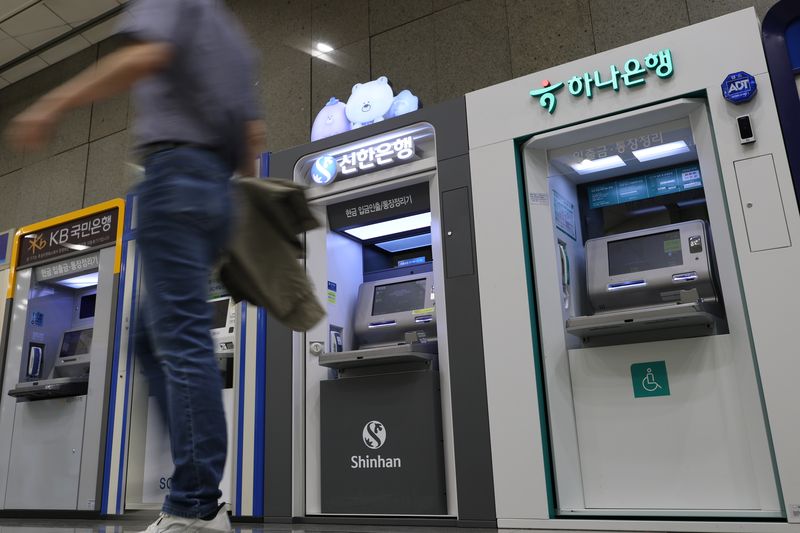
[Financial News] The number of detected voice-phishing cases involving the misuse of easy money transfers surged this year. In the first half, the number of payment suspensions involving related accounts at the five major banks jumped to 3.5 times the figure for the same period a year earlier. However, the amount of fraud proceeds deposited per case fell sharply.
According to data obtained from the Financial Supervisory Service on the 13th by the office of Rep. Seo Il-jun of the People Power Party, a member of the National Assembly’s Political Affairs Committee, the five major banks—KB Kookmin, Shinhan, Woori, Hana and NH NongHyup—recorded a total of 3,273 payment suspensions in the first half on accounts into which voice-phishing proceeds had flowed through prepaid payment providers (NAVER Pay, Kakao Pay and Toss, hereafter referred to as payment companies).
That figure had already exceeded the full-year total of 3,146 payment suspensions last year. It was up 247% from the 943 recorded in the first half of last year.
By contrast, the amount of fraud proceeds deposited totaled 3.59004 billion won, only 19% more than the 3.02327 billion won recorded in the same period a year earlier. The amount per case also fell from 3.21 million won to 1.1 million won.
Easy money transfer is a service that allows users to send money with simple authentication, such as a password or biometric data like a fingerprint or facial recognition.
Unlike direct transfers between bank accounts, easy transfers through payment companies involve prepaid balances moving between the companies’ accounts. This made it difficult for banks to trace the flow of funds within payment companies.
However, a 2024 amendment to the Enforcement Decree of the Act on the Prevention of Losses Caused by Telecommunications-Based Financial Fraud and Refunds for Damages made information sharing between financial institutions and prepaid payment providers mandatory. As a result, fraud proceeds transferred through easy money transfer services also became subject to payment suspension.
If the fraud proceeds remain as prepaid balances, the payment company suspends payments from its master account. If the funds have already been transferred to an account at another bank, that bank suspends payments from the account after receiving notice from the payment company.
The number of cases in which payment companies’ master accounts were frozen because voice-phishing proceeds remained in prepaid balances held with providers such as NAVER Pay, Kakao Pay and Toss also rose sharply in the first half of this year.
There were 324 payment suspensions, involving a total of 284.67 million won, up 85% and 51%, respectively, from the same period last year. The amount per case fell from 1.08 million won to 880,000 won, also reflecting a trend toward more cases involving smaller sums.
From September 2024 through June this year, 4,336 of the 7,312 payment suspensions at the five major banks involved Kakao Pay, accounting for 59% of the total. Kakao Pay’s share of the amount of fraud proceeds deposited reached 79%.
NAVER Pay recorded 698 payment suspensions in the first half of this year, already exceeding its full-year total of 534 last year. For Toss, payment suspensions totaled 696 and fraud proceeds deposited amounted to 890 million won, up 154% and 106%, respectively, from the same period a year earlier.
Fraud involving easy money transfers also appears to have increased as authentication has become more convenient. It is also understood that mandatory information sharing and the introduction of detection systems have made it possible to suspend payments in cases that previously went undetected.
Financial authorities plan to step up efforts to prevent losses by upgrading the AI platform for sharing and analyzing voice-phishing information (ASAP) and the Fraud Detection System (FDS).
[email protected] Seo Ji-yun Reporter