“Your personal data can all be stolen when you trade crypto” ... Mass blocking of access to unregistered virtual asset service providers
- Input
- 2026-10-13 11:26:17
- Updated
- 2026-10-13 11:26:17

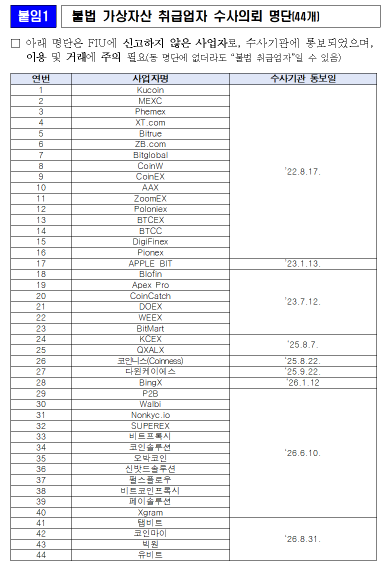
According to financial authorities on the 13th, the FIU has responded to illegal virtual asset service providers using various measures, including restricting transactions, notifying investigative authorities and requesting that online access be blocked. It has guided and supervised registered virtual asset service providers to ensure they do not transact with unregistered providers, and when an unregistered provider is detected, it notifies registered providers so they can restrict transfers of virtual assets. It has also blocked credit card transactions with unregistered providers through policy changes. Any confirmed illegal activity is immediately reported to investigative authorities; to date, a total of 44 companies have been reported.
Operating an unregistered virtual asset service is illegal under the Act on Reporting and Using Specified Financial Transaction Information. To operate legally in Korea, providers must meet requirements such as obtaining Information Security Management System (ISMS) certification and register with the FIU. Those who operate without registering may face up to five years in prison or a fine of up to 50 million won. The same Act also applies to overseas providers that operate in South Korea targeting Korean nationals.
Illegal virtual asset service providers are not regulated or supervised under relevant laws, leaving them without adequate anti-money-laundering systems or safeguards to protect users’ assets. Because they do not meet security requirements such as ISMS certification, they may be exposed to personal information leaks and hacking, or their services may be exploited to conceal criminal proceeds and launder money. Financial losses from investment scams may also occur—for example, when providers take payment but fail to deliver virtual assets, or charge excessive fees compared with registered providers. It is also difficult to obtain redress. A joint intensive investigation by DAXA and registered providers in June 2026 found that the average transaction fee rates at the companies caught ranged from 1.5% to 10%, as much as 62 times the average rate of 0.16% at Korea’s five largest won-based exchanges.
Following this access-blocking decision, users’ access can be blocked immediately when unregistered virtual asset operations are detected. With the providers’ cooperation, DAXA will offer guidance and support on withdrawal methods and procedures for existing users facing difficulties such as withdrawal restrictions. The FIU plans to continue working with relevant agencies, including the Broadcasting, Media and Communications Review Commission, to prevent money laundering and protect users. Its ongoing measures will include stepped-up efforts to detect illegal virtual asset service providers, prompt requests for reviews of newly detected providers and replacement sites, and greater disclosure and public guidance on lists of illegal providers reported to registered providers and investigative authorities.
Users must check whether the virtual asset service provider they use is properly registered with the FIU under the Act on Reporting and Using Specified Financial Transaction Information. A total of 28 providers are currently registered with the FIU. Users should be wary of false or exaggerated advertising and of sign-ups or referrals through referral or recommendation links. If a provider is found to be unregistered, users should immediately withdraw their virtual assets and deposited funds and avoid providing personal information. Anyone who suspects illegal virtual asset activity can notify the police or the FIU, or file a complaint directly with investigative authorities.
The illegal virtual asset service providers blocked this time are Kucoin, MEXC, Phemex, XT.com, Bitrue, CoinW, ZoomEX, Poloniex, BTCC, DigiFinex, Pionex, Blofin, Apex Pro, WEEX, BitMart, KCEX, BingX, P2B, Nonkyc.io, SUPEREX, Coin Solution, Sinbad Solution, Xgram, Tapbit, Coinmy, BigOne and Ubit. Users should remain cautious, as providers not on this list may also be operating illegally.
[email protected] Park Mun-su Reporter