KOSPI Tumbles as Semiconductor Stocks Crumble; Market Mainstay Electrical and Electronics Sector Plunges in the 5% Range
- Input
- 2026-10-13 09:36:20
- Updated
- 2026-10-13 09:36:20
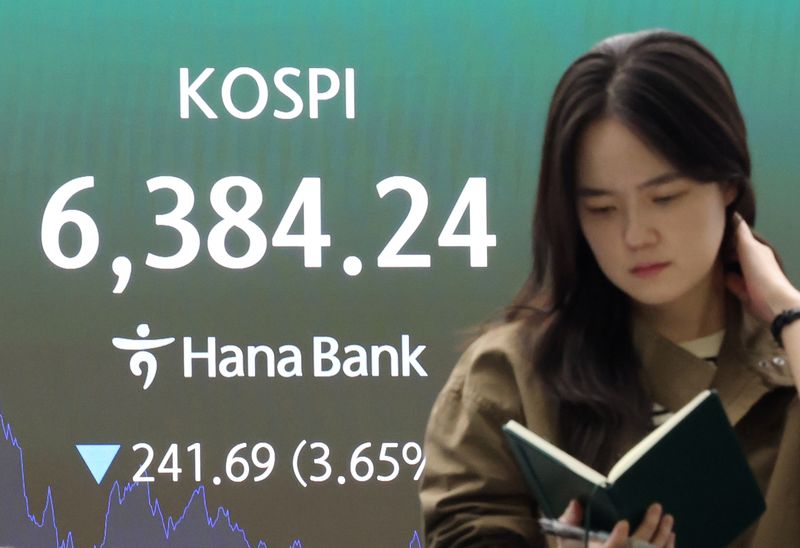
[Financial News] South Korea’s stock market is extending the sharp declines seen the previous day, falling steeply from the start of early trading. The electrical and electronics sector, which is home to many of the KOSPI’s largest companies by market capitalization, is leading the index lower, with losses exceeding 5%.
Concerns over Chinese memory-chip makers catching up technologically, rising international oil prices and foreign selling are converging, concentrating selling pressure on the large-cap semiconductor stocks that have long supported South Korea’s stock market.
According to the Korea Exchange, the KOSPI stood at 6,101.49 at around 9:28 a.m. on the 13th, down 4.43% from the previous trading day.
By sector, electrical and electronics posted the steepest decline, falling 5.51%. Manufacturing was also down 4.87%, while large-cap stocks fell 4.71%. With the KOSPI broadly weaker and semiconductor stocks—which make up a large share of the index—plunging, investor sentiment across the market is also weakening.
By individual stock, SK hynix fell around 6%, while Samsung Electronics dropped more than 5%. Semiconductor-related stocks, including Samsung Electronics preferred shares and SK Square, also weakened. With major large-cap stocks such as LG Energy Solution and Samsung SDI also falling, selling appears to be spreading beyond semiconductors to stocks across the upper ranks by market capitalization.
Concerns that Chinese semiconductor companies are catching up lie behind the sharp declines. News that Chinese memory-chip maker ChangXin Memory Technologies (CXMT) plans to launch server chips within the year has heightened concerns about the competitiveness and future profitability of South Korean semiconductor companies.
Even as expectations for rising memory demand amid the spread of artificial intelligence (AI) persist, concerns that Chinese companies’ technological development could intensify competition over supply and put pressure on prices are seen as having unsettled investor sentiment.
Rising international oil prices are also a source of concern. Amid recent instability in the Middle East, oil prices have been trading above $100 a barrel, bringing inflationary pressure and interest-rate concerns back into focus.
Rising oil prices increase companies’ cost burdens and could also weaken expectations for monetary policy easing, weighing on a stock market centered on growth stocks.
Pressure on semiconductor stocks has also been building from the supply-and-demand side. According to reports the previous day, foreign investors had been net sellers of Samsung Electronics for nine consecutive trading days and SK hynix for 12 consecutive trading days.
Analysts say that continued foreign selling even in large-cap semiconductor stocks with strong earnings prospects has weakened the buying support needed to underpin a rebound in the index.
After the KOSPI fell 3.65% and the KOSDAQ 4.83% the previous day, sharp declines continued in early trading today, further increasing volatility in South Korea’s stock market.
With concerns about Chinese semiconductor makers catching up, rising oil prices and foreign selling all weighing on the market at once, whether losses among large-cap semiconductor stocks begin to narrow is emerging as a key factor in gauging further downward pressure on the index.
[email protected] Kang Jung-mo Reporter