Points deducted for disclosing personal information or connections in principal recruitment interviews
- Input
- 2026-10-13 09:30:05
- Updated
- 2026-10-13 09:30:05
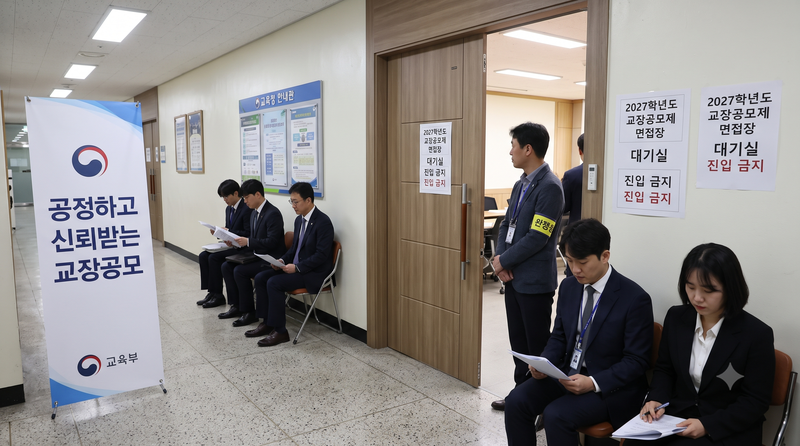
The Ministry of Education said on the 13th that it had notified provincial and metropolitan offices of education of the "Guidelines for Implementing the Principal Open-Recruitment System for the 2027 School Year." The system hires principals through open recruitment who have the capabilities and leadership suited to the needs of the school community.
Applicants for open-recruitment principal posts are assessed using anonymized personal statements, school management plans and other documents. Until now, points were deducted only when applicants included personal information such as their names in these documents or disclosed ties to a specific organization or individual. In-person assessments, including in-depth interviews, were not subject to deductions. Going forward, applicants who disclose the same information in an interview will also lose points, following a review by the open-recruitment principal screening committee.
Education Minister Choi Kyo-jin said, "These guidelines strengthen the fairness of principal recruitment assessments while reflecting the views of schools and expanding the autonomy of provincial and metropolitan offices of education."
Superintendents of education will be able to choose the method for selecting open-recruitment principals. Candidates are selected through assessments by the school and the education office, and only those who score at least 85% of the maximum can be selected. For the 2026 school year, the "staged" method was used, requiring candidates to score at least 85% of the maximum in each of the two assessments. Starting with the 2027 school year, superintendents will choose in advance between the staged method and the "combined" method, under which the scores from the two assessments are weighted equally and candidates who score at least 85% of the maximum are selected. The Ministry said that some schools had recommended only one of several applicants for the education office assessment, prompting calls for the combined method.
The designation process has also been revised for schools applying for "Internal Type B," which allows educators with at least 15 years of experience in education to apply without a principal's certificate. Superintendents may designate Internal Type B schools up to 50% of the number of schools that applied for the internal type. However, provincial and metropolitan offices of education have differed in whether they calculate this ratio separately for elementary and secondary schools or together. In places that calculate separately, there have been cases where the school's request was not reflected despite its wish to apply: the overall figure was below 50%, but the figure for one school level exceeded 50%. Starting with the 2027 school year, a school may be designated even if the elementary or secondary figure exceeds 50%, as long as the total does not exceed 50% of all elementary and secondary schools applying for the internal type.
According to the Ministry of Education, as of March 1 this year, open-recruitment principals were serving at 768 of the 10,384 national and public schools, or 7.4%. This figure combines eight rounds of appointments, from those effective September 1, 2022, through those effective March 1 this year, taking the four-year term into account. Principals appointed through open recruitment without a principal's certificate were serving at 184 schools, or 1.8% of all national and public schools.
Each provincial and metropolitan office of education plans to draw up its principal open-recruitment plan by the 23rd and conduct the recruitment process for appointments effective March 1, 2027. Each office's selection method will be announced alongside the recruitment notice.
[email protected] Kim Man-gi Reporter