Midnight epigastric pain after a fatty meal... What if it's not indigestion?
- Input
- 2026-10-13 09:25:21
- Updated
- 2026-10-13 09:25:21
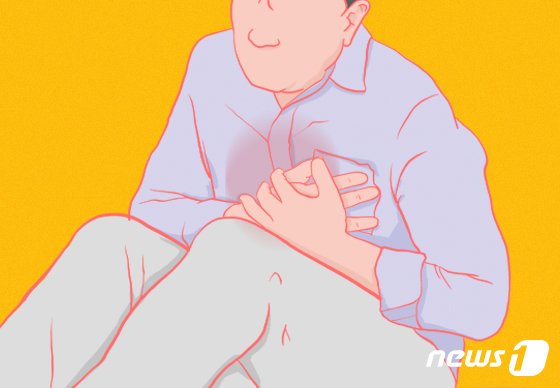
[Financial News] When people have pain in the pit of the stomach, they habitually reach for digestive medicine first. But if the same pain recurs after fatty meals or night after night, they should consider the gallbladder rather than the stomach.
Jang Jae-hoon, a professor of gastrointestinal surgery at Kangdong Kyung Hee University Hospital, stressed, “It may be a sign of gallstone disease, in which stones form in the gallbladder or bile duct,” and “If you dismiss it as pain that will pass quickly and leave it untreated, it can lead to complications such as cholecystitis, cholangitis or pancreatitis, so caution is needed.”
Bile produced by the liver collects in the gallbladder before being released into the duodenum, where it helps digest fats. If the balance of cholesterol, bile acids, bile pigments and other components of bile is disrupted, debris forms and gradually hardens into gallstones.
According to the Health Insurance Review and Assessment Service, there were 286,703 patients with gallstone disease last year, a 19.4% increase from 2021. The rise appears to have been influenced by the aging population, metabolic diseases such as obesity and diabetes, and increased consumption of high-calorie, high-fat foods. Last year, 89.4% of patients were aged 40 or older. The condition is more common in women than men because female hormones raise cholesterol levels in bile. Rapid weight loss and family history are also considered risk factors.
Pain that can be mistaken for indigestion... Left untreated, it can progress to sepsis
Not everyone with gallstones experiences pain. Many people have no symptoms, and the stones are discovered incidentally during an ultrasound or abdominal CT scan. Even when symptoms occur, they may amount only to fullness or discomfort in the pit of the stomach and subside on their own, making them easy to mistake for simple indigestion or gastritis.
The characteristic pain known as biliary colic occurs when a gallstone blocks the opening of the gallbladder, raising pressure inside it. Severe pain or pressure may occur in the upper-right abdomen or the pit of the stomach and can spread to beneath the shoulder blade or to the shoulder. The pain typically begins after eating fatty food or at night, lasts at least 30 minutes and sometimes several hours, and is accompanied by nausea and vomiting.
If a gallstone continues to block the opening of the gallbladder, the condition can worsen into cholecystitis. This is the most common complication of gallstone disease, and at least 90% of acute cholecystitis cases are caused by gallstones. Cholecystitis should be suspected if pain lasts for several hours or longer and is accompanied by fever and chills. If a gallstone blocks the bile duct, it can cause acute cholangitis with abdominal pain, jaundice and a high fever. If it becomes lodged at the duodenal papilla, where the bile duct and pancreatic duct meet, acute pancreatitis can develop. If cholecystitis or cholangitis worsens, it can progress to sepsis and become life-threatening.
If symptoms recur, laparoscopic cholecystectomy... Discharge in 2–3 days
Treatment depends on the location of the gallstones and whether symptoms are present. If there are no symptoms, most cases are monitored through regular checkups. However, if biliary colic recurs or cholecystitis develops, cholecystectomy—the removal of the gallbladder itself—is the definitive treatment. Surgery may also be recommended, even without symptoms, if the gallbladder wall has become calcified or a gallstone is 3 cm or larger, given the risk of gallbladder cancer. If a gallstone has moved into the bile duct, it is removed using endoscopic retrograde cholangiopancreatography (ERCP).
Laparoscopic cholecystectomy, in which several 0.5–1 cm incisions are made in the abdomen to insert a camera and surgical instruments, has become the standard procedure. It causes less pain and scarring and allows faster recovery, and robotic surgery is also being performed in recent years. According to the Korea Disease Control and Prevention Agency, the complication rate for cholecystectomy is 2–4%, and the mortality rate is below 0.1%. Patients are generally discharged within 2–3 days after surgery and can return to their daily routines in 2–4 weeks.
Removing the gallbladder does not significantly disrupt daily life because the liver continues to produce bile. However, diarrhea or bloating may occur early after surgery, so it is advisable to cut back on fatty foods and gradually increase meal portions.
To help prevent gallstones, it is advisable to eat regular meals without skipping them and to consume plenty of vegetables and dietary fiber instead of high-calorie, high-fat foods. Cut back on cholesterol-rich foods such as shrimp, organ meats and eel, and avoid excessive fasting or rapid weight loss. Metabolic diseases such as diabetes and hyperlipidemia should also be managed consistently.
Professor Jang stressed, “Gallstone pain can subside on its own, making it easy to miss the right time for treatment,” and “If pain in the pit of the stomach or upper-right abdomen recurs after meals, it is important not to dismiss it as simple indigestion and to get an accurate diagnosis.”
[email protected] Jeong Myeong-jin, medical correspondent Reporter