Simple Sprinklers to Be Installed in Older National Rental Apartments, Too
- Input
- 2026-10-13 09:12:24
- Updated
- 2026-10-13 09:12:24
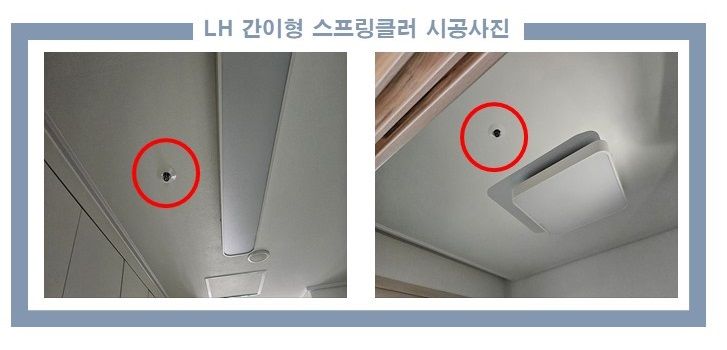
[Financial News] Fire-response equipment in older public rental apartments that are not required to have sprinklers will be extended from permanent-rental to national-rental housing. Korea Land and Housing Corporation (LH) has already installed simple sprinkler systems in about 14,000 permanent-rental units, connecting sprinkler heads to the water-supply pipes inside each unit. Starting this year, LH will gradually expand installations in conjunction with remodeling projects in national-rental housing.
According to LH on the 13th, the expansion will build on installation experience gained at permanent-rental complexes. Because ceiling structures and finishes vary from unit to unit in national-rental housing, LH plans to adapt installation methods to site conditions, including removing and reinforcing sections of ceiling. It will also develop and apply a separate installation method that can be used regardless of remodeling schedules, further expanding the coverage.
Simple sprinkler systems use the water-supply pipes already installed in each unit and automatically spray water from sprinkler heads if a fire breaks out. LH has been developing the systems since last year and has been installing them in older complexes in stages. Installing conventional sprinklers in completed apartment buildings requires separate water-supply equipment for firefighting and additional piping, creating significant costs and construction burdens. A key advantage of the simplified systems is that they can reduce installation costs by minimizing such equipment and additional piping work.
The systems have also undergone performance testing. Their design followed the criteria for systems directly connected to the public water supply under the “Technical Standards for Fire Safety of Simple Sprinkler Systems (NFTC 103A).” They were reviewed by fire-safety experts, including those from the National Fire Agency and the Korea Fire Protection Engineers Society. Tests involving an actual fire also confirmed that the systems can contain flames in the initial stages of a fire.
Older apartment buildings are considered a blind spot in fire safety because installation standards are not applied retroactively. Requirements for sprinklers in apartment buildings began in 1990 with buildings of 16 stories or more, and were tightened in stages to 11 stories or more in 2005 and six stories or more in 2018. But complexes completed before the standards changed are excluded. The apartment fire in Soha-dong, Gwangmyeong, Gyeonggi Province, last July, which killed three people, also occurred in a 10-story building that did not fall under the standards in force at the time and had no sprinklers. Many point out that retrofitting conventional sprinklers is virtually impractical because new piping, pump rooms and water tanks would have to be installed. With fire-related casualties occurring in a succession of recent fires at older apartment buildings without sprinklers, calls have again grown louder for strengthening fire-response capabilities in existing apartment buildings.
In April last year, LH announced a plan to install simple sprinkler systems in 14,935 homes across 97 older permanent-rental complexes. At the time, it said it would prioritize complexes where many older adults and people with disabilities live, and that it would consider expanding the program to other public rental housing, including national-rental housing, in consultation with a fire-safety experts’ council.
An LH official said, “Older rental housing that is not legally required to have sprinklers also needs stronger initial fire-response equipment to protect residents,” adding, “We will continue to call for an increase in the government’s support rate and funding to ease the project’s financial burden, while doing our utmost to expand the coverage of simple sprinkler systems and reduce fire-safety blind spots in rental housing.”
[email protected] Jeong Gyeong-su Reporter