Musk donates 370 billion won to U.S. Republican campaigns, tops midterm donor list
- Input
- 2026-10-13 10:11:50
- Updated
- 2026-10-13 10:11:50
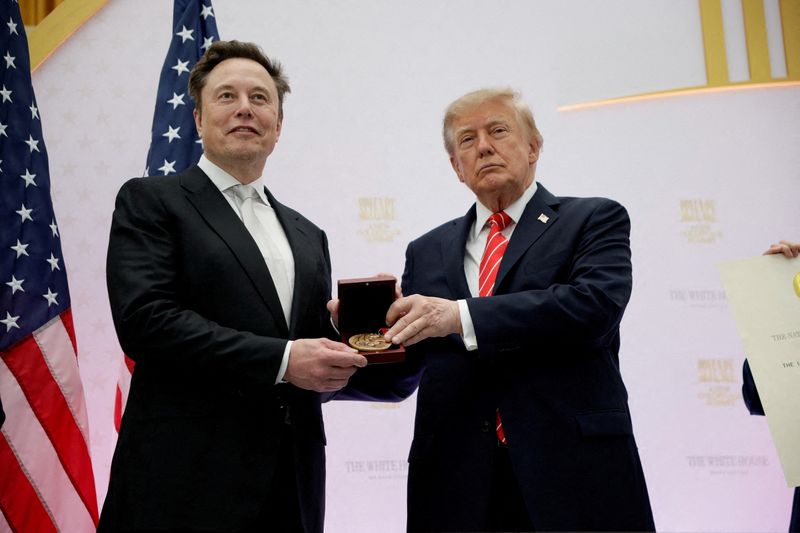
[Financial News] Elon Musk, the Tesla and SpaceX CEO who was rumored to have fallen out with U.S. President Donald Trump last year, has officially donated more political funds than anyone else for the U.S. midterm elections in November. This is at odds with his statement last year that he would spend less on politics going forward.
According to The New York Times (NYT) on the 12th (local time), Musk disclosed details of his political donations through the newspaper shortly before the deadline for reporting political contributions, set for the 15th. Musk said he donated $290 million in 2023–2024, when the U.S. presidential election was in full swing, and a total of $366 million (about 489.3 billion won) in 2025–2026. Of that amount, $276 million (about 369 billion won) was spent since July this year. U.S. business news outlet CNBC noted, in connection with the NYT report, that Musk’s $276 million was the largest confirmed amount donated to political causes related to this year’s midterm elections.
Of the $276 million, $158 million went to the Senate Leadership Fund, one of the Super PACs. Musk’s team said the Super PAC supports Republican Senate races. Musk also donated at least $76 million to America PAC, a Republican Super PAC he founded in 2024. He separately sent $10 million to the Lone Star Liberty PAC, which supports Republican former Texas Attorney General Ken Paxton, who is running for the U.S. Senate from Texas in the midterms. Tesla and SpaceX are both headquartered in Texas. Musk also gave $20 million to the House Leadership Fund, which supports Republican House races. Separately from these midterms, he donated $10 million to the Republican Governors Association and $20 million to the Republican Attorneys General Association.
In the United States, there are limits on how much individuals can contribute to a particular candidate’s campaign. Businesses, labor unions and other interest groups cannot contribute directly. Instead, they set up political action committees (PACs) to raise funds separately and support specific candidates or parties. PACs also face limits on contributions and restrictions on spending, including on political advertising. But Super PACs, which emerged after 2010, can raise unlimited contributions if they are established and operated independently of any particular party or candidate. They are nominally independent organizations, but in practice work on behalf of specific parties and candidates.
Musk, who supported the Republicans and Trump in the 2024 presidential election, clashed with the Trump administration over budget cuts while serving as head of the Department of Government Efficiency (DOGE) from January to May last year. In an interview last December, when asked whether he would do the same thing again, he said, “Probably not,” adding, “Instead of doing DOGE work, I’ll basically work for my companies.” At a discussion event held last May, he said, “I’m going to spend far less on political spending going forward.”
After leaving DOGE, Musk clashed with Trump last July by announcing plans to establish a third party, the America Party, separate from the Democrats and Republicans. He later halted the effort and has again drawn close to the Republican Party. U.S. Secretary of War (Defense) Pete Hegseth named Musk as one of the civilian participants in a U.S. military project to develop future technologies in an announcement on the 30th of last month.
[email protected] Park Jong-won Reporter