Investor Munster Says Musk’s SpaceX ‘Will Launch a Starlink Phone’
- Input
- 2026-10-13 10:46:19
- Updated
- 2026-10-13 10:46:19
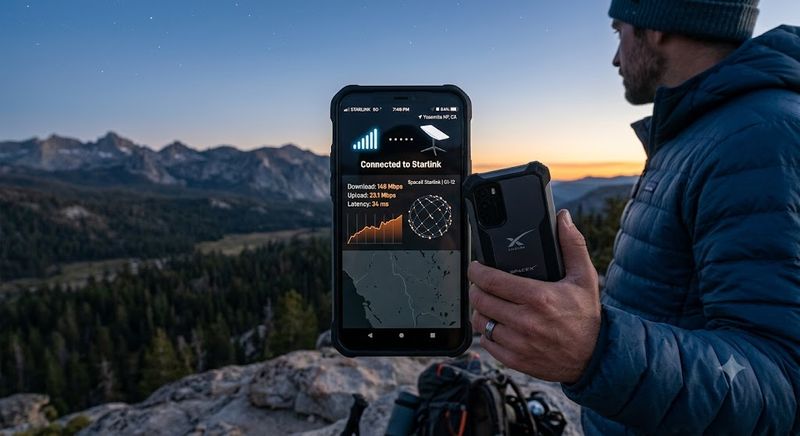
[Financial News] After SpaceX, the private space company led by Elon Musk, agreed to acquire nationwide low-band spectrum in the U.S., speculation has emerged that it could enter the mobile communications market. If this becomes reality, it is expected to pose a major threat to smartphone makers Samsung Electronics and Apple.
On the 12th (local time), online outlet Benzinga reported that Gene Munster, a partner at Deepwater Asset Management, expects SpaceX to launch a phone, according to his social media posts.
Munster, known on Wall Street in New York for his expertise in analyzing Big Tech, wrote in a post on X last week that although CEO Elon Musk has expressed opposition to entering the smartphone manufacturing business, market experts expect SpaceX to eventually unveil its own ‘Starlink phone.’
Munster explained that a vertically integrated smartphone optimized for the Starlink mobile network could offer unique features and lower-cost services that existing carriers cannot provide.
Munster went on to predict that this move would hit Samsung Electronics harder than Apple. In Apple’s case, he said, “It is difficult to break the strong ecosystem ties between devices and services.” According to market research firm StatCounter, Apple held 30.8% of the global mobile market in September, compared with Samsung Electronics’ 23.52%.
SpaceX previously announced that it had agreed to acquire a nationwide portfolio of 800-MHz low-band spectrum in the U.S. from Grain Management. SpaceX said the acquisition “will serve as a springboard for Starlink to become a major mobile carrier in the U.S.”
Low-band frequencies are particularly effective at penetrating obstacles, providing stable communications inside buildings and in coverage dead zones. SpaceX emphasized that it would use the spectrum to “provide reliable mobile service anywhere, indoors and outdoors, including in existing dead zones,” and CEO Musk also described the acquisition as “a very big deal.”
Musk, however, has long expressed strong reluctance to make his own smartphone. At a town hall in Pennsylvania in 2024, he said, “The thought of making a smartphone makes me want to die. I would make one if circumstances made it unavoidable, but would aim to avoid making one if at all possible.”
Early this year, however, Musk partially softened his stance, saying there was a possibility of a device “on a completely different level from today’s smartphones.” He suggested it could be an entirely new kind of device—not in the form of a conventional smartphone—specialized in running artificial intelligence (AI) neural networks at the best possible performance for its power consumption.
The global IT industry is watching closely to see whether SpaceX can shake up the next-generation mobile market with its satellite communications infrastructure.
Analysts at investment bank William Blair said incumbent wireless carriers are pessimistic that the quality of service SpaceX can offer will not surpass their own, but forecast a powerful offering that would include Starlink broadband and mobile services, as well as xAI’s AI chatbot Grok.
The global market analysis outlet The Kobeissi Letter said on X that a SpaceX smartphone “will cause the biggest disruption in the history of the mobile communications and internet industries.” The outlet noted that the mobile communications and internet industries had struggled for decades with limited competition, slow innovation and inadequate service, warning, “SpaceX will change that. It will be a clear wake-up call for the current giants in the industry. Those that fail to change will be left behind.”
[email protected] Jae-jun Yoon Reporter