Kang Kyung-wha, Chung Dong-young and Cho Hyun take divergent views as US-South Korea intelligence-sharing restrictions drag on
- Input
- 2026-10-13 09:00:47
- Updated
- 2026-10-13 09:00:47
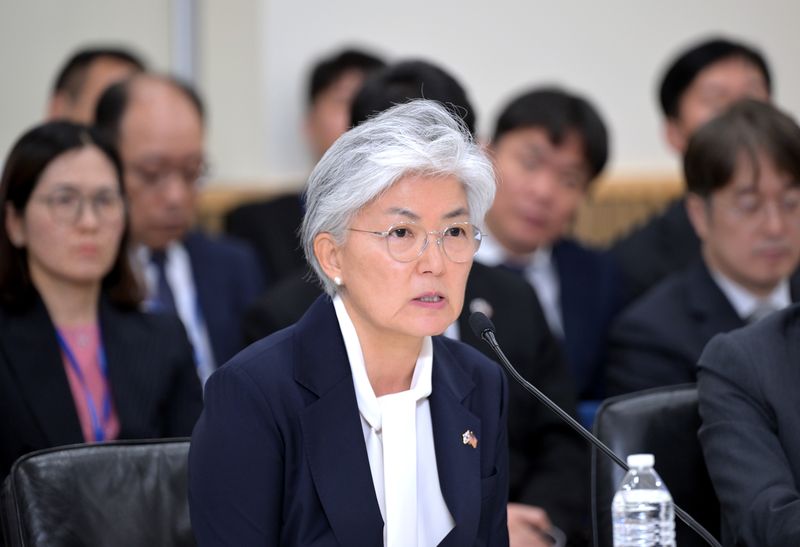
South Korean Ambassador to the United States Kang Kyung-wha confirmed that the US side had raised concerns about Minister Chung Dong-young’s disclosure of information on North Korea’s nuclear program. Chung, in turn, countered that the issue stemmed from a US misunderstanding and that the South Korea-US alliance remained firm. Foreign Minister Cho Hyun said the two countries would work to reconcile their differences, revealing subtle differences in their positions.
At a parliamentary audit by the National Assembly’s Foreign Affairs and Unification Committee held at the South Korean Embassy in Washington, DC, on the 12th (local time), Ambassador Kang faced intense questioning from independent lawmaker Han Dong-hoon about the meeting between US Secretary of State Marco Rubio and Foreign Minister Cho Hyun on the 18th of last month.
Ambassador Kang said, “There was a comment [from Secretary Rubio] that there was a problem with intelligence cooperation,” adding, “The minister [Cho Hyun] said they would listen carefully to the US side’s concerns, return to Korea, consult with relevant ministries and work toward a resolution.” Han also asked, based on information he had gathered, “Is it true that Secretary Rubio said confidence in the leadership of South Korea’s intelligence services, including the National Intelligence Service, had been damaged, and asked that the need to normalize the situation be conveyed to President Lee Jae-myung?” Kang did not comment specifically, explaining only that “the US side provided an account of its concerns about intelligence cooperation.” She did, however, clarify that the US had not singled out Unification Minister Chung Dong-young or National Intelligence Service Director Lee Jong-seok for criticism.
Meanwhile, Unification Minister Chung Dong-young, who was at the center of the “secret disclosure of information about a nuclear facility in Kusong, North Korea”—the trigger for the intelligence-sharing restrictions—is arguing that the issue stems from a US misunderstanding. At an unscheduled press conference the previous day, Chung expressed strong dissatisfaction with the US position and criticism from conservative media in South Korea.
Chung said misunderstandings over the interruption of South Korea-US intelligence exchanges following his remarks disclosing information about a nuclear facility in Kusong, North Korea, needed to be cleared up. “They are taking issue with my remarks about Kusong at the Foreign Affairs and Unification Committee in March this year, when I was serving as a minister, but I had already made remarks about Kusong eight months earlier, in July 2025, when I was a lawmaker,” he said, arguing that the information had already been made public.
Chung also dismissed as untrue reports that a meeting with National Intelligence Service Director Lee Jong-seok fell through during a visit to South Korea late last year by a senior US Central Intelligence Agency (CIA) official. It was reported that the two sides clashed over whether the US intelligence official should first visit National Security Office Director Wi Sung-lac or the head of the National Intelligence Service, leading to the cancellation of the meeting with Lee. Chung also rejected the opposition’s calls for his dismissal as minister, calling them ideological mudslinging.
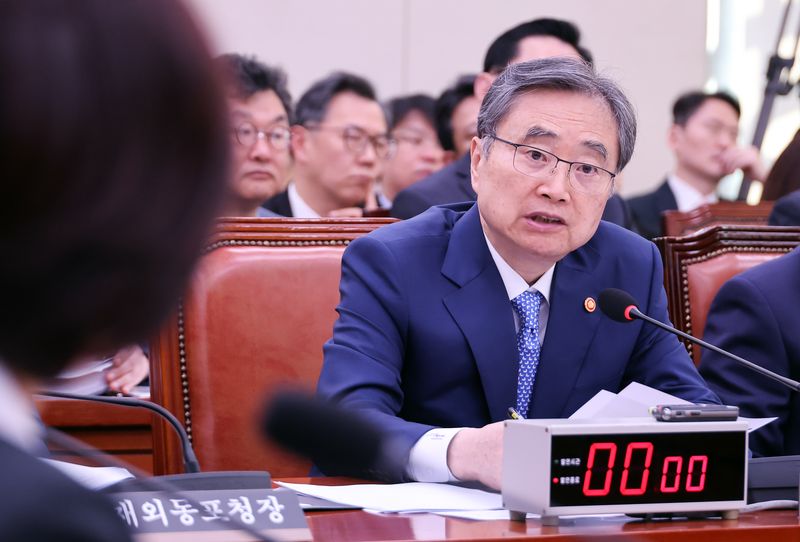
In a response during a parliamentary audit on the 6th, Foreign Minister Cho Hyun dismissed as “utterly absurd and without any logical basis” concerns from some quarters that communication between South Korea and the US had faltered or that the alliance was fractured. Cho stressed that the two countries shared the broad direction of their policy toward North Korea and that nothing was wrong with the alliance’s fundamental framework.
However, regarding the discord with the US over intelligence that emerged after Chung’s remarks, Cho indirectly acknowledged the existence of practical differences, saying, “The two countries cannot agree 100% on every diplomatic issue.”
Cho expressed confidence in a diplomatic resolution, saying that various issues now being raised—including US concerns about Chung’s remarks—would be addressed through close consultations and coordination via high-level channels between South Korea and the US.
With key foreign policy and security officials taking differing views of the situation, concerns about a lack of coordination within the government are likely to persist.
Foreign policy experts have warned that if the situation, now in its seventh month, drags on, delayed real-time intelligence sharing between South Korea and the US in the event of a North Korean provocation or sudden upheaval could create a critical security vacuum. [email protected] Reporter Kim Kyung-soo
[email protected] Kim Kyung-soo Reporter