Films instead of ads...Innocean’s experiment with a “second Night Fishing”
- Input
- 2026-10-13 09:00:00
- Updated
- 2026-10-13 09:00:00
[Financial News] “In an era when people don’t watch ads, I want to make content that’s worth paying to see.”
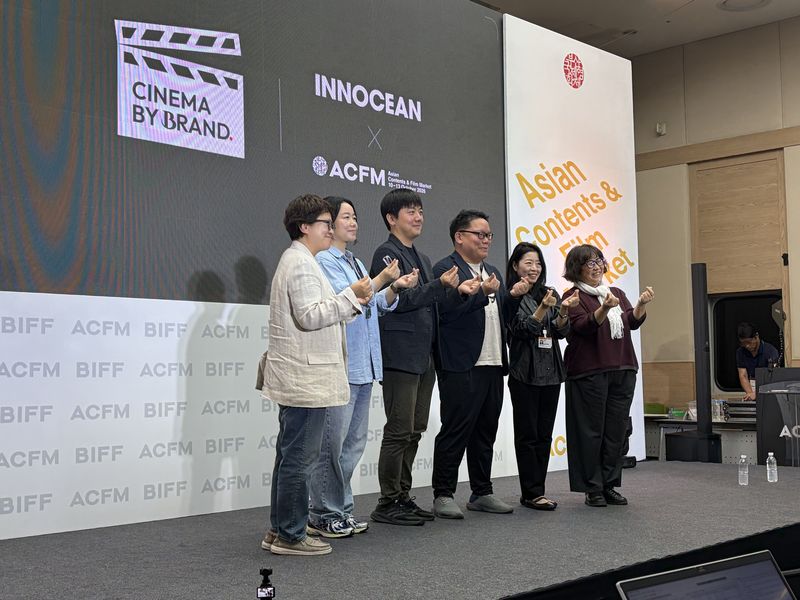
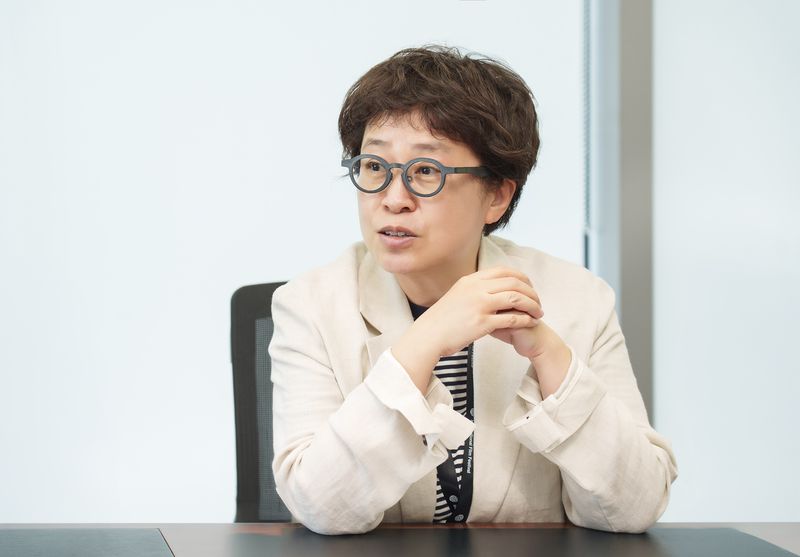
Innocean CEO Kim Jeong-a made the remark while introducing “Cinema by Brand,” which connects brands with film directors, when she met with reporters at BEXCO in Busan on the 12th. Innocean co-planned the project with the Busan International Film Festival’s official market, the Asia Contents & Film Market (ACFM). It is a new form of content that turns messages brands want to communicate into films. The first project will focus on “space-based solar power,” a core business of Hanwha Group.
Innocean cited changes in content-consumption habits as the reason it brought together the creative field of filmmaking and brands. As people watch less TV and more consumers pay to avoid ads on content platforms such as YouTube and Netflix, it is becoming increasingly difficult for companies to gain brand exposure. “Branded content” containing brand messages is growing as an alternative, CEO Kim said, “but even that is being perceived as advertising.” By contrast, she stressed, “Consumers are willing to pay for content they want, so content involving brands can also be judged worth watching, depending on the end result.”
A leading example is the 2024 short film Night Fishing. It tells the story of events that unfold when actor Son Suk-ku drives a Hyundai Motor Company IONIQ 5 to go night fishing. Rather than showing the IONIQ in its entirety, the film was shot using seven cameras attached to the car. The 13-minute film, produced with Hyundai Motor Company’s marketing budget, drew 46,000 moviegoers in theaters. CEO Kim said that after persuading the client, who wanted the film to be available for free on YouTube, to screen it in theaters for 1,000 won per ticket, “we found a new business model.” The film earned recognition at major advertising festivals, including winning the Grand Prix in the Entertainment category at Cannes Lions last year.
The film industry is also watching the project closely. As the film market contracts, investment is flowing mainly into a small number of films considered likely to be hits. The project is seen as a possible breakthrough in an environment where creative freedom is being constrained. “The biggest appeal is that directors can feel less pressure to make a hit and give free rein to their imaginations, drawing on stories brands want to tell,” said ACFM committee chair Kim Young-deok. Director Lee Jin-ho, who was selected for the project after proposing a film made with artificial intelligence (AI), said, “During the selection process, the director’s perspective was respected, and I expect we’ll be able to make a film that would have been difficult to produce in Korea before.” Along with Lee, directors Hong Ui-jeong and Edmund Yeo of Malaysia were selected for the project. The directors’ selected works were unveiled for the first time at a special session held at BEXCO that day. They were chosen from among 60 submissions from eight countries.
Hanwha, which is taking part in the project, also expressed high hopes. “We’ve pursued various initiatives, including producing branded content with global media outlets such as CNBC and Bloomberg in the United States,” said Park Ji-young, vice president of the Hanwha Communications Committee. “As Hanwha rises to fifth place among business groups this year and its business role grows, I hope this will become content that helps audiences around the world understand the values and philosophy Hanwha seeks to realize.” This year, the production budget has been set below media advertising expenditure, which also gives companies a cost advantage.
Starting this year, Innocean will produce films annually that connect brands with creators. Next year, it plans to expand into animation, documentaries and other formats. The initiative is also underpinned by a long-term strategy to play a role in creating content needed for the era of autonomous vehicles envisioned by its parent company, Hyundai Motor Group. “Creators had vague fears that working with brands might negatively affect their work, but Innocean understands both brands and creativity and has played an intermediary role, making it possible to break new ground,” said CEO Kim Jeong-a. “Our long-term goal is to broaden opportunities for brands and creative work to come together across a range of genres, including theater, sports and concerts.”
[email protected] Kang Myeong-yeon Reporter