[2026 Paris Motor Show] Renault: “We recognize China and learn from it” ... to launch an all-electric vehicle in South Korea in 2028
- Input
- 2026-10-13 07:22:25
- Updated
- 2026-10-13 07:22:25
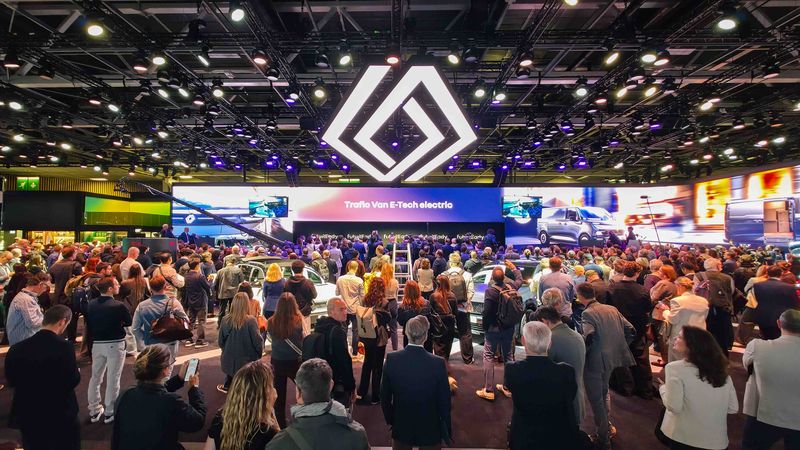
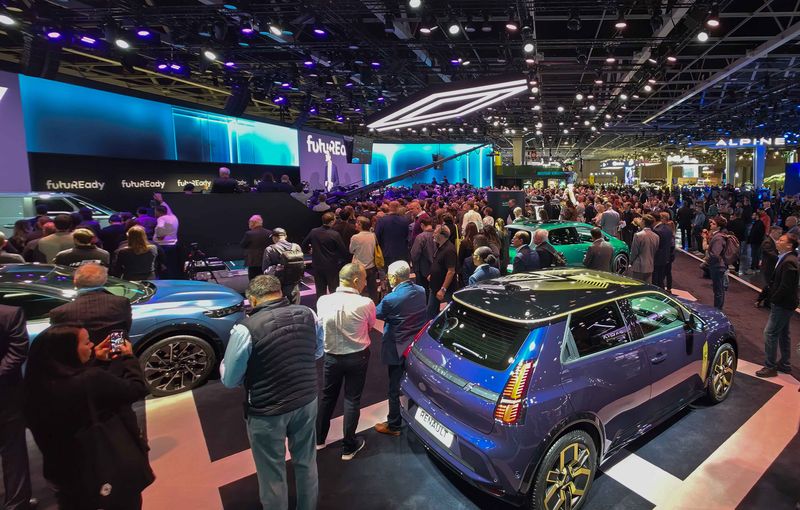
Ivan Segal, senior vice president of global sales and operations for the Renault brand, made the remarks on the 12th (local time), speaking with a group of Korean reporters at the 2026 Paris Motor Show at Porte de Versailles in Paris, France.
In interviews that day with Segal and other executives, including Renault Group Chief Technology Officer (CTO) Philippe Brunet, Renault outlined its strategy for the South Korean market and its technological direction.
■ Hybrids in 2027, all-electric vehicles in 2028
Segal stressed that “South Korea is a very important and strategic market.” He said the market was somewhat sluggish this year, estimating that it was “currently down around 1–2%.” He added that Renault would work to improve sales by emphasizing the Arkana, Grand Koleos and Filante.He also outlined the powertrain strategy. Although Renault currently produces hybrid vehicles in South Korea, Segal said, “I think we need to be able to move toward 100% all-electric vehicles in the future,” adding, “We are considering introducing 100% all-electric vehicles in 2028.”
Hee-jung Sang, a vice president at Renault Korea Co., Ltd., explained, “A hybrid model is scheduled for 2027, and we are planning an all-electric vehicle for 2028.”
Segal described the Renault Korea Busan plant as a facility that meets demand in the South Korean market and as one of the Renault Group’s top-tier plants, capable of exporting vehicles worldwide.
Asked whether the U.S. sales halt for the Polestar 4, which was slated for production at the Busan plant for export to North America, could undermine the plant’s position as an export hub, he acknowledged that one of Renault’s several partners had faced difficulties exporting one model to the United States. However, he replied, “I think Renault can find more export opportunities through the Filante, the Grand Koleos and other models.”
He singled out South America, including Colombia, which has a free trade agreement (FTA) with South Korea, as a promising market. Vice President Sang added, “Exported vehicles are selling well in Colombia, so we view that very positively.” She said the European market could also be considered and that they were currently looking into it.
■ Chinese brands hold 12% of the European market ... “Renault hasn’t lost market share”
Segal stressed that Renault should not ignore the competitiveness of Chinese companies, but acknowledge it and learn from them. He said Renault operates a team of 150–200 employees in China to monitor local trends and technology.He cited the Twingo as an example of the results. A few years ago, developing a new car in Europe took around four years; working with a Chinese development company shortened the period to just under two years, he explained. Renault plans to apply this approach—developing vehicles within two years—to all its models.
“Chinese brands currently have a 12% share of the European market,” Segal said. “But Renault hasn’t lost market share. If anything, its share has tended to increase.”
He cited Renault’s decision to pursue electrification five years ago and introduce full hybrids and all-electric vehicles together, as well as its dealership network of around 3,000 locations reaching even small towns, as factors behind its success. He also pointed to residual-value management as a competitive strength. “I think it takes around two to four years to know the residual value of Chinese cars,” he said.
On cooperation with Chinese companies, he explained, “Our principle is to pursue it on a case-by-case basis when it is mutually beneficial, with localization as a prerequisite.” He said Renault’s cooperation with Geely followed the same principle, adding, “That doesn’t mean we’ll open up and cooperate with everyone around the world without exception.”
■ CTO focuses on “price competitiveness” for next-generation EV
CTO Brunet said price competitiveness was the area receiving the most attention in the next-generation EV Renault plans to unveil in South Korea in 2028. “That doesn’t mean we intend to make a cheap car,” he said. “The technology we plan to use is cutting-edge, and we want to offer it on competitive terms.”He also emphasized combining electrification with intelligent features. Renault plans to apply artificial intelligence (AI) not only to the cockpit but also to driver-assistance functions. Asked whether the vehicle would include L2++-level driver-assistance technology, he replied, “That is our intention.”
CTO Brunet said Renault expects to develop and introduce its own urban driving-assistance feature, “City NOA,” in the near future. He explained that Geely is a partner operating a joint venture in South Korea, but Renault can freely choose between Geely’s technology and its own, depending on which is more suitable.
He said Renault is conducting preliminary research and development on Level 4 (L4) autonomous driving with WeRide, a Chinese autonomous-driving company in which Renault is a shareholder, but has no immediate plans to bring it to market because the regulatory outlook is unclear.
On hybrids, he said, “At present, we believe a hybrid system combining series and parallel configurations is the most suitable technology in terms of fuel efficiency.” He said Renault would maintain its “Two Legs Strategy” of pursuing both EVs and hybrids. He left open the possibility of introducing extended-range electric vehicles (EREVs) as needed to address the concerns of customers worried about driving range.
CTO Brunet, who previously oversaw development of the QM6, said, “South Korea’s engineering team has very strong capabilities in the D and E segments.” He also cited Renault Korea Co., Ltd.’s agility in introducing new features, including connectivity, as a strength.
[email protected] Kim Dong-chan Reporter