Kang Kyung-wha: “Intelligence cooperation with the U.S. is the most difficult outstanding issue; it has not been resolved as much as the U.S. expects”
- Input
- 2026-10-13 05:12:42
- Updated
- 2026-10-13 05:12:42
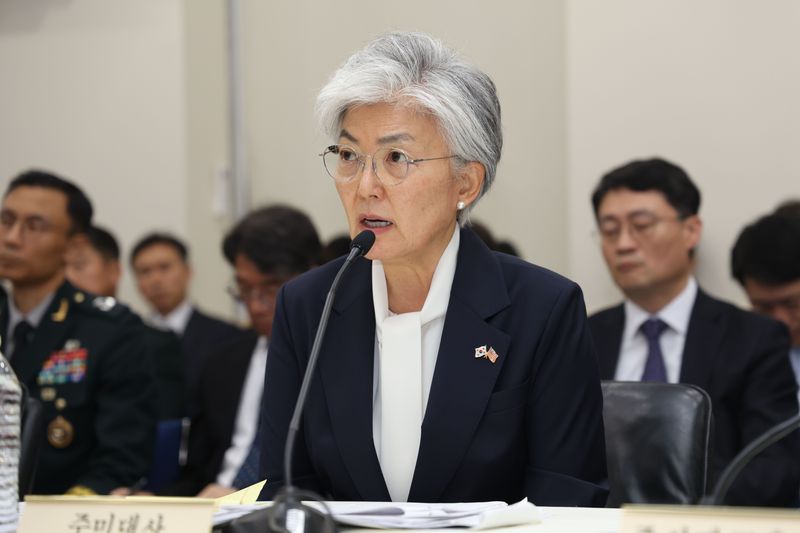
At a parliamentary audit by the National Assembly’s Foreign Affairs and Unification Committee in Washington, D.C., that day, Kang was asked about the most difficult issue in South Korea-U.S. relations and replied, “It is the issue being discussed the most in connection with intelligence cooperation.” Kang added, “Strategic investment was the most difficult issue until the announcement of the No. 1 project, including investment in Alaska LNG.”
Kang said the U.S. side raised the issue of intelligence cooperation at a meeting on the 18th of last month between Foreign Minister Cho Hyun and U.S. Secretary of State Marco Rubio. “There was talk at the time that there was a problem with intelligence cooperation,” Kang said. Regarding South Korea’s response since then, Kang said, “I don’t think the issue has yet been sufficiently resolved to the extent the U.S. side expects.”
However, Kang drew a distinction when asked whether Secretary Rubio had mentioned the future of Unification Minister Chung Dong-young or National Intelligence Service Director Lee Jong-seok, saying, “I don’t recall any mention of specific individuals.”
Regarding Minister Chung’s remarks about North Korean nuclear facilities in Kusong, Kang explained, “It was not a criticism of Minister Chung personally.” Kang said communication between the two countries’ intelligence agencies had taken place and that, as far as Kang knew, progress had also been made.
Kang voiced difficulties in communicating with the White House. “I acknowledge that there are limits to communication with the White House,” Kang said, adding that high-level consultations had not taken place as often as desired, “to the point that even I feel frustrated.”
Meanwhile, regarding the possibility of a North Korea-U.S. summit, Kang said, “There is always a possibility, but as far as I know, there has not yet been any concrete progress.”
Kang said President Trump had expressed his willingness to engage in dialogue with North Korea several times, but that “there are no concrete signs.” However, Kang stressed that, with North Korea indicating it would no longer treat South Korea as a dialogue partner, it was important to open the way for inter-Korean dialogue through talks between North Korea and the U.S.
[email protected] Correspondent Lee Byung-cheol Reporter