After nearly three years, decision due this month on fines over Google and Apple in-app payments; regulatory gaps around X and short-form content also under scrutiny
- Input
- 2026-10-12 23:47:23
- Updated
- 2026-10-12 23:47:23
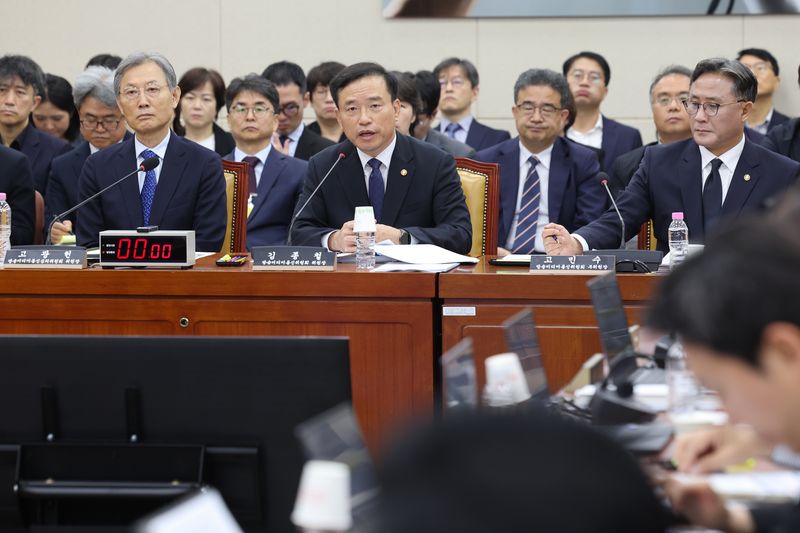
[Financial News] Regulatory and user-protection blind spots involving global Big Tech platforms and emerging content services came under intense scrutiny during a parliamentary audit. In particular, the imposition of fines worth hundreds of billions of won on Google and Apple for forcing in-app payments—which has remained unresolved for nearly three years—is expected to be finalized this month.
At a parliamentary audit on the 12th by the National Assembly’s Science, ICT, Broadcasting, and Communications Committee of the Broadcasting, Media and Communications Commission (BMCC) and the Korea Communications Standards Commission (KCSC), lawmakers sharply criticized global platforms for evading domestic regulations and raised concerns about gaps in user protection as new content services proliferate.
■ End in sight this month for Google and Apple in-app payment sanctions delayed for three years
The biggest issue at the audit that day was the BMCC’s delay in sanctioning Google and Apple for forcing in-app payments. In October 2023, the Korea Communications Commission, the BMCC’s predecessor, had given advance notice of a proposed corrective order to impose fines totaling 115.5 billion won—47.5 billion won on Google and 68 billion won on Apple—saying the two companies had forced app developers to use specific payment methods and imposed unfavorable terms on third-party payments. But amid disruptions at the commission and other problems, no final decision had been made even after three years.
Song Gi-heon, chair of the Science, ICT, Broadcasting, and Communications Committee, strongly criticized the delay, saying, “Nearly three years have passed since advance notice was given of the fines, and there is still no decision.” He added, “Sanctions have already been imposed in other jurisdictions, including the European Union (EU) and India, but this is being delayed excessively.”
BMCC Chair Kim Jong-cheol said, “I expect a decision to be made soon, before October is over.” He explained, “After hearing from the parties last August, we requested submissions of views and evidence on additional issues that were raised and received responses. We are now in the final stages of completing our review,” adding, “We are carefully examining matters that could spark international controversy to ensure procedural legitimacy.”
■ Drug posts slip through on X; sexually suggestive overseas short-form content faces no safeguards — regulatory blind spots come under fire
The audit also focused on the spread of drugs and harmful content through overseas platforms such as X (formerly Twitter), as well as the lack of oversight of fast-growing short-form dramas.
Jo Gyeong-tae of the People Power Party said, “Unlike in the United States or Japan, posts related to drugs or crime can be searched on X in Korea without being filtered.” He argued that the aggressive search restrictions X imposed during the spread of deepfakes of pop star Taylor Swift should also be applied in Korea.
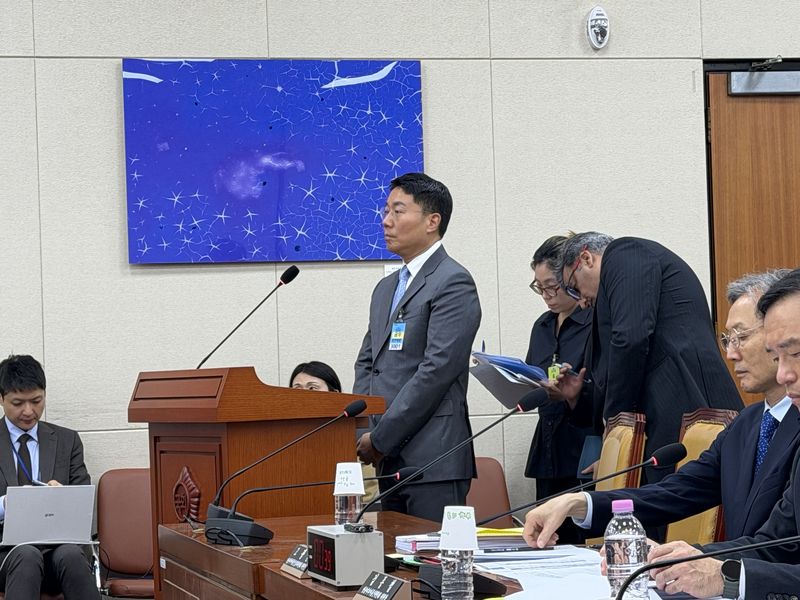
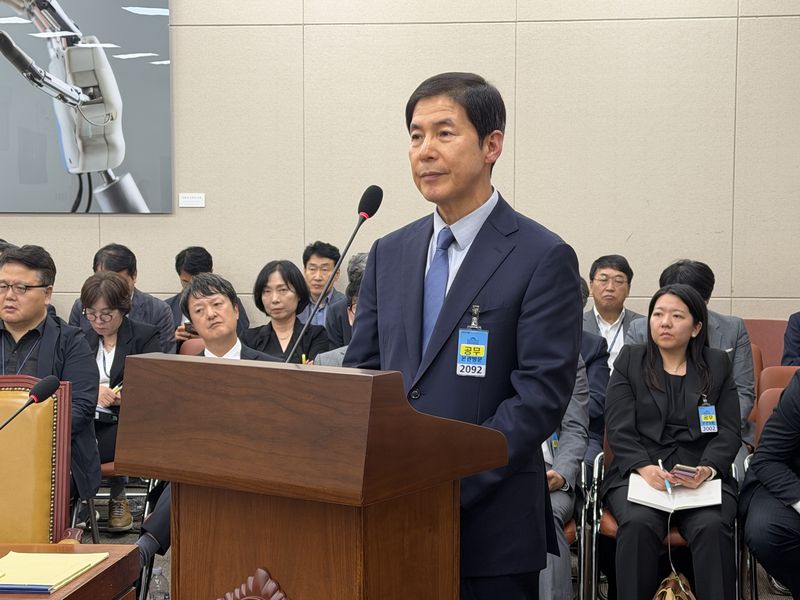
Appearing as a witness, X Korea CEO Shin Chang-seop said in his defense, “The algorithm uses the same detection system worldwide and does not discriminate by country.” He added, “We understand your concerns and will do our utmost to take action against crime-related content.”
Criticism was also raised that overseas short-form dramas are cleverly evading domestic regulations. Lee Jeong-heon of the Democratic Party of Korea pointed out that, when determining which services must designate a person responsible for youth protection—those with an average of 100,000 daily users and annual revenue of at least 1 billion won—authorities rely on incomplete monthly statistics based mainly on Android panels, allowing large overseas operators to skirt regulation. He also noted that the KCSC had not reviewed a single short-form drama or harmful advertisement to date, and criticized the situation, saying, “Only domestic businesses are facing reverse discrimination.”
Kim Jong-cheol promised, “We will thoroughly review changes to our investigation methods and other measures to reduce blind spots.” KCSC Chair Ko Gwang-heon also said, “We will set a period for focused monitoring, examine the issue intensively, and report the results.”
[email protected] Park Ji-hyun Reporter