Homeplus CEO Jo Joo-yeon: “Limited scope to boost sales; no capacity to support tenant businesses’ losses”
- Input
- 2026-10-12 18:04:33
- Updated
- 2026-10-12 18:04:33
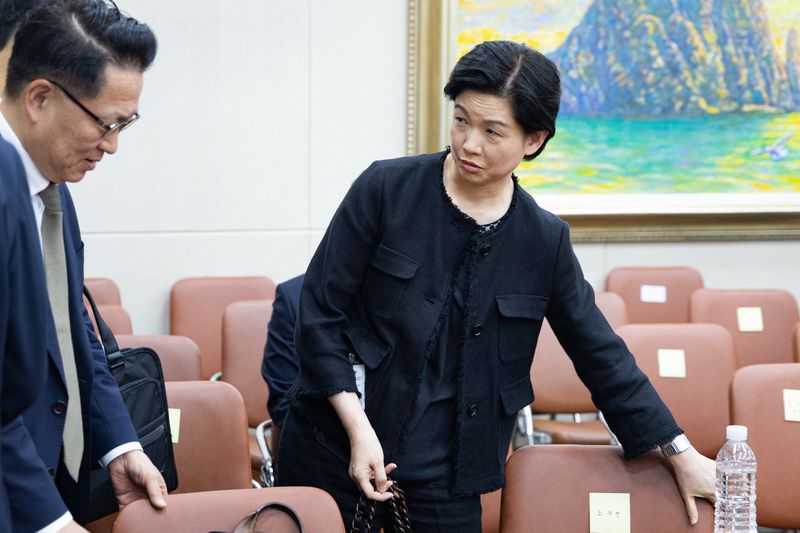
[Financial News] Homeplus CEO Jo Joo-yeon said the company’s sales situation was “such that there is limited room for growth.”
Jo made the remarks on the 12th while appearing as a witness at the National Assembly Political Affairs Committee’s audit of the Fair Trade Commission, in response to a question from Min Byung-deok of the Democratic Party of Korea about why the company had introduced a voluntary retirement program.
Min pointed out that when stores were closed in the past, the terms included 12 months’ wages, and immediately before the rehabilitation proceedings, 18 months’ wages, but this voluntary retirement program offered no separate compensation. He criticized the company, saying, “Unpaid wages and severance pay are things that must obviously be paid,” and noted that the agreement reached as part of receiving 200 billion won in funding did not mention voluntary retirement.
Jo said, “We were able to resume operations with 200 billion won in debtor-in-possession (DIP) financing. What we had originally expected was to normalize deliveries and increase inventory and sales through credit transactions.” He added, “But in reality, only prepayment and cash transactions are possible,” saying that boosting sales was difficult.
Asked whether he had also offered his resignation in connection with MBK Partners Vice Chairman Kim Kwang-il’s announcement that he was stepping down, Jo replied, “I have not.”
Questions also continued about measures to address losses suffered by tenant businesses amid the Homeplus crisis. People Power Party lawmaker Seo Il-jun pointed out that the number of tenant businesses had fallen less than the number of suppliers because contract terms, the return of security deposits and restoration costs made it difficult for them to withdraw easily.
When Seo then asked whether support was being provided to tenant businesses unable to operate during the prolonged shutdown, Jo said the company was taking steps such as allowing them to use their own booths after stores reopened. However, regarding additional support, he said, “We are doing everything we can, but at present we don’t have the capacity.”
Jo cited M&A and store sales as ways to repay creditors. “We are proceeding with the sale of 19 stores that we own among the closed locations,” he said. “We will secure funds as quickly as possible and do our utmost to repay what we owe.” He added, “We are set to receive letters of intent by the end of October,” and emphasized, “We will expedite M&A and quickly repay all outstanding claims.”
Seo repeatedly asked what the plan would be if the sales did not go smoothly, but Jo repeated that he would “do his best.”
Also during the audit, GS Retail was criticized for inserting unnecessary intermediary vendors (suppliers) into the supply process, driving up supply prices and passing the burden on to consumers and franchise owners. Allegations were also raised that it had entrusted product supply to a so-called “former-insider firm” established by someone formerly with GS Retail.
GS Retail Vice President Oh Jin-seok replied, “We are carefully looking into what issues there may be internally.”
[email protected] Jang Yu-ha Reporter