Knee pain—should you just rest? After-holiday pain: movement is the medicine
- Input
- 2026-10-12 15:47:48
- Updated
- 2026-10-12 15:47:48
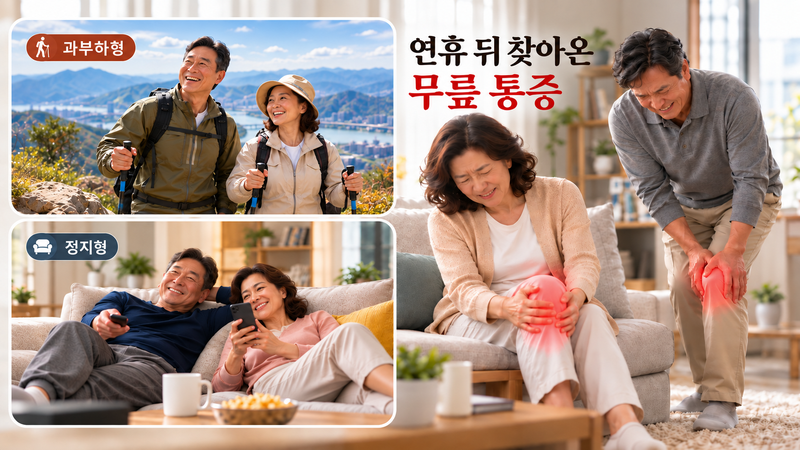
[Financial News] The idea that you should rest when your knee hurts could actually slow your recovery. When knee pain strikes after a holiday break, once the swelling has gone down, the key is not resting but “how you move.”
Kim Ha-neul, director of Busan Jaseng Hospital of Korean Medicine, said on the 12th, marking World Arthritis Day: “On the way to work after returning from a holiday break, some people find their knees aching every time they climb the stairs, or their joints feeling stiff and difficult to straighten when they stand up after sitting for a long time. It is usually fatigue that eases within a few days, but it could also be a sign of a joint problem that had gone unnoticed.”
Whether you use your knees too much or too little, they can hurt... ‘Overload’ and ‘disuse’
Knee pain after a holiday break generally falls into two types: “overload,” from using the knees too much, and “disuse,” from using them too little. Both can cause pain in previously healthy knees or hasten the onset of degenerative arthritis.
Overload-related pain is caused by the force placed on the knees. Even when walking on level ground, the knees bear forces several times a person’s body weight, and the load is greater when walking downhill or downstairs. If someone who does not usually walk much suddenly goes hiking or takes a long trip, their muscles may not absorb all the impact, transferring the load directly to the cartilage and surrounding tissues.
In a study by researchers at the UK’s Keele University, adults aged 45 and older with knee pain were followed for up to three months. The results showed that people who performed movements that place heavy stress on the knees—such as squatting, going up and down stairs, or lifting heavy objects—were about 2.2 times more likely to experience a sharp worsening of pain within 48 hours.
Conversely, pain can develop even when the knees are barely used. Cartilage, which has no blood vessels, receives nutrients from joint fluid that circulates when the knee moves. Sitting on the sofa watching TV for a long time or driving for hours with the knees bent can reduce this circulation, making the joints stiff and causing pain when standing up. If this continues for a long time, the thigh muscles that absorb impact on the knees can weaken, potentially contributing to arthritis.
According to a study of 46,819 people published in the international journal British Journal of Sports Medicine, people with weak muscles at the front of the thigh that straighten the knee had a higher risk of knee osteoarthritis: 1.85 times as high among women and 1.43 times as high among men.
Don’t stop just because it hurts... Start moving gradually after the acute phase
When their knees hurt, many middle-aged and older adults first cut back on movement. They take the elevator instead of the stairs and drive even short distances. But appropriate movement can actually help recovery. The Korea Disease Control and Prevention Agency also emphasizes regular physical activity through resources such as its National Health Information Portal, saying it is a misconception that people with knee arthritis should reduce activity to spare their joints.
The key is when and how you move. During the acute phase, when the knee is swollen or feels warm, you should get sufficient rest. Once the symptoms have eased, it is best to start with exercises that place less stress on the joints—such as walking on level ground, using a stationary bike, or exercising in water—and gradually increase your activity. On a stationary bike, body weight is distributed across the seat, reducing impact on the knees while strengthening the surrounding muscles. The buoyancy of water also makes it relatively easy to move during water exercise, even when you are in pain.
“Walking backward,” which recently made headlines after actress Sunwoo Yongnyeo introduced it as a way to care for the knees, may also be worth trying. It uses the lower-body muscles differently from forward walking, evenly stimulating muscles that are not usually used as much. Research has also reported that walking backward can help relieve pain and improve strength and physical function in people with knee arthritis.
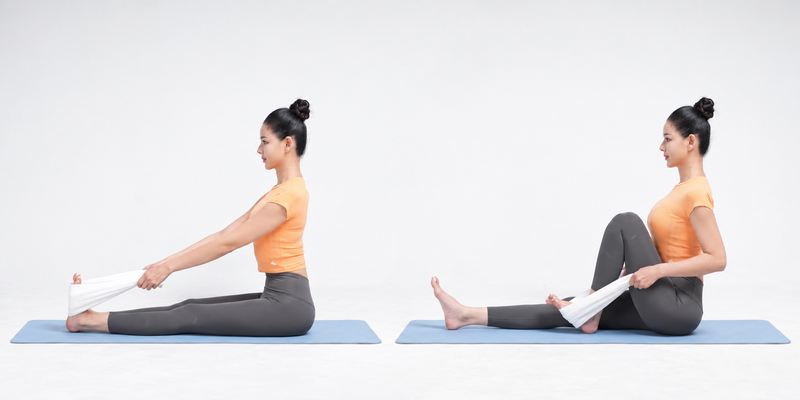
It is also a good idea to regularly stretch the hamstrings, the muscles at the back of the thigh that bend the knee. When knee pain reduces activity, the hamstrings can become stiff and limit joint movement. Sit on the floor with your legs extended and loop a towel around the sole of the foot on the painful side. Keeping the knee straight, slowly pull the towel toward your body and hold for 15 seconds. Then slowly bend the knee as far as you can, and gradually straighten it as if pushing the towel away with your foot. Repeat the movement for 3 sets of 3 repetitions.
If even walking is difficult, start with treatment... Restore function as well as relieve pain
If even walking remains difficult, treatment should first bring the pain under control and build a foundation for moving again. The goal should go beyond pain relief to restoring joint function so that patients can walk again and return to their daily lives.
Korean medicine considers not only the painful joint but also the surrounding muscles and ligaments and the balance of the body as a whole. Integrative Korean medicine treatment—including acupuncture, pharmacopuncture, Chuna manual therapy, and herbal medicine—is used to relieve pain and improve function. According to a paper published in the SCI(E)-indexed international journal Medicine by the Spinal and Joint Research Institute at Jaseng Hospital of Korean Medicine, the Numeric Rating Scale (NRS; 0–10) score for pain among 81 patients with knee arthritis fell from 5.4 at admission to 2.96 after integrative Korean medicine treatment, a decrease of nearly half.
Director Kim Ha-neul stressed: “If knee pain keeps recurring after a holiday break, it could be a sign of joint disease, so an accurate diagnosis is necessary. Rather than stopping because it hurts, it is important to manage the pain and consistently maintain muscle strength through low-impact exercise.”
[email protected] Medical correspondent Jeong Myeong-jin Reporter