“Claimed they’d live there, then rented to someone else” ... Supreme Court sets first standard for landlord liability
- Input
- 2026-10-12 14:48:47
- Updated
- 2026-10-12 14:48:47
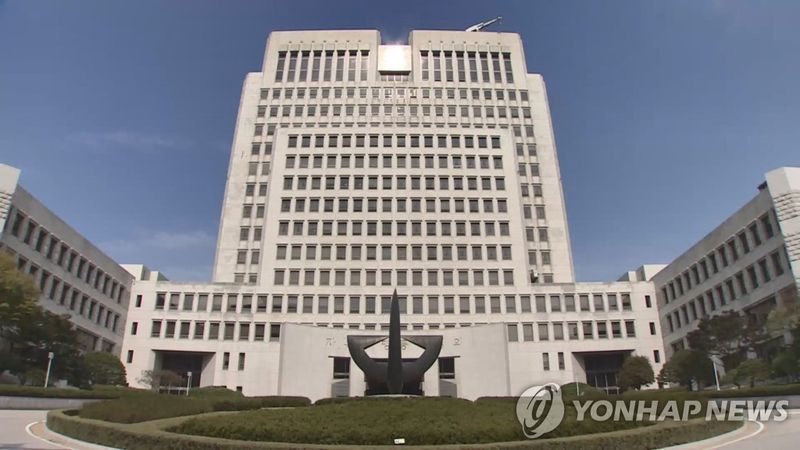
According to legal circles on the 12th, the Supreme Court’s Second Division, with Justice Kwon Young-jun as the justice in charge, dismissed landlord B’s appeal in a damages lawsuit brought by tenant A on the 10th of last month and upheld the lower court’s ruling ordering B to pay 30,799,992 won.
In July 2020, A rented an apartment in Seoul’s Seodaemun District for two years with a 660 million won deposit. In May 2022, shortly before the lease was due to end, A asked to renew it. B refused, saying B would move in and live there, and A vacated the apartment.
The Housing Lease Protection Act allows a tenant to exercise the right to request a lease renewal once and bars a landlord from refusing without just cause. If the lease is renewed, the lease term is considered to be two years. A landlord may refuse, however, if the landlord or a lineal ascendant or descendant intends to live in the property. But if the landlord rents it to a third party without just cause before the renewed term would have ended, the landlord must compensate the tenant for the resulting losses.
B registered a change of address to the apartment in September 2022, entered Korea in February 2023 and lived there until April 2024. Then, in February of that year—before the renewed lease would have ended in September 2024—B rented the apartment to someone else for two years with an 820 million won deposit. A sued, seeking damages under the law.
B argued that the situation had been unavoidable. Six tenants in a multi-family house B co-owned with B’s husband had demanded the return of their deposits all at once. B said the amount to be returned was 690 million won, while the new tenant had paid only 180 million won; B had no income and could not obtain a loan; and selling the property would have meant paying about 300 million won in capital gains tax. B also argued that these circumstances could not have been foreseen when the lease renewal was refused.
The first- and second-instance rulings reached opposite conclusions. In May last year, the Seoul Western District Court, the court of first instance, rejected A’s claim, finding that the six tenants’ simultaneous demands for their deposits in the wake of jeonse fraud were unforeseeable when the renewal was refused and that renting the property to a third party was unavoidable.
The appellate court, by contrast, overturned the first-instance ruling in April this year and ordered B to pay 30,799,992 won plus interest for delay. It found that the obligation to return the deposits on the multi-family house had already arisen when the lease renewal was refused, and that it was sufficiently foreseeable that payment would come due around February 2024. It also said that choosing to rent the apartment was merely one of several ways to raise the money and could not be considered unavoidable.
The Supreme Court upheld the appellate ruling and set out two requirements for “just cause.” The panel stated, “The landlord must have had to rent the property to a third party because of circumstances that could not have been foreseen when the renewal was refused, and renting the property to a third party must have been unavoidable.” It added, “The burden of proving that such just cause existed rests with the landlord.”
The burden of proof determines who bears the adverse consequences if a fact ultimately remains unclear. This means that a landlord who fails to prove both requirements cannot avoid liability for damages. This is the first time the Supreme Court has ruled on what constitutes “just cause” under this provision.
[email protected] Kim Dong-gyu Reporter