President Lee and the Democratic Party of Korea (DPK) see approval ratings fall in tandem as security and livelihood woes heighten the ruling camp’s sense of crisis
- Input
- 2026-10-12 15:39:21
- Updated
- 2026-10-12 15:39:21
[Financial News] As approval ratings for President Lee Jae-myung and the DPK fall in tandem, a “lame-duck crisis” for the government and ruling party appears to be coming into view. The setbacks are piling up, including a landmine explosion in the Demilitarized Zone (DMZ), a series of ministerial nominees withdrawing, and rising jeonse and monthly rents and apartment prices. In particular, head-to-head confrontations between hard-liners within the party, including Gyeonggi Province Governor Choo Mi-ae and lawmaker Kim Yong-min, and figures from the Rebuilding Korea Party (RKP) are continuing, further accelerating divisions in the progressive camp. Some say the ruling bloc will ultimately need to deliver results on people’s livelihoods and diplomacy to overcome this crisis.
Political sources said on the 12th that a series of foreign policy and security setbacks during the parliamentary audit period—including a DMZ landmine explosion, diplomatic tensions with Ukraine, and controversy over the National Intelligence Service being sidelined—have disrupted the Lee Jae-myung government’s and the DPK’s ability to advance their agenda. Controversies have also arisen across the board, from a comprehensive farmland investigation and efforts to impeach Chief Justice of the Supreme Court Cho Hee-dae to rising home prices, driving down approval ratings for the government and ruling party.
That day, a Realmeter poll commissioned by The Asia Business Daily surveyed 1,504 people aged 18 or older nationwide from the 6th to the 8th. It found that approval of the president’s job performance fell 2.2 percentage points from the previous week to 35.2%, while disapproval stood at 61.4%. In a separate party-approval survey of 1,004 people aged 19 or older nationwide on the 7th and 8th, the DPK scored 35.5%, down 7.0 percentage points from the previous poll. The PPP rose 2.9 percentage points to 41.3%, overtaking the DPK.
“Security issues appear to have prompted conservative-leaning voters, which seems to have driven the decline in approval ratings,” Kim Bong-shin, head of MetaVoice, told Financial News. “Another notable point is that, since the party convention, some voters who supported a hard-line approach to prosecutorial reform, including supporters of former leader Jeong Cheong-rae, have gone through a process of feeling a sense of defeat rather than political efficacy, and have been unable to unite as one,” he explained.
The sharp drop in the DPK’s approval rating sparked considerable debate in political circles. Although the government and ruling party had called for a “president for everyone” and a “DPK for everyone,” repeated failures have cost them support not only among centrists and conservatives but also among party members. Recent controversies over defending former Seoul Mayor Park Won-soon, Kim Ji-yong’s nomination to head the Serious Crimes Investigation Agency, and the dispatch of troops to the Strait of Hormuz are accelerating divisions in the progressive camp. Critical voices on these issues have also emerged from the RKP, the Progressive Party, and the Justice Party, which are considered part of the progressive camp.
A sense of crisis is also mounting within the DPK. Some are cautiously suggesting that victory cannot be assured in next year’s by-elections and that the party could even suffer a crushing defeat in the 2028 general election. There are also concerns that the party could lose again even if the Supreme Court upholds a ruling invalidating the election of Seoul Mayor Oh Se-hoon. “If the current situation continues, defeat in the general election may be unavoidable,” one ruling-bloc official said. “The president needs to take steps toward national unity, and party lawmakers should focus on delivering results in governing rather than provoking division.”
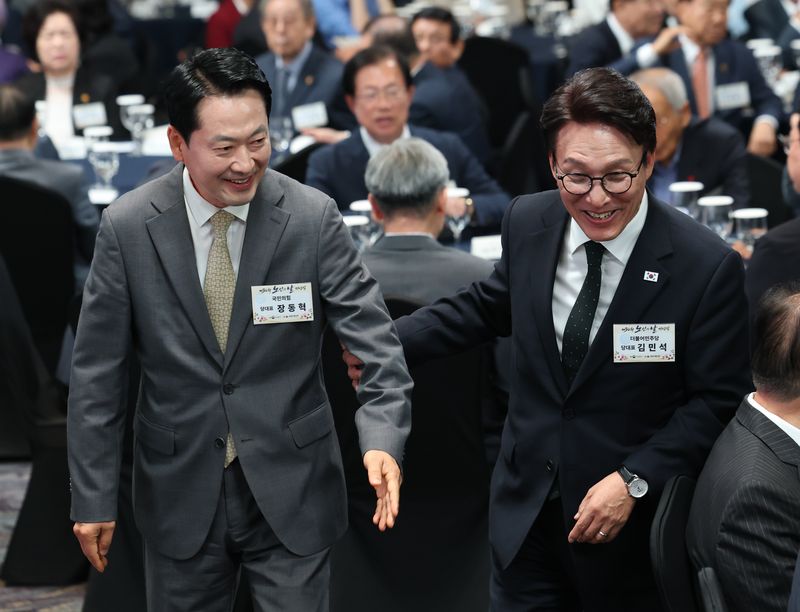
Buoyed by this atmosphere, the PPP appears to be stepping up its attacks. Criticism has continued over President Lee playing golf on the day a ceiling collapsed at a commercial building in Daegu, as well as his excessive use of social media (SNS). “These days, it seems the only things President Lee is interested in are golf and social media,” PPP leader Jang Dong-hyeok said. “He played golf even as Navy personnel were drowning at sea, and played golf with his family when a commercial building collapsed and the lives of elderly people were in danger.” Lawmaker Joo Jin-woo announced plans to introduce a “golf special counsel bill” targeting the controversy over President Lee’s golf outing. This amounts to continuing the special counsel push that followed the single-stock leveraged ETF issue. While this has not led to a notable rise in the PPP’s approval rating, questions have also been raised about the viability of Jang’s leadership. For now, however, party members appear to be holding back from internal divisions, sharing the view that this is a time to focus on confronting the ruling party.
Some say the government and ruling party will ultimately need to deliver visible results on people’s livelihoods and diplomacy to regain momentum in governing. However, since the parliamentary audit, budget, and tax policy debates that continue through the end of the year have generally tended to work against the ruling bloc, analysts say it may be difficult in practice to create momentum for a turnaround. “There may be a semiconductor boom, but its benefits are not being distributed evenly to ordinary people and the middle class. We need an opportunity to revive the livelihoods of ordinary people,” Kim said. “There needs to be either a notable achievement in people’s livelihoods and diplomacy, or an emerging sense of crisis that creates a mood in which people feel they need to protect the president.”
[email protected] Lee Hae-ram Reporter