POSTECH to Develop a 'Future Narrative Literacy' Education Model
- Input
- 2026-10-12 14:15:07
- Updated
- 2026-10-12 14:15:07
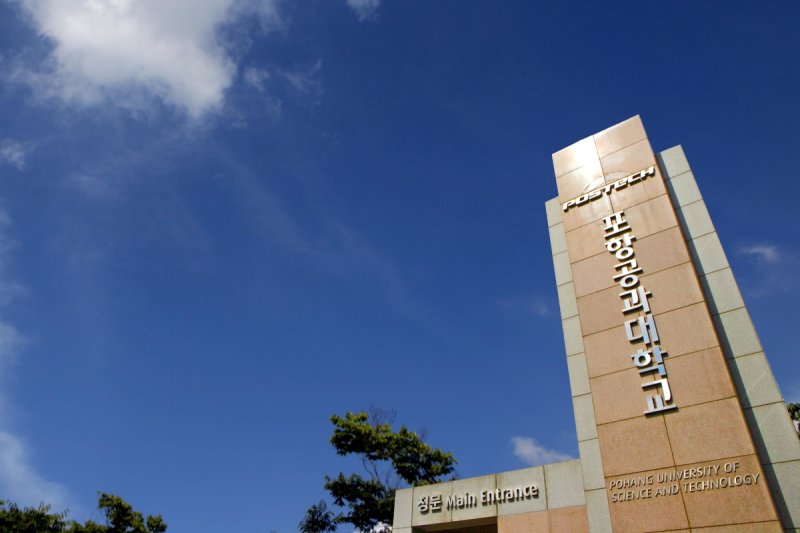
POSTECH's Institute for Communication and Public Discourse announced on the 12th that it had been selected for the Education-Linked Track of the 2026 Humanities and Social Sciences Research Institute Support Program, administered by the National Research Foundation of Korea (NRF). As a result, it will receive approximately 1.9 billion won in research funding over six years, including indirect costs. The selected project is titled 'Future Narrative Literacy Education Model: Developing and Expanding a Multidisciplinary Curriculum Linking Artificial Intelligence (AI), Extended Reality (XR), and Games at Science and Technology-Focused Universities.'
The project is led by Professor Kim Jin-hee of POSTECH's Division of Humanities and Social Sciences, with researchers from six fields taking part: literature, cognitive science, science and technology studies, communication, economics, and the arts. The team plans to structure Future Narrative Literacy around three areas—'narrative and cognition,' 'science and technology,' and 'social institutions'—and develop a multidisciplinary curriculum that connects them.
The program will focus in particular on using science fiction and other future narratives to help students understand the possibilities and limitations of science and technology and explore for themselves the social and ethical issues that technology may bring. The team plans to expand the model to include scenario creation using generative AI, experiences of future society based on XR, and game-based decision-making, enabling students to experience conflicts in future society firsthand and construct a range of possible futures.
Developing a Future Narrative Literacy education model at a science and technology-focused university is a first in Korea. The team plans to apply the model at POSTECH in both formal and non-formal education, while also expanding it to local communities and other universities to broaden the foundations for communication and education about science and technology and future society.
Kim Jin-hee, director of the Institute for Communication and Public Discourse, said, "In an era when science and technology, including generative AI, are advancing rapidly, the ability to imagine and ask questions about what kind of society and future that technology will create is as important as the ability to develop and use it." Kim added, "We will develop an educational model that enables students in science and engineering to go beyond simply predicting the future and shape a desirable future for themselves."
[email protected] Yeon Jian Reporter