Jeju to upgrade teacher-rights protection unit to department level next January
- Input
- 2026-10-12 14:08:20
- Updated
- 2026-10-12 14:08:20
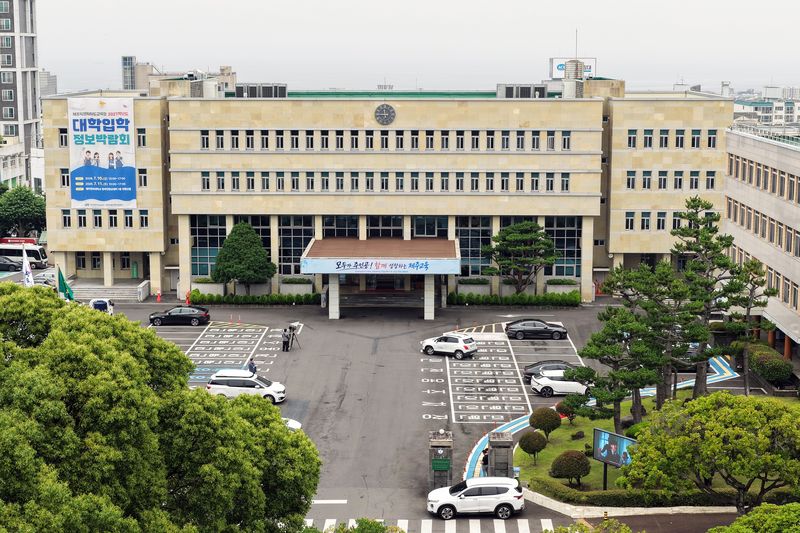
【Financial News Jeju = Jeong Yong-bok, staff writer】 Jeju is pursuing a reorganization to upgrade the dedicated unit protecting teachers’ educational activities in the region to department level next January. The key is to strengthen a support system that links responses to violations of educational activities at schools with conflict prevention and mediation, and recovery for affected teachers.
The Jeju Special Self-Governing Provincial Office of Education said on the 12th that it plans to reorganize the Education Activity Protection Center, currently part of the Emotional Recovery Division, as a department-level unit called the Education Activity Protection Office on January 1, 2027. Before the reorganization, the office plans to gather feedback from schools and define the new unit’s role and operating direction.
To that end, it will hold a forum titled “A New Beginning for Protecting Educational Activities: Finding a Way Forward Together” at 2 p.m. on the 15th at the 3D Theater of the Jeju Institute of Convergence Science. Around 80 people, including school staff, parents and Jeju residents, are expected to attend.
The reorganization focuses on linking responses to violations of educational activities with prevention, conflict mediation and recovery support. The aim is to strengthen professional support from the education office when teachers face complex conflicts, such as school violence, violations of educational activities or complaints from parents.
The Jeju Office of Education had earlier bolstered the center’s on-the-ground response capacity by adding two education supervisors and one administrative officer as of September 1. On the 29th of the same month, it announced a support plan linking reports made through the Education Activity Protection Safe Call Center (064-1395) with on-site assistance, legal consultations, and protection and recovery for affected teachers.
When a violation of educational activities is reported at a school, the education supervisor in charge visits the site or consults with school officials and provides guidance on separating the affected teacher from those involved in the incident, classroom operations and procedures of the Local Teacher Rights Protection Committee.
Efforts to strengthen systems protecting educational activities are also underway nationwide. In January, the Ministry of Education announced plans to expand the number of Education Activity Protection Centers from 55 in 2025 to around 110 this year, and to strengthen preventive functions such as early dispute mediation and legal support. The Jeju Office of Education is pursuing a plan to reorganize its existing center as a department-level unit within the office.
How to connect legal judgments with educational approaches to resolving conflict will be a key topic at the forum. Lee Jae-young, founder of the Korea Peace Education and Training Institute and chairman of the Korea Restorative Justice Association, will present on “The Meaning and Necessity of Restorative Justice as a Way to Address School Conflicts Educationally.”
Restorative justice is an approach that, when conflict arises, goes beyond determining rule violations and responsibility: it considers both the harm and the responsibility involved, and seeks to resolve the problem through dialogue and the restoration of relationships. The presentation will offer ways to address conflicts among students, teachers and parents in schools through an educational approach.
Three experts from the field will then take part in a discussion moderated by Lee Bong-hwa, principal of Yerae Elementary School. Song Gil-heon, head of the Student Life and Safety Division at Jeju Jeil Middle School, will discuss how school violence, violations of educational activities and student guidance are handled under separate laws and systems, and outline what is needed to ensure fair case handling while also resolving conflicts through educational approaches.
Oh Gwang-won, a lawyer at the Education Activity Protection Center of the Jeju Office of Education, will explain patterns of school disputes and ways to protect teachers, drawing on three years of experience providing legal support. Lee Eun-young, the school violence lead teacher at Nohyeong Middle School, will share examples of resolving conflicts by listening to students and holding dialogue sessions, and suggest ways to provide specialist support and reduce teachers’ workloads.
The provincial office of education plans to review feedback from the forum, develop a support system spanning prevention of violations of educational activities, conflict mediation, response and recovery, and incorporate it into the operating direction of the Education Activity Protection Office.
Yang Ho-seon, head of the Emotional Recovery Division at the Jeju Office of Education, said, “We will listen carefully to the views of the educational community, including school staff and parents, to ensure that the expansion of the organization leads to practical support for protecting teachers and providing students with a stable learning environment.”
[email protected] Jeong Yong-bok Reporter