Soaring fuel prices shake up US midterms ... 18 US House districts shift toward Democrats
- Input
- 2026-10-12 10:54:59
- Updated
- 2026-10-12 10:54:59
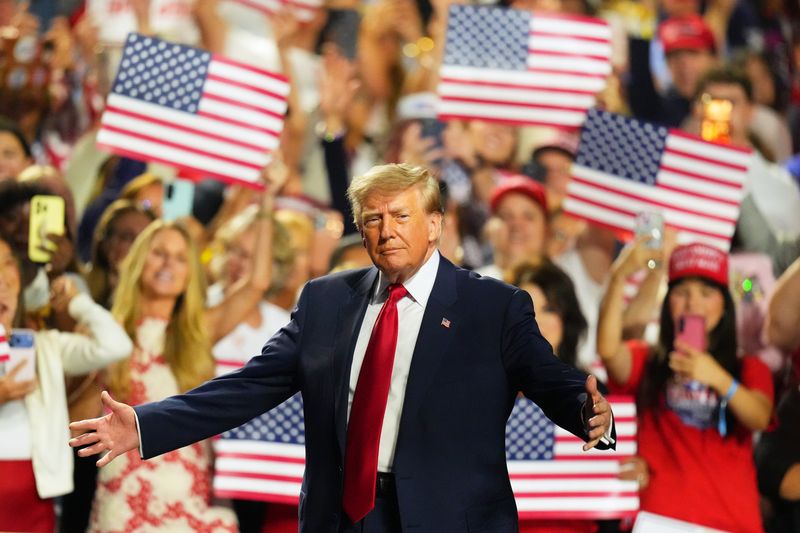
[Financial News, New York = Correspondent Lee Byung-cheol] With the U.S. midterm elections about three weeks away, analysts say the Democrats’ advantage in House races is becoming more pronounced. The nonpartisan Cook Political Report has shifted its ratings in 18 districts all at once in the Democrats’ favor, projecting they will retake a House majority. President Donald Trump has even moved to ease sanctions on Russian diesel in an effort to curb surging prices, but worsening economic sentiment—with his approval rating on inflation handling hovering around 20%—is adding to the burden on Republicans in the midterms.
18 House districts shift toward Democrats
On the 9th, the Cook Political Report shifted its ratings in 18 House districts in the Democrats’ favor. The move came just two weeks after it adjusted ratings in 15 districts on the 25th of last month.
In the latest changes, five districts shifted from Toss Up to Lean Democrat: four held by Republican incumbents—Iowa’s 1st and 3rd districts and Pennsylvania’s 7th and 10th—and Washington’s 3rd district. Four other districts previously rated Lean Republican—Iowa’s 2nd, Michigan’s 4th, North Carolina’s 1st and Virginia’s 1st—were reclassified as Toss Up. Ratings in Pennsylvania’s 1st and Maine’s 2nd districts, among others, also shifted in the Democrats’ favor.
The Cook Political Report raised its projection for the Democrats’ net House seat gains from 5–15 to 9–19. It now projects the Democrats will win 224–234 seats, above the 218 needed for a majority in the 435-seat House.
Analysts say even the Republicans’ large-scale campaign advertising has failed to turn the tide. Erin Covey, the Cook Political Report’s House analyst, said Republicans had poured vast sums into advertising but had failed to bring about meaningful change with less than a month remaining before the election. Many of the key battlegrounds, she noted, are districts Trump won in the 2024 presidential election, and negative views of his economic policies are weighing on Republican candidates.
Trump’s approval on inflation at 20% ... Economic discontent spreads
Voter dissatisfaction with economic policy lies behind the increasingly unfavorable electoral environment for Republicans. A joint poll with polling firm Focaldata, reported by the Financial Times (FT) on the 11th, found that President Trump’s job approval rating stood at just 34%. His ratings on jobs and economic policy were 25%, while his rating on handling inflation was even lower, at about 20%.
In a poll conducted on the 2nd–4th among 2,275 registered voters, more than two-thirds of respondents said the U.S. economy was headed in the wrong direction. Forty-five percent said Trump was hurting Republican candidates in the midterms. Nationwide preference for Democratic candidates was also at least 5 percentage points higher than for Republican candidates.
Among those who supported Trump in the 2024 presidential election, the share who still approved of his job performance had fallen to below 70%, from 80% in May. However, 80% of these voters still said they would vote for Republican candidates, suggesting economic dissatisfaction has not translated directly into defections from his support base.
Diesel prices surge 70% ... Trump lifts sanctions on Russia
Energy prices are one of the main economic issues putting pressure on Trump. According to the American Automobile Association (AAA), the U.S. national average price of diesel was $6.28 per gallon on the 9th, up about 67% from $3.76 on Feb. 28, just before the Iran war. The price hit a record $6.53 on the 22nd of last month. Regular gasoline also rose about 40% from a year earlier, to $4.37 per gallon.
The diesel price surge is also weighing on traditional Republican support groups, including farmers and truck drivers. Disruptions to Middle Eastern refinery operations caused by the Iran war and damage to Russian refineries from Ukrainian drone attacks have worsened the global shortage of refined petroleum products.
The Trump administration has pushed for the release of 100 million barrels from the strategic reserves of the Group of Seven (G7) and temporarily allowed diesel marked for tax-exempt use to be driven on public roads. But with the supply shortage persisting, the measures are seen as having a limited effect on stabilizing prices.
Then, on the 9th, after speaking by phone with Russian President Vladimir Putin, Trump announced a six-month sanctions waiver allowing the sale and import of Russian diesel, among other things. Trump said Russia had agreed to supply more than 300,000 tonnes immediately, 500,000 tonnes in November, and a further 1 million tonnes thereafter.
The move also drew criticism from within the Republican Party. Republican senators Susan Collins, Lisa Murkowski, Thom Tillis and John Curtis joined Democratic lawmakers in calling for the easing of sanctions to be reversed. They criticized the imports, saying they could violate U.S. law and provide economic benefits to Russia, which invaded Ukraine.
[email protected] Correspondent Lee Byung-cheol Reporter