Jeju launches bid to host ‘Global AI Hub,’ activates deputy-governor-level task force ahead of public hearing on 14th
- Input
- 2026-10-12 10:39:08
- Updated
- 2026-10-12 10:39:08
【Financial News, Jeju = Reporter Jeong Yong-bok】 As the government prepares to invite bids this month from domestic locations to host the Global Artificial Intelligence (AI) Hub, Jeju Province has formed a dedicated team led by its Deputy Governor for Climate and Economy and entered the competition in earnest.
According to Jeju Special Self-Governing Province on the 12th, the province has formed a working-level task force (TF) led by Deputy Governor for Climate and Economy Lee Chang-heum to prepare for the call for candidate sites for the Global AI Hub, and has begun developing a bid strategy.
The Global AI Hub is a cooperation center where governments, international organizations, multilateral development banks, businesses, academia and research institutions use artificial intelligence technology to address shared challenges facing the international community.
It is envisioned as an international campus that will support a joint response to challenges such as climate change, health, food and jobs—which individual countries may be unable to solve on their own—and help developing countries use AI technology and formulate policies.
On May 21, the government announced its vision for the Global AI Hub with the participation of nine international organizations, including the International Labour Organization (ILO), the International Telecommunication Union (ITU), the United Nations Development Programme (UNDP) and the World Health Organization (WHO), as well as five multilateral development banks, including the World Bank (WB) and the Asian Development Bank (ADB).
“AI for All, AI to Solve Global Challenges” is the central vision. Personnel seconded from international organizations are expected to be based at the hub and work on AI policy, the development of international standards, data and model sharing, joint international research, and education and training for developing countries. A key feature is that it will be an international cooperation body where countries and international organizations jointly use AI technology, personnel and research findings.
The site-selection process is also moving forward in earnest. The government plans to hold a public hearing at 10 a.m. on the 14th in the International Conference Hall at the Government Sejong Convention Center to disclose the site-selection criteria, evaluation process, future schedule and guidelines for the call for candidate sites, and gather feedback.
The goal is to invite applications for candidate sites this month, taking the hearing’s results into account, and finalize the location by the end of the year following document reviews and on-site inspections. The Global AI Hub is scheduled to open in 2027. Jeju is not the only contender: Busan, Incheon, Goyang and other regions are also seeking to host it, setting the stage for competition over the location.
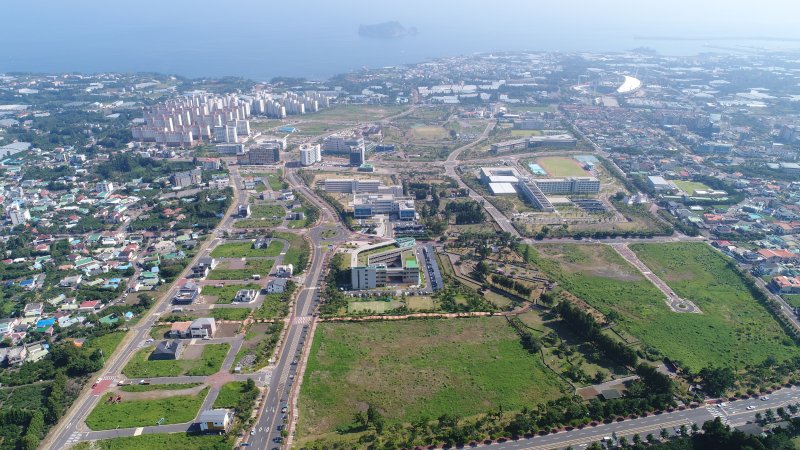
Jeju Province expects there will be little time to prepare between the start of the government’s call for applications and the proposal submission deadline, so it has first established a working-level response system. Centered on the Jeju Province AI Innovation Promotion Team, the TF has four divisions: international cooperation, living conditions, trends and communications, and demonstration models. The Jeju Research Institute is also providing policy advice.
The international cooperation division is reviewing experience working with UN agencies and running international training programs, while the living conditions division is examining housing, education and other essential services for personnel seconded from international organizations and their families.
The trends and communications division will respond to the government’s application schedule and evaluation criteria, while the demonstration models division plans to develop ways to connect Jeju’s climate, environmental and energy industries with international AI research projects. The divisions’ findings will be used to prepare the candidate-site proposal and for on-site inspections.
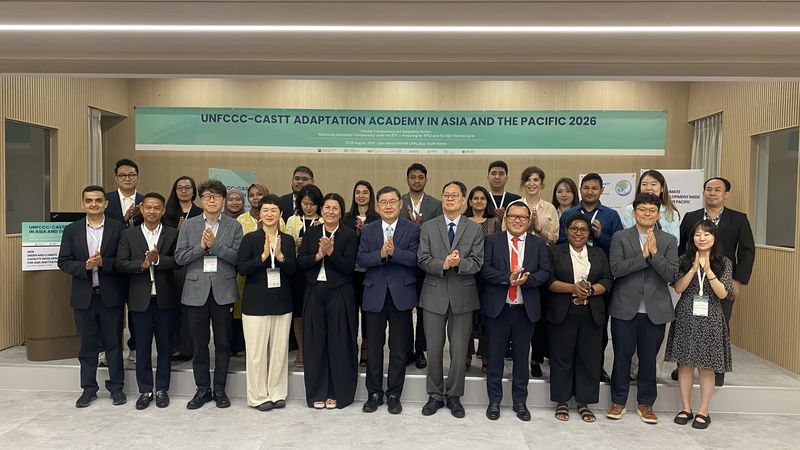
The main competitive advantage Jeju Province is highlighting is its established foundation for international cooperation. According to the policy brief “Global AI Hub: Why Jeju Is Ready,” released by the Jeju Research Institute on September 23, the United Nations Institute for Training and Research (UNITAR) Jeju International Training Center (CIFAL Jeju) has been running international training programs since 2010.
Last year, 7,049 people from about 150 countries took part in the center’s programs. Including the 6,622 participants in 2024, the total for the past two years comes to 13,671.
The center also has a track record of international training in AI. A course on “Inclusive Digital Governance in the Asia-Pacific Region,” held last July, drew 509 participants from 63 countries. In September that year, it also ran an international training program on artificial intelligence and transnational organized crime. This means Jeju already has the capacity to train developing-country stakeholders in AI policy and the use of AI technology.
The government’s international cooperation organizations are also based in Jeju. The National Information Society Agency (NIA) Global Center, located in Jeju Innovation City in Seogwipo, carries out international information and communications technology (ICT) cooperation projects, capacity-building programs for developing countries, and work with international organizations.
The Jeju Research Institute identified as a distinguishing advantage the presence in the same area of an international training organization linked to UN agencies and the government’s international digital cooperation organization. Jeju’s experience hosting international conferences, its status as an International Free City and the four international schools in its English Education City were also cited in support of its bid.
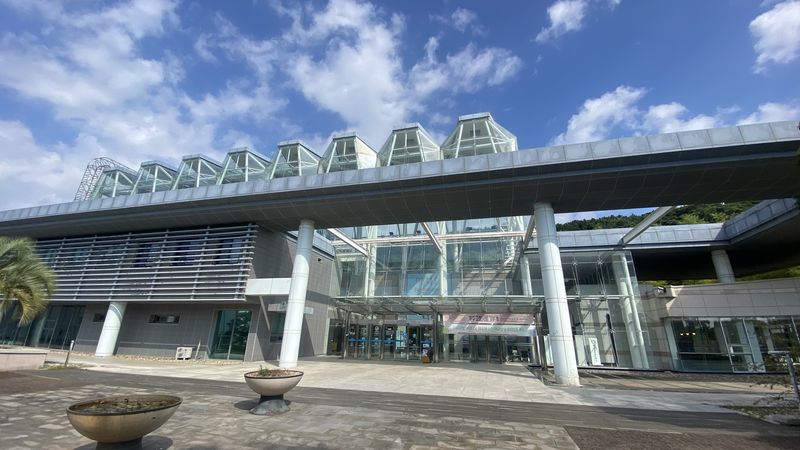
However, Jeju’s existing record of international cooperation does not guarantee that it is a suitable location for the Global AI Hub. To accommodate personnel from international organizations on a long-term basis, Jeju would need to secure adequate working space and meeting and research facilities, as well as housing, healthcare, education for their children and access to international transportation. The eligibility of staff and their families to stay, the scope of the visa-free system, the legal status of international organizations and agreements required to operate their facilities are also matters to be examined.
The relationship between Jeju Province’s planned 40-MW-class eco-friendly AI data center and the Global AI Hub also needs to be clearly defined. The 40-MW-class data center is a separate national-project proposal intended to combine renewable energy with AI computing facilities. The Global AI Hub, by contrast, is a center for international organizations’ cooperation on policy, research and education; the two projects have different functions and implementation processes.
Jeju Province envisions linking the two projects to strengthen its foundation for AI research and demonstration, but construction of the data center itself has not been confirmed as a prerequisite for selection as the host of the Global AI Hub.
Taking these points into account, the Jeju Research Institute proposed expanding existing international training programs into the AI field and developing joint courses with the UNITAR Jeju International Training Center and the NIA Global Center. It also proposed organizing data on living conditions for international organization personnel and the capacity of training facilities, and reviewing legal and institutional requirements in advance.
The institute also said Jeju should consider a strategy of first expanding international AI education and training and individual demonstration programs, regardless of the site-selection outcome, while still aiming to host the entire hub.
Jeju now urgently needs to connect its 16 years of experience in international cooperation with the government’s actual evaluation criteria and present concrete evidence that it can provide the working and living conditions international organizations require.
Ahn Hye-young, head of the Jeju Province AI Innovation Promotion Team, said, “It is important to show with concrete evidence why Jeju is suitable as a hub for international cooperation,” adding, “We will build a competitive bid strategy by drawing on Jeju’s experience in international cooperation and its foundation for demonstration projects.”
[email protected] Jeong Yong-bok Reporter