Hormuz flares up again as tanker attacks mount and oil shipments plunge
- Input
- 2026-10-12 13:19:49
- Updated
- 2026-10-12 13:19:49
[Financial News] Oil traffic through the Strait of Hormuz, which had nearly returned to prewar levels as of last month, is falling again. Iran, backed into a corner by the U.S. blockade, has stepped up attacks on merchant ships in an effort to regain control of the strait ahead of the U.S. midterm elections in November.
CNN reported on the 11th (local time), citing ship-tracking data from Kpler, a multinational maritime intelligence platform. As of the 6th, seven tankers had transited the Strait of Hormuz—less than half the daily average number of transits measured on a weekly basis and the lowest figure since July 23. From the 1st to the 7th, crude oil transiting the strait averaged 8.5 million barrels a day, about 40% below normal.
According to Kpler, crude oil volumes passing through the strait rose rapidly last month, exceeding prewar levels in the final week in particular. From the 24th to the 29th of last month, an average of 19.5–22.5 million barrels of crude oil a day passed through the Strait of Hormuz. From March last year until February this year, just before the Iran war broke out, the average was about 18 million barrels a day.
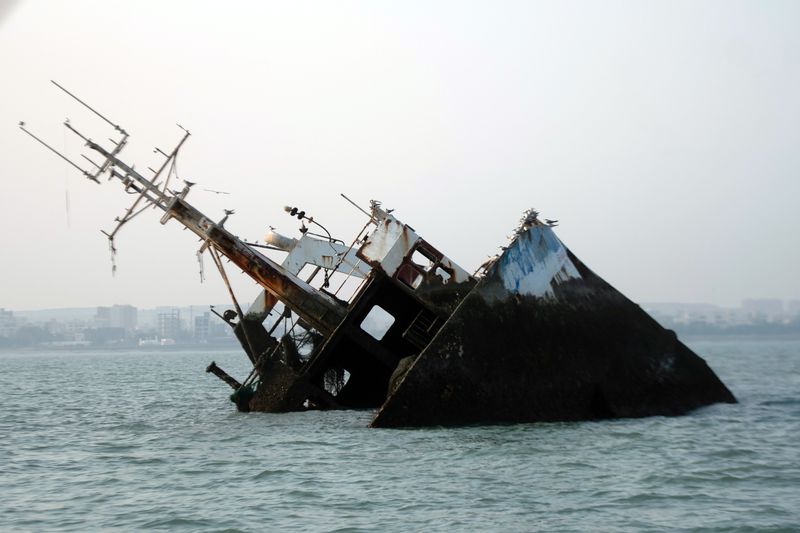
The number of tankers entering and leaving the strait has fallen sharply since late last month. Qatar-based pan-Arab outlet Al Jazeera reported on the 11th that at least 12 ships had been attacked in the strait from the 29th of last month to the 5th of this month. This was the highest weekly total since the Iran war began. At least one of the ships was struck in waters off northern Qatar, away from the Strait of Hormuz.
On the 10th, United Arab Emirates (UAE) authorities said they had rescued 22 crew members after a fire broke out aboard a tanker near the strait that day. The United Kingdom Maritime Trade Operations (UKMTO) said that same day that a tanker leaving the strait had been hit by an unidentified projectile, and reports of further attacks followed the next day. Neither of the two attacks caused any casualties.
On the 11th, Iran's political-military force, the Islamic Revolutionary Guard Corps (IRGC), issued a statement claiming that three tankers had struck mines in the Strait of Hormuz that day. Regarding one of them, the IRGC said, “A tanker carrying 750,000 barrels of crude oil ignored warnings from the IRGC Navy and struck a mine while attempting to take an unauthorized route. An explosion and a fierce fire followed.”
Iran returned to fighting in July after signing a memorandum of understanding with the United States to end the war in June. That same month, Iran said it would fully reseal the Strait of Hormuz. In response, the United States blocked Iran's oil exports by stopping and attacking Iran-linked vessels in the strait and near Iranian ports. On the 10th, U.S. Central Command, which oversees operations against Iran, said on X that it had attacked a Panama-flagged cargo ship near Oman that was not complying with U.S. military directives, damaging its propulsion system.
With the U.S. midterm elections set for November 3, the United States has not carried out direct airstrikes on mainland Iran since early last month. In a statement on the 8th, President Donald Trump said the United States would not attack Iran before the midterms. Iran, too, had halted attacks on merchant ships after the 23rd of last month, but has recently resumed them.
CNN said Iran had resumed attacks on tankers during the U.S. pause in attacks in an effort to regain control of the Strait of Hormuz. Mohsen Rezaee, secretary-general of Iran's Supreme National Security Council, wrote on X on the 11th, “The United States has agreed to some of Iran's seven conditions, but we consider that insufficient.” He added, “We presented the United States with seven conditions and made clear that we would not open the Strait of Hormuz to the United States or hold any negotiations until they were met.” Last month, Iran proposed that it would reopen the strait within seven days if the United States met seven conditions, including lifting the naval blockade, easing sanctions on oil, and a ceasefire in the Middle East, including Lebanon. The United States rejected Iran's proposal at the time.
Meanwhile, U.S. Treasury Secretary Scott Bessent, whose department is imposing economic sanctions on Iran alongside the blockade of its ports, said in a Fox News interview on the 11th, “Iran is the biggest loser in this confrontation.” He predicted that if the U.S. military blockade and economic sanctions continued for 2–4 months, Iran's economy would be pushed to its limits. He said Iran had tried to raise global energy prices and pressure the United States by blockading the Strait of Hormuz, but “got nothing.”
[email protected] Park Jong-won Reporter