“Sunlight brings income to villages”: Hongcheon County selects four villages in project call
- Input
- 2026-10-12 09:57:33
- Updated
- 2026-10-12 09:57:33
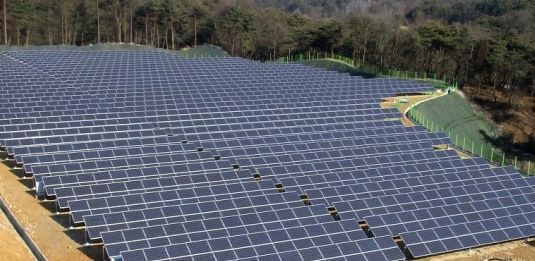
[Financial News, Hongcheon = Kim Gi-seop, reporter] Four more sunlight-income villages are expected to be added in Hongcheon, where residents directly operate solar power plants and share the profits.
According to Hongcheon County on the 12th, all four villages that applied for the second call for applications for this year’s Sunlight Income Village development project, led by the Ministry of the Interior and Safety, were selected conditionally. The villages are Seongsan 1-ri, Suha 1-ri, Jangpyeong 1-ri and Cheongnyang 2-ri. The county plans to quickly address the conditions set for each village, secure final project approval and then begin full-scale work, including building solar power plants.
The Ministry of the Interior and Safety announced the results of the second call on the 7th. It evaluated applications from 608 villages submitted by the end of July and selected 436. Adding the 87 villages chosen in the first call brings the nationwide total of participating villages to 523. Of the selected villages, 23 met all the requirements, including forming a cooperative, securing a site and preparing a financing plan. The remaining 413 were selected conditionally because, although they need to address some issues such as site lease agreements, financing plans and power-grid connections, it was judged that they could proceed with their projects within a short period. By region, South Jeolla and Gwangju had the most, with 106 villages, while 42 villages were selected in Gangwon Province.
The Sunlight Income Village initiative is a key campaign pledge of Hongcheon County Governor Shin Young-jae for the ninth popularly elected local-government term. Residents take part in building and operating solar renewable-energy power plants in their villages, and the resulting revenue is used for resident welfare and village development. The model involves installing facilities with a capacity of 300 kW to 1,000 kW on unused village land. Depending on local circumstances, revenue can also be distributed to residents as a form of basic income, drawing attention to the initiative as a new source of income for rural villages.
Government support will also be provided. The Ministry of the Interior and Safety plans to work with relevant agencies and local governments to help selected villages quickly launch power-generation projects, assisting with permitting procedures such as power-generation licenses, financing of up to 85%, securing project sites and resolving issues that arise during grid connections.
A county official said, “Villages are showing growing interest in a model where residents operate the power plants themselves and the revenue goes back to support village welfare and residents’ incomes.” The official added, “We will actively help villages establish cooperatives and secure state-owned and other public land in preparation for future calls, including the third call, which closes this month, so that more villages can take part in the project.”
[email protected] Kim Gi-seop Reporter