Park Jeong-hyeon, chair of the Presidential Committee for the Era of Local Autonomy: “Local governments should decide and implement policies their regions need”
- Input
- 2026-10-12 10:31:25
- Updated
- 2026-10-12 10:31:25
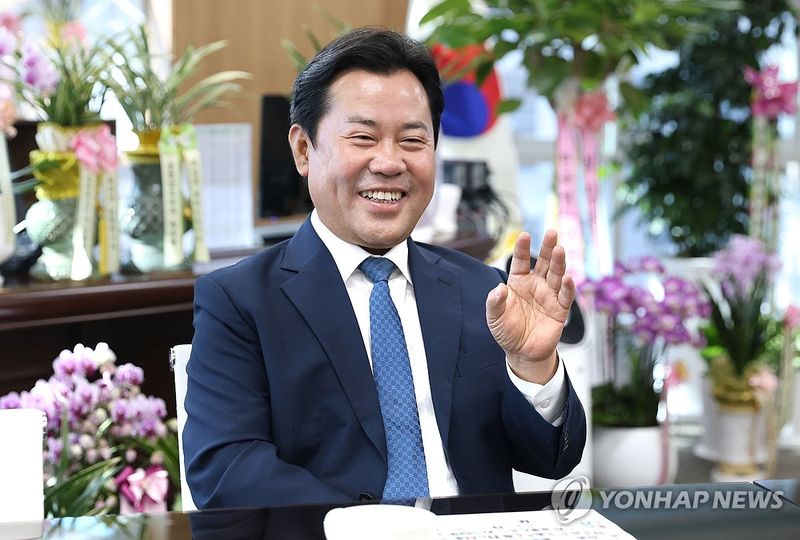
[Financial News] Park Jeong-hyeon, chair of the Presidential Committee for the Era of Local Autonomy under the president, said on the 12th that “residents and local governments should be able to decide and implement the policies their regions need,” adding that he would pursue decentralization and local autonomy to expand local governments’ discretion.
At the inauguration ceremony for the committee’s third chair, held in Sejong City that day, Park said, “I will build trust in local self-government through resident participation and transparent fiscal management, and foster cooperation so that the central government, too, can be a partner in making policy together.”
Park identified decentralization and local autonomy, along with supra-regional cooperation, as priorities for locally led growth. “Supra-regional special agreements should serve as a means of connecting projects designed by regions with central government funding and policies,” he said. “I will make sure that the commitments in those agreements are translated into actual investment and jobs, convenient transportation, and everyday services.”
He also said he would ensure that the views of basic local governments and residents are reflected in supra-regional cooperation. “It is also important to build a structure in which regional hub cities, surrounding cities and counties, and rural, mountain and fishing communities develop together,” Park said. “I will help each region build on its strengths and ensure that the voices of basic local governments and residents are fully reflected even within supra-regional cooperation.”
He presented the “Five Hubs and Three Special Districts balanced growth strategy” as a key priority for revitalizing regional economies. “Centered on growth engines that combine regional strengths with national strategies, I will connect corporate investment with talent development and help ensure that investment leads to good jobs and a strong industrial ecosystem,” he said.
Park said, “Changing a structure in which regions face population decline and a weakening industrial base while the Capital Metropolitan Area bears housing burdens and the costs of overcrowding is a task that cannot be postponed if South Korea is to achieve sustainable growth.” He added, “The balanced growth we seek is growth that builds regional capacity while improving people’s lives across the country. The gains from industry should translate into income for residents, while the foundations of education, healthcare, care and housing should support people in putting down roots and taking on new challenges.”
He also said he would reflect the philosophy of a basic society in balanced growth policies. “Wherever people live, they should be guaranteed the basics of life and be able to pursue a better future from that foundation,” Park said. “We will build a structure in which security in people’s lives and regional growth support each other.”
He also identified completing the administrative capital and relocating public institutions to other regions as priorities. “I will pursue both in a way that expands the country’s functions and opportunities for growth,” he said. “I will work with others to ensure that construction of the presidential office in Sejong and the Sejong National Assembly Building proceeds without disruption, and contribute to the necessary legal and regulatory changes.”
Park, who is from Buyeo County in South Chungcheong Province, served as a special policy adviser to former South Chungcheong Governor Ahn Hee-jung, as the province’s deputy governor for political affairs, and as Buyeo County mayor during the seventh and eighth popularly elected terms. He also served as spokesperson and vice chair of the Basic Income Local Government Council, among other roles.
[email protected] Lee Bo-mi Reporter