Preventing Children's Overreliance on AI: ChildFund Korea Proclaims Children's Rights Charter
- Input
- 2026-10-12 09:41:42
- Updated
- 2026-10-12 09:41:42
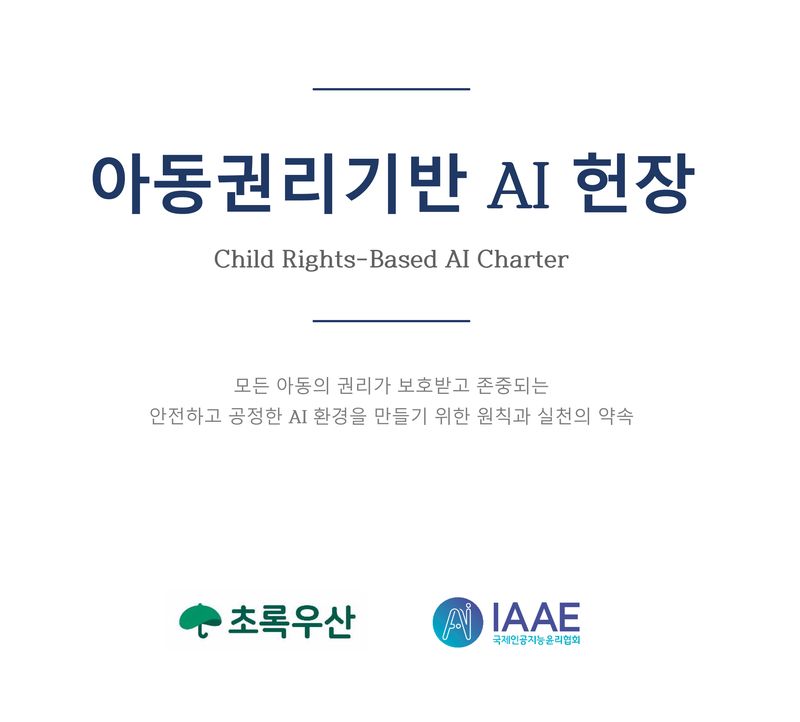
ChildFund Korea, a specialized child-welfare organization, said on the 12th that it had drawn up and proclaimed the “Child Rights-Based AI Charter” jointly with the International Association for AI Ethics. Philosophy, ethics, AI and legal experts drafted it based on the UN Convention on the Rights of the Child (CRC), incorporating input from around 200 members of ChildFund Korea’s Child Rights Advocacy Group.
The charter consists of six chapters and 20 articles. It is grounded in the principles of children’s dignity and best interests, and addresses nondiscriminatory access to AI and learning opportunities, opportunities to express opinions and participate, protection from risks, and remedies for harm.
AI systems that converse with children as if they were exchanging emotions are to have a feature that continually informs children that they are interacting with an AI, not a person. The charter also sets out a ban on designing or operating AI in ways that strengthen children’s emotional dependence or commercially exploit their vulnerabilities.
AI that could have a significant impact on children’s rights and safety must undergo a “Child Rights Impact Assessment” before development, introduction or major changes. However, the charter is not a legally binding regulatory document but a declaration proposing how different stakeholders can put its principles into practice.
The relationship between AI and children is also being addressed internationally as an area requiring protection. In a policy paper published last June, the United Nations Children’s Fund (UNICEF) noted that children use AI chatbots not only for information and learning but also to seek advice and emotional support, and called for a shift from responding after harm occurs to a prevention-focused approach.
ChildFund Korea plans to share the charter with the government, digital platform companies and others, and work with them to incorporate it into AI policies and guidelines, as well as the development and operation of services.
ChildFund Korea Chairman Hwang Young-ki said, “Children’s safety and rights are important standards that must be incorporated at the design stage, before AI is put to use.”
[email protected] In-seo Jang Reporter