“Thought it was lung cancer, but marinated crab was the culprit” ... ‘Parasite eggs’ in the lungs [Health Talk]
- Input
- 2026-10-12 08:53:22
- Updated
- 2026-10-12 08:53:22
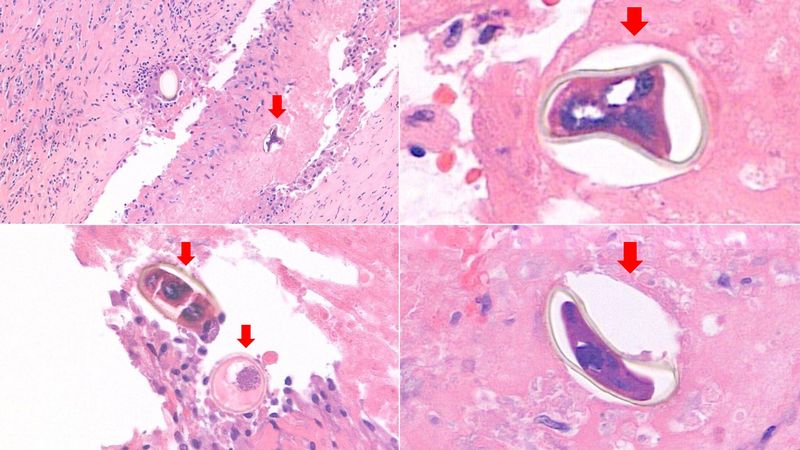
[Financial News] Parasite eggs, rather than cancer cells, were found in the lung of a patient in their 60s who had suspected lung cancer after coughing up blood-streaked sputum for several months. The patient had paragonimiasis, an infection contracted by eating freshwater crabs and similar foods raw.
Professor Jeon Yeong-jeong of the Department of Thoracic and Cardiovascular Surgery at Samsung Medical Center recently reported a case involving the diagnosis and surgery of a patient with paragonimiasis mistaken for lung cancer in the Journal of Chest Surgery, the official journal of the Korean Society of Thoracic and Cardiovascular Surgery.
According to the report, Patient A sought care at a local medical facility after experiencing bloody sputum for several months. Tests revealed an 18 mm nodule in the lower lobe of the right lung and approximately 1.5 liters of pleural fluid, raising suspicion of lung cancer.
Patient A underwent detailed tests at Samsung Medical Center, but no evidence confirming cancer was found. Professor Jeon then used video-assisted thoracoscopic surgery (VATS) to inspect the lesion directly, and found lung fluke eggs (Paragonimus ova). Instead of performing cancer surgery, the medical team removed a thick inflamed membrane embedded with parasite eggs and administered antiparasitic medication. Patient A was discharged six days after surgery without any significant complications.
Paragonimiasis is one of the major neglected tropical diseases (NTDs) designated by the World Health Organization (WHO). Eating raw or undercooked freshwater crabs and crayfish is a major route of infection. The disease was once common in South Korea, with the number of infected people reaching 2 million in the 1960s. But the number of diagnoses per year had plunged to fewer than 400 as of 2018, making it rare today. Sporadic cases still occur when people eat freshwater crustaceans raw, including freshwater marinated crab.
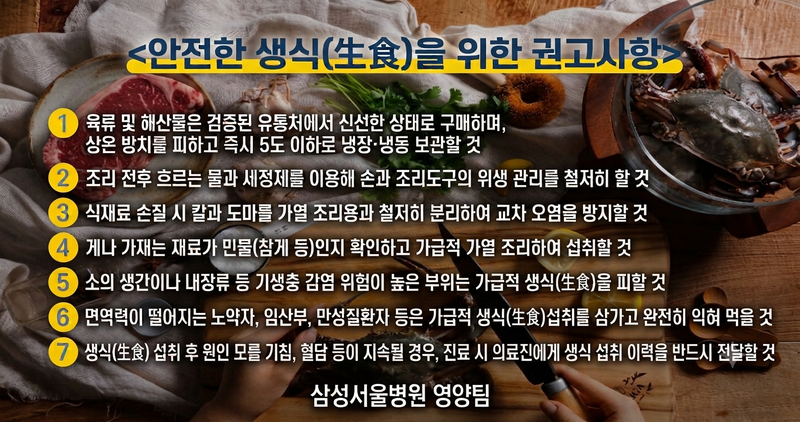
Professor Jeon said, “Parasitic diseases are easy to regard as forgotten illnesses, but as the trend of eating raw foods spreads, they need to be managed carefully. People should be cautious about consuming uncooked meat and seafood in general, including freshwater marinated crab and raw beef liver.”
Professor Jeon explained, however, that there is no need for excessive concern. Because the lung fluke’s intermediate hosts are limited to freshwater crustaceans, there is no risk of lung fluke infection from saltwater blue-crab gejang, commonly found in restaurants. It can be eaten safely as long as the source of the ingredients is checked carefully.
Professor Jeon advised, “When a lung nodule is found, parasitic infection is one possibility that should be considered. If you have eaten freshwater marinated crab or raw meat, you should tell your medical team during your consultation so that they can make an accurate diagnosis.”
[email protected] Jeong Myeong-jin, Medical Correspondent Reporter