RSV alert as seasons change...warning of infections among newborns at postpartum care centers
- Input
- 2026-10-12 08:27:05
- Updated
- 2026-10-12 08:27:05
[Financial News] Postpartum care centers, where newborns and mothers stay together, are particularly vulnerable to the spread of respiratory syncytial virus (RSV). Adults may experience it as a mild cold and recover, but if they pass it to newborns, it can lead to bronchiolitis or pneumonia, making extra caution necessary during seasonal changes.
RSV spreads not only through droplets produced by coughing or sneezing, but also through contact with hands, toys and household items contaminated with the virus. In settings such as postpartum care centers, where a small staff cares for multiple newborns, one infected person can spread the virus to many others. Adults and mothers may have no symptoms even if infected, and can unknowingly transmit the virus to newborns. Contact with symptomatic visitors or family members should be limited in areas where newborns stay.
Thought it was a cold...then a lower respiratory tract infection within days
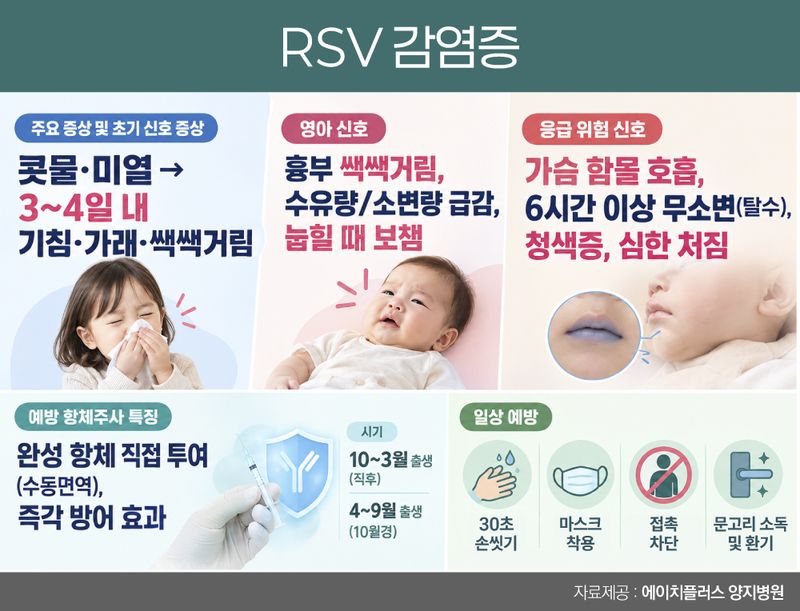
RSV begins with symptoms similar to those of a common cold, such as a runny nose, sneezing and a mild fever, making it difficult to distinguish. But it can progress to a lower respiratory tract infection, with worsening cough, rattling phlegm or wheezing when breathing. If coughing worsens at night and makes it difficult to sleep, or if vomiting occurs, feeding may also become difficult.
Hong Ju-hee, a specialist in pediatrics and adolescent medicine at H+ Yangji Hospital, said, "Within three to four days after a cough begins, lower respiratory symptoms such as rattling sounds from phlegm or wheezing may become pronounced." She added, "Because infants who cannot speak have difficulty expressing their symptoms, their feeding and urine output and breathing should be monitored carefully."
Seek immediate medical care if retractions or cyanosis appear
Infants have narrow airways and a weak cough reflex, so they may be unable to cough up phlegm and their symptoms can worsen quickly. If they develop retractions, with the area below the ribs pulling inward with each breath; dehydration, such as not urinating for six hours or more; cyanosis, with bluish lips or hands and feet; or severe lethargy, they should be taken to a medical facility immediately.
Hong emphasized, "Infants have very narrow bronchioles, so respiratory symptoms can worsen rapidly when inflammation develops." She added, "If an infant appears to be having difficulty breathing, or their feeding drops sharply and their urine output also decreases, it is important to seek medical care immediately rather than assume it is just a common cold and wait."
RSV reinfections are common, so caution is needed until children are 24 months old. Premature infants and those with underlying conditions such as heart disease, chronic lung disease or weakened immunity are at greater risk of developing severe illness. Older adults can also develop pneumonia or experience worsening of existing conditions if infected, so families should take care to prevent transmission among household members.
Treatment focuses on symptom relief...prepare with preventive antibody shots
RSV treatment focuses on supportive care to relieve fever and respiratory symptoms and provide sufficient fluids and nutrition, rather than antiviral treatment that directly eliminates the virus. Depending on symptoms, patients may also receive nebulizer treatment or postural drainage to help clear phlegm.
At home, it is best to keep indoor humidity at 50–60% and avoid cold air. If feeding is difficult, keeping the nose clear and offering smaller amounts more frequently rather than a large amount at once can help.
Antibody shots can be used for prevention. Unlike regular vaccines, they work through passive immunization, in which preformed antibodies are administered directly, so an immediate preventive effect can be expected. Everyday preventive measures are also important. Before caring for a newborn, people should wash their hands and wear a mask, and it is best to avoid contact with visitors. At postpartum care centers and at home, frequently touched items such as bottles, toys and doorknobs should be disinfected, and indoor spaces should be ventilated often.
Hong said, "Because symptoms can worsen rapidly after RSV infection in newborns and infants under 12 months old, prevention is important." She added, "It is best to consult medical staff and decide on preventive antibody administration for newborns born during the RSV season immediately after birth, and for other infants before the season begins."
[email protected] Jeong Myeong-jin, Medical Correspondent Reporter