“Reemployed until 65 after retiring at 60” ... KEF floats “employment extension” instead of raising the retirement age
- Input
- 2026-10-12 08:58:20
- Updated
- 2026-10-12 08:58:20
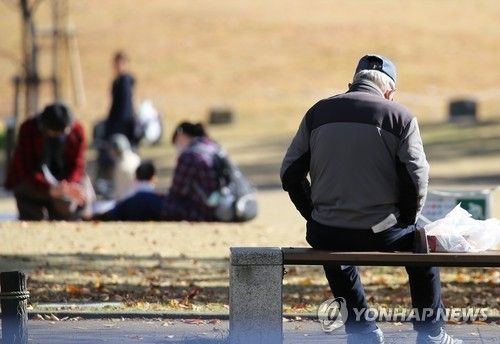
[Financial News] The Korea Enterprises Federation (KEF) argued that a phased approach centered on reemployment is needed to expand employment for older workers, rather than uniformly raising the statutory retirement age.
KEF points to Japan’s example, proposing “a structure that allows people to work until age 65”
According to Yonhap News Agency on the 12th, KEF introduced Japan’s example of maintaining the statutory retirement age at 60 while guaranteeing employment opportunities through age 65, primarily via reemployment, in a report titled “Japan’s Retirement Age Extension: Cases and Implications,” released the previous day.
In March, KEF visited Japan’s Ministry of Health, Labour and Welfare, the Japan Business Federation (Keidanren), and local companies to examine the background and current status of policies to employ older people and measures to secure employment for them.
When Japan amended the law in 2004, it introduced measures centered on reemployment to secure employment for older people through age 65, instead of raising the statutory retirement age, taking into account difficulties young people faced finding jobs and the burden on companies.
Starting in 2006, Japan made the measures to secure employment through age 65 mandatory in stages. The requirement to reemploy everyone who wished to continue working was gradually expanded from 2013 and fully implemented starting last year.
Japan also shared the burden of expanding employment for older people among labor, management, and the government. Workers accepted wage cuts as part of reemployment, companies revised their wage systems, and the government subsidized some of the wage reductions.
As of 2010, the average wage of reemployed workers was 68.4% of what they had earned just before retirement.
Japanese companies redesigned jobs and introduced performance-based compensation systems.
One company used funds generated by widening performance-based pay differences to improve conditions for reemployed workers. A company also redesigned jobs before retirement, taking into account workers’ health, expertise, and organizational needs.
KEF: “Uniformly raising the retirement age would dampen youth employment”
KEF explained that, as Japan pursued policies to employ older people, it built social consensus by taking into account both labor market conditions and the burden on companies, and increased business participation and acceptance of the system through phased legislation.
It also said that, as Japan worked to boost employment of older people, shifting to a wage system centered on job roles and performance played a very important role in easing companies’ labor costs and enabling them to continue using older workers.
KEF stressed that although the need to make use of older workers is also growing in South Korea, the country should take a cautious approach to raising the retirement age in light of highly seniority-based wages, rigid employment practices, and difficulties young people face finding jobs.
Lee Sang-cheol, head of KEF’s Employment and Social Policy Division, said, “If the retirement age alone is raised uniformly, the burden will lead directly to a contraction in youth employment and a deepening of the labor market’s dual structure.” He added, “There is an urgent need for a flexible system centered on reemployment that prevents conflicts with youth employment and guarantees companies the freedom to make their own choices.”
[email protected] An Gaeul Reporter