Saudi Arabia May Mount Major Military Retaliation After Houthi Rebels’ Airport Attack
- Input
- 2026-10-12 08:24:57
- Updated
- 2026-10-12 08:24:57
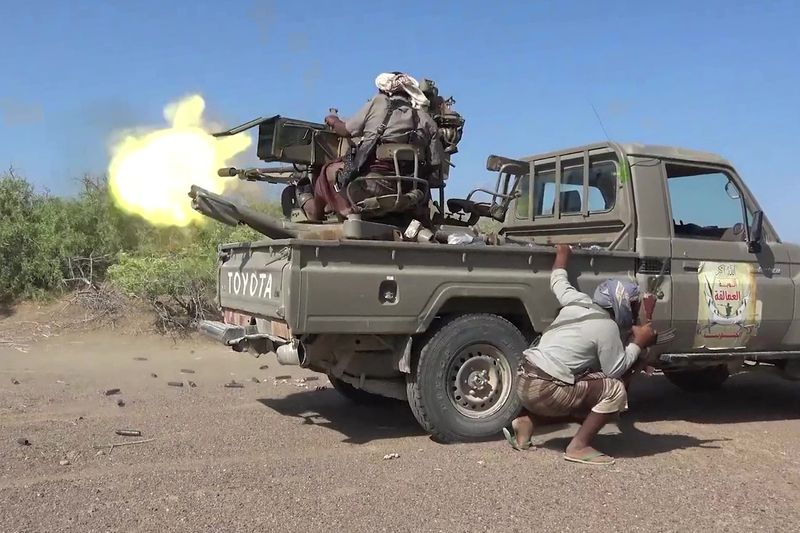
[Financial News] Despite more than 300 casualties in an airstrike by Yemen’s pro-Iran Houthi rebels on the airport in Riyadh, Saudi Arabia’s capital, Middle East experts say the Saudi government will not back down and is likely to sharply step up its military response against the rebels.
On the 11th (local time), Israeli outlet The Jerusalem Post (JP) reported, citing interviews with experts, that the airstrike exposed the vulnerability of Saudi Arabia’s civilian infrastructure, but that Saudi Arabia was more likely to choose a hardline military response than compromise with the Houthi rebels.
Bernard Haykel, a senior fellow at the Foundation for Defense of Democracies (FDD), said, “Saudi Arabia has long known that the Houthi rebels are capable of carrying out attacks with support from Iran and Shiite factions in Iraq,” adding, “Saudi Arabia will not be brought to its knees by this airstrike or surrender to the Houthis.” Haykel predicted that Saudi Arabia would greatly increase its support for anti-Houthi government forces in Yemen and step up military operations.
Michael Ratney, a former U.S. ambassador to Saudi Arabia and a current adviser to the Center for Strategic and International Studies (CSIS), also said Saudi Arabia was deeply shocked by the scale and audacity of the attack. The former ambassador assessed, “The Houthis have mainly targeted military bases or energy facilities in the past, but directly attacking a civilian airport with the aim of causing mass civilian casualties is clearly a provocation on an entirely different level.”
Experts said Saudi Arabia was disappointed by the limits of U.S. air defenses and military support. Haykel said, “Saudi Arabia is disappointed that U.S. forces are not sufficiently prepared to defend the country from Houthi and Iranian attacks because they have had to spread their forces across the Gulf region,” while explaining that Saudi leaders also understood the limitations on how the United States could deploy its forces.
Ratney said the United States was providing behind-the-scenes support, including intelligence sharing, target selection and operational planning, but that Saudi Arabia wanted direct U.S. involvement in airstrikes. However, both countries are wary of an extreme escalation into full-scale war. He added that Saudi Arabia’s top priority was to retake strategic coastal positions near the Bab el-Mandeb Strait occupied by the Houthis, and that it would then seek to gradually ease tensions.
Some have raised the possibility of cooperation with Israel, which has extensive experience in eliminating Iranian proxy forces, but experts were skeptical. Ratney said, “The political risks of open cooperation with Israel far outweigh the military benefits,” and predicted that Saudi Arabia would be reluctant to pursue it.
Haykel also said Israel likely had not yet developed intelligence capabilities against Yemen’s Houthi rebels on a par with those it had used against Hezbollah, the armed group in Lebanon, and assessed the likelihood of decisive Israeli military intervention as low.
U.S. President Donald Trump said on the 10th that, following the Houthi rebels’ attack on Riyadh International Airport, he was considering joining Saudi Arabia’s retaliatory operation.
One American was reportedly among those killed in the Houthi rebels’ attack on King Khalid International Airport on the 11th. Saudi civil aviation authorities also said that four Saudi citizens, two Bangladeshi nationals, and people from Jordan, Syria, Egypt, Sudan and Palestine had been killed.
The British outlet Sky News reported that Iran had discussed easing tensions over attacks by Saudi Arabia and the Houthi rebels.
The Saudi state news agency reported that Iran’s foreign minister had proposed talks between the Houthis and Saudi Arabia and said he would work toward a political solution.
[email protected] Yoon Jae-jun Reporter