Saudi Airspace in Turmoil ... Key Europe–Asia Air Route Effectively Paralyzed
- Input
- 2026-10-12 06:39:01
- Updated
- 2026-10-12 06:39:01
[The Financial News] The civilian aviation market is being pushed to the front lines of armed conflicts escalating around the world.
On the 11th (local time), The Wall Street Journal (WSJ) reported that unprecedentedly large-scale missile and drone attacks directly targeting major airports, aircraft on the ground and national airspace had put global air routes on high alert.
Since the United States and Israel launched military operations against Iraq and Iran last February, major airports across the Middle East have been persistent targets of attack. Disasters have continued as civilian aircraft parked on aprons were struck by missiles or debris from air-defense interceptions, killing crew members and passengers.
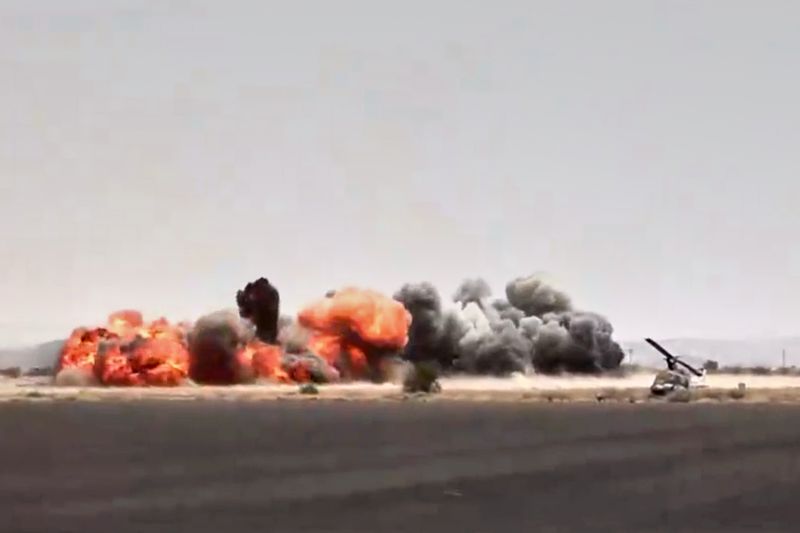
The situation took a turn for the worse on the 10th, when Yemen's Houthi rebels launched a missile attack on King Khalid International Airport in Riyadh, Saudi Arabia. The attack killed at least 12 people and injured around 300. It was the worst loss of life in Saudi Arabia in a decade and the deadliest direct attack on a civilian airport. In its wake, airlines around the world made large-scale diversions, and at least 1,000 flights were canceled. Saudi authorities said that further attacks on the closed airport continued on the 11th, setting Terminal 4 on fire, while a cruise missile was intercepted nearby.
With Saudi Arabia's major airports hit one after another, one of the key alternate air routes linking Europe and Asia has been effectively shut down. Governments including those of the United States, the United Kingdom and Australia urged their citizens to avoid using Riyadh airport, while France, Canada and Germany warned their airlines that flying over all or parts of Saudi airspace was dangerous.
Experts say the frequency of attacks on civilian aircraft and airports by conventional missiles and long-range drones, as well as the scale of the damage, has reached an all-time high. The danger is growing further as countries' stocks of air-defense missiles run low. Matt Borie, chief intelligence officer at aviation security firm Osprey Flight Solutions, advised: “The final decision on flight safety rests with each country's government and airlines' own risk assessments.” He added, “Passengers must make sure to check government travel advisories.”
In addition to aerial attacks, threats from within are also coming into view. Earlier this month, a pilot for UAE airline flydubai attempted to hijack an aircraft bound for Tel Aviv airport in Israel and crash it, but the attempt failed, raising a new security risk originating inside the cockpit.
Airspace around the world is already on the brink of exploding. Iran has struck airport fuel tanks, runways and air traffic control facilities in Dubai, Qatar, Bahrain, Kuwait and elsewhere, while Beirut airport was damaged in Israeli attacks. Ukraine, too, is carrying out sustained drone attacks targeting Russian airspace.
As the situation worsened, the International Civil Aviation Organization (ICAO) recently strongly urged member states to “take measures to ensure that the aviation industry is not drawn into conflicts.” The aviation safety group OpsGroup also recommended that flights avoid the entirety of Saudi airspace, saying that “the Houthi rebels are clearly targeting civil aviation.”
As safe corridors linking Europe and Asia disappear, the burden on airlines is growing.
Following the closure of Russian airspace due to the Russia-Ukraine war in 2022, Middle Eastern airspace has now closed as well, leaving airlines crowding into narrow air corridors through Georgia, Azerbaijan and Turkmenistan. The Journal reported that the resulting higher costs for the aviation industry—including longer detours and rising jet fuel prices—and operational disruptions are expected to continue for the time being.
[email protected] Yoon Jae-jun Reporter