Riyadh airport in Saudi Arabia attacked for second straight day...Houthis warn, “Airports across Saudi Arabia are targets”
- Input
- 2026-10-12 05:26:49
- Updated
- 2026-10-12 05:26:49
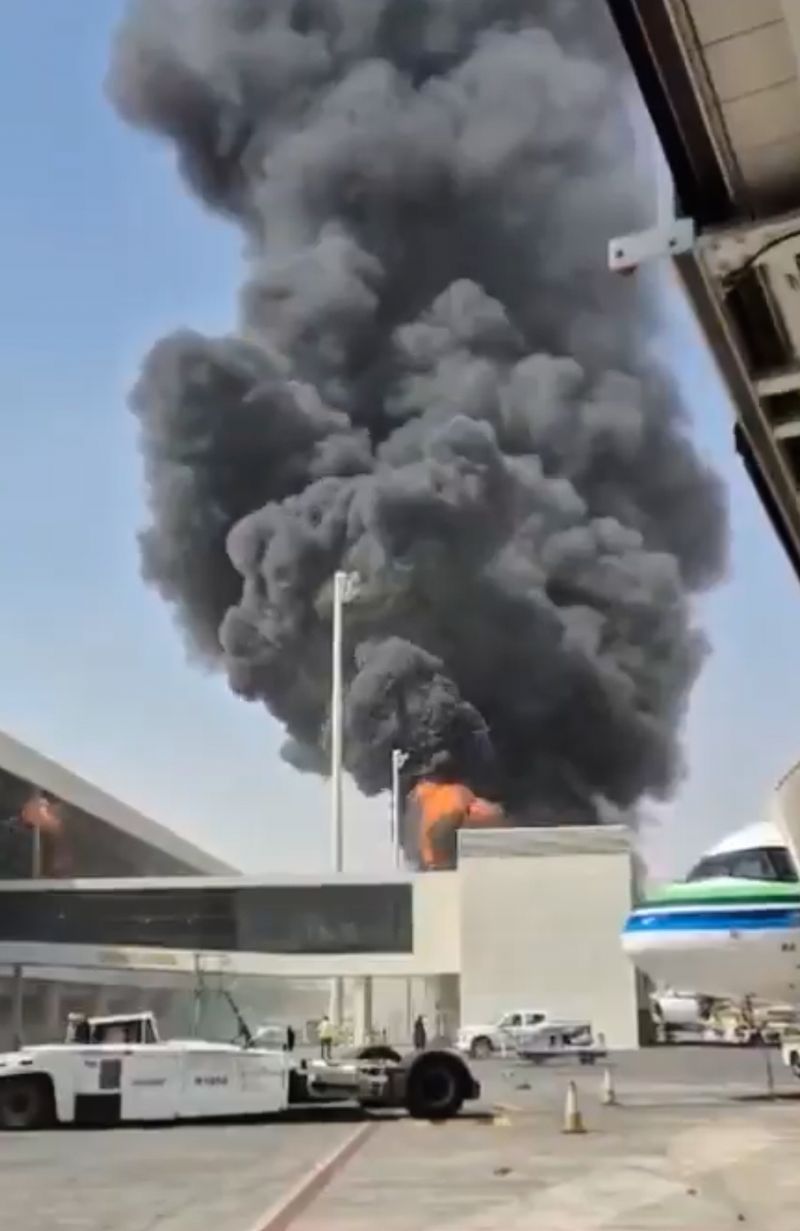
[Financial News] King Khalid International Airport in Riyadh, the capital of Saudi Arabia, was attacked again on the 11th (local time), setting fire to a passenger terminal and causing further casualties. Yemen’s Houthi rebels claimed responsibility for the attack and warned people against using airports and airspace across Saudi Arabia.
According to the BBC, Major General Turki Al-Maliki, a spokesman for the Saudi-led coalition, said, “The air defense system intercepted one missile near the airport, but an unidentified projectile landed at Passenger Terminal 4, causing a fire that is now being dealt with.” Saudi Arabia’s General Authority of Civil Aviation also announced that people had been injured in the attack.
The attack came just a day after a large-scale airstrike the previous day killed 13 people and injured 308. According to Saudi authorities, those killed on the 10th included four Saudi nationals and two Bangladeshis, as well as Americans, Jordanians, Palestinians, Syrians, Sudanese and Egyptians. The Indian Embassy in Saudi Arabia said one Indian national had also died while receiving treatment.
Brigadier General Yahya Saree, military spokesman for the Houthi rebels, announced that they had simultaneously struck Riyadh airport, Dammam airport in eastern Saudi Arabia and oil facilities over the past 24 hours, using ballistic and cruise missiles and drones.
He threatened that “all airports in Saudi Arabia, except the holy cities of Mecca and Medina, are potential targets,” and that “we will further expand military operations toward the heart of Saudi Arabia.”
The incident has caused the highest toll from a single attack targeting a Gulf Arab state since the war between Israel and the United States, on one side, and Iran, on the other, began last February. The Saudi-led coalition called the attack a “war crime” and vowed retaliation.
International condemnation is also mounting. U.S. President Donald Trump said he would “decide and act very quickly” on whether to launch retaliatory strikes against the Houthi rebels, while U.S. Secretary of State Marco Rubio confirmed that U.S. citizens had been killed and strongly condemned the attack. The foreign ministries of the United Kingdom and other major Western countries also advised against travel to some areas of Saudi Arabia and areas along the Yemen border, and urged their citizens to exercise caution.
The Houthi rebels claim the attack was retaliation for Saudi Arabia’s support for Yemeni government forces and its airstrike on Sanaa airport. The temporary ceasefire between the Houthi rebels and the Saudi-led coalition, brokered in 2022, was scrapped in July. Since then, fighting over strategic sites along the Red Sea coast has intensified, and bloodshed has continued.
The Houthi rebels currently control about one-quarter of Yemen’s territory and 80% of its population, and are seeking to take over the entire country. Saudi Arabia, for its part, continues to take a hard line to prevent an Iranian satellite state from being established on its southern border, and regional tensions are expected to remain at a peak for the time being.
[email protected] Yoon Jae-jun Reporter